Before we begin, an announcement. If you preordered my book, firstly: THANK YOU. Secondly, you can get a free signed bookmark! All the details are here. Again, THANK YOU. ❤
It’s now been over two years since I signed with an agent and started thinking of myself as an author of books, instead of (or rather, as well as) a reader of books. In that time, my reading habits have changed very drastically. I’ve been thinking about this a lot, so I thought I’d write a blog post. (Warning: it’s very introspective.)
Reading YA
I sometimes joke that when I was a teenager I read adult fiction, and now I’m an adult I read teenage fiction. It’s kind of true. I read a lot, lot more YA now than I ever used to. So far in 2015 I have read 55 YA novels, out of a total of 101 books (54%). In the whole of 2012, when I was writing The Next Together, I read 13 YA books out of a total of 80 books (16%).
One reason for this is because I’m in a community with a huge amount of passion for YA, and it’s hard not to want to read books that everyone you know loves. A less optimistic way of putting that is: I get caught up in the hype a lot more now that I ever used to as a reader. Whereas I previously only read books I really liked the sound of, I now try and read everything that’s getting Big. I feel like I have to keep on top of the YA world.
Sometimes this leads to absolute gems – books I get to read months and months before they hit the shelves (thank you, Netgalley! That website is another reason I read more YA- who can resist the siren call of review books?).
Other times it means that I don’t really enjoy the books I’m reading that much. Because, simply put, I’m not the target audience. I’m just not. There is a lot of crossover potential in YA for adults and teenagers, but that isn’t (and should never be) the main focus of YA novels. YA novels are for teenagers, and I am no longer one. This all tends to mean I don’t get as enthusiastic about books as I really should.
I recently enjoyed The Raven Cycle, and that’s probably the first YA series I’ve read since becoming an author that really clicked for me as a book that I can consider myself a real fan of, rather than reading it and appreciating it for what it is: a good book for teenagers.
That feeling of thoroughly, wholeheartedly enjoying a book made me suddenly realise what I’ve been missing. For a while, that kind of feeling will make me read only adult literature, or science fiction, or historical romances – or fanfiction.
Then another YA book will get lots of great reviews on twitter – or, more likely, I’ll start to feel guilty about not reading YA. As a writer of YA, I feel like I have a responsibility to read everything. It is my job, after all! I should know what’s out there! Why am I wasting time reading Neil Gaiman when I should be reading the YA bestsellers? Instead of reading for me, I feel like I’m reading so that I don’t feel like an imposter as an author.
How often I read
Looking through my goodreads list, I read more – a lot more – than I used to. I read 50 more books in 2014 than in 2013.
Some of that is simply because I’ve graduated now, and have more time. But a lot of it is that I feel bad about not having read stuff, like I discussed above. I feel more pressured to be reading as much as possible, so I can keep up with other people. Even as I write that, I know it’s ridiculous. ‘Keep up’? At reading? That’s nonsense. But it’s something I feel.
However, I do give up on books more easily now, though. If it’s something I think I’m not going to enjoy, I’ll stop reading it. I’m not investing time in something I won’t get anything out of. I like that I do that now, whereas I used to force my way through books as a matter of principle.
Reading for enjoyment
I am very, very unforgiving of a lack of diversity, gender equality, and a general lack of liberal values. I will now stop reading a book if it has any hint of racism/sexism/homophobic/transphobia/rape, whereas before I would happily read a 1950s scifi novel with no female characters, without thinking about how terrible that was – or worse, something written by Orson Scott Card. This may just be an age thing, though – I’m a lot more educated about feminism and social politics than I used to be as a teenager.
I read books more critically now from an editorial point of view, as well – I actively assess what books does well, and what they don’t – because I want to make sure my own writing doesn’t fall into the same holes. I don’t lose myself in books any more, in the way I used to.
I won’t deny being a critical reader has taken some of the joy out of reading, but being an author is a job. Reading is just as much a part of that job as writing is – I might even argue that it’s more important, but that’s a blog post for another time.
However, on the bright side: I get that thrill from writing now, instead of reading. I’m always always excited to write (okay, unless I’m stuck on a plot point. Then I’d rather be doing literally anything else.) The feeling I get from writing totally outshines the way I ever used to feel about reading. So I wouldn’t change anything, for the world.
How have your reading habits changed over the years? Are you swayed by books you see on twitter or tumblr?
A rebloggable version of this post can be found here.


 It’s just another day of high school for Zack Lightman. He’s daydreaming through another boring math class, with just one more month to go until graduation and freedom-if he can make it that long without getting suspended again. Then he glances out his classroom window and spots the flying saucer. At first, Zack thinks he’s going crazy. A minute later, he’s sure of it. Because the UFO he’s staring at is straight out of the videogame he plays every night, a hugely popular online flight simulator called Armada-in which gamers just happen to be protecting the earth from alien invaders. But what Zack’s seeing is all too real. And his skills-as well as those of millions of gamers across the world-are going to be needed to save the earth from what’s about to befall it. Yet even as he and his new comrades scramble to prepare for the alien onslaught, Zack can’t help thinking of all the science-fiction books, TV shows, and movies he grew up reading and watching, and wonder: Doesn’t something about this scenario seem a little too…familiar?
 It’s the beginning of the summer in a small town in Ireland. Emma O’Donovan is eighteen years old, beautiful, happy, confident. One night, there’s a party. Everyone is there. All eyes are on Emma. The next morning, she wakes on the front porch of her house. She can’t remember what happened, she doesn’t know how she got there. She doesn’t know why she’s in pain. But everyone else does. Photographs taken at the party show, in explicit detail, what happened to Emma that night. But sometimes people don’t want to believe what is right in front of them, especially when the truth concerns the town’s heroes…
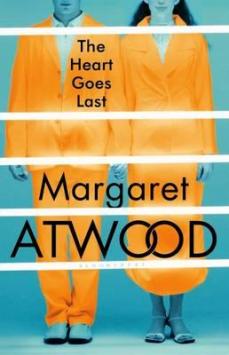 Living in their car, surviving on tips, Charmaine and Stan are in a desperate state. So, when they see an advertisement for Consilience, a ‘social experiment’ offering stable jobs and a home of their own, they sign up immediately. All they have to do in return for suburban paradise is give up their freedom every second month – swapping their home for a prison cell. At first, all is well. But then, unknown to each other, Stan and Charmaine develop passionate obsessions with their ‘Alternates,’ the couple that occupy their house when they are in prison. Soon the pressures of conformity, mistrust, guilt and sexual desire begin to take over.







 Music:







 6.
6. 

 2.
2. 

 Wren James