Why we need literary pride

When I walk into my local bookshop these days, the shelves burst with a rainbow of queer representation. Every time I scroll through Instagram, there are dozens of recommendations for bright pastel-toned romances featuring characters of all genders and sexualities.

Last Night at the Telegraph Club, a Young Adult novel by Malinda Lo, a Chinese American writer exploring butch-femme culture in nineteen-fifties San Francisco, has recently won a slew of awards. Red, White and Royal Blue by Casey McQuiston and The Priory of the Orange Tree by Samantha Shannon are perpetually on the bestseller lists.

Heartstopper, the Netflix TV show on which I work as a story consultant and script editor, recently won a GLAAD Media Award for Outstanding Kids & Family Programming. It tells the story of British teenage boys, Nick and Charlie, who struggle through schoolyard bullying, coming out, mental health and relationship milestones as they fall in love. It has carved out a space for queer representation aimed at all ages.

But when I was growing up there was a dearth of fiction featuring characters like me, let alone ones written specifically for young readers. I used to hunt through my public library for blurbs that gave any hint of potential gayness.”

I obsessed over Fingersmith, a deliciously dark, twist-filled Victorian sapphic heist by Sarah Waters and Crush, an erotically-charged collection of gay poetry by Richard Siken.

I would save up to buy second-hand editions of books only published in the US off eBay, scouring charity shops for the titles I’d found on ‘Gay Classics’ lists online.

Something inside me craved representation, but it was hard to find. The old classics like Rubyfruit Jungle by Rita Mae Brown, Stone Butch Blues by Leslie Feinberg and The Well of Loneliness by Radclyffe Hall felt unbearably out of date, and practically unrelated to my own experiences of queerness in the twenty-tens. Not to mention, old censorship laws had imposed tragic endings on those stories in a way that made them hopelessly depressing to read.

Even today, there is a trend of diverse character being the first to die. This is known as the ‘bury your gays’ trope, and is seen on TV shows like Killing Eve, Game of Thrones, Supernatural and The 100.

We don’t want queer people to grow up feeling that there is no life for them beyond ‘coming out’ narratives. Even when I was a teenager, I didn’t want to read about homophobia; I wanted stories about people like me finding their happily-ever-afters!

Queer people deserve to see themselves represented in happy stories where they can be loved for being themselves. As Camille Perri, author of The Assistants, says,

“Art and entertainment about happy gay people may not be about politics — but the fact of its existence is political. Just because a story is entertaining and funny doesn’t mean it necessarily backs away from serious issues. A celebratory queer love story in the midst of all the hatred and bigotry present in our daily collective conscious is, as far as I’m concerned, a form of resistance.”

Fortunately, as I’ve grown older, I’ve started noticing how the publishing industry has changed. Queer fiction is now on bestseller lists and displayed front-and-centre in bookshops.

The Song of Achilles by Madeline Miller, Nimona by ND Stevenson and Everything Leads to You by Nina LaCour have all won awards. And queer fiction is now seen in every genre – historical, fantasy, contemporary – you name it.

These days, I’m a creator of queer content in my own right, writing novels such as The Quiet at the End of the World, about a bisexual girl who is one of the last children born before humans become infertile, and grows up knowing she will watch the human race go extinct. She seeks out her own queer representation in social media archives from past generations, watching long-lost TV shows about bisexual women and longing to be friends with them.

I also pour my own experiences into scenes on Netflix’s TV series Heartstopper, where I work as a story consultant. The TV series is based on the graphic novels by Alice Oseman, which mainly focus on Nick and Charlie’s journey. However, the show has more space to explore the other characters’ stories, so I’ve helped to create plotlines for characters such as Imogen, Tara, Darcy, Isaac, Tao and Elle.

As a bisexual, non-binary person, I’ve drawn from my own turbulent journey of self-acceptance. From scenes where Nick faces confusion over his bisexual identity, to Elle’s search for new friends exploring their gender expression, it has been cathartic to use my own life in the show – and know that young viewers would find comfort in scenes that mirror their own lives.

The show is unique in its tone of kindness and joy even though it doesn’t shy away from difficult issues. In the writers’ room, Heartstopper creator Alice Oseman always emphasises the importance of having storylines that are drawn from authentic teenage experiences.

The characters aren’t exploited for dramatic effect, but grow at their own pace, with realism taking priority over suspense. There are no love triangles or cliffhanger break-ups; instead, we see smaller slice-of-life moments, rooted in ‘found family’ support networks.

I envy the characters for being able to explore their gender and sexual identity at such a young age. It took me far longer to understand myself. It’s difficult to parse your own identity when there are few queer role models to emulate.

Fortunately, young people today can see a spectrum of identifies, including Nick (bisexual), Elle (transgender) and Isaac (asexual). They can try those labels on to see what fits, without the pressure to conform to any particular identity.

Meredith Russo, transgender author of Birthday, says,

“I think the most important thing about these conversations [about trans issues] is that we need to have them openly, honestly, and gently with one another where young people can see and hear. All it would have taken was exposure to a trans role model or to have a trusted adult mention in passing that being transgender was okay and it would have made a difference in my life.”

Nowadays, my cup floweth over with queer fiction. While writing my latest novel Last Seen Online, which looks at how queerness exists in fandom spaces online, I read Idlewild by James Frankie Thomas and Dead Collections by Isaac Fellman, which look at similar themes.

I ate up The Argonauts by Maggie Nelson, Detransition, Baby by Torrey Peters and Her Body and Other Parties by Carmen Mario Machado, which show an insatiable and unapologetic view of queer female sexuality.

I fell for the non-binary robot assassin in All Systems Red by Martha Wells and annotated notes into the margins of C+nto & Othered Poems by Joelle Taylor and Dykette by Jenny Fran Davis.

There is, of course, still work to be done. We need more transfeminine stories; more stories about older queer characters; more queer representation about people of colour.

As Emily Hashimoto, author of A World Between, says,

“What I’m used to in my own life is folks with different backgrounds of race, ethnicity, economics, folks who are trans, folks who are not trans, queer, not queer. I haven’t seen that without tokenizing.”

But at least children today can finally start to see themselves represented in books, as strong heroes and loved individuals with joyful futures and happily-ever-afters. They will be able to imagine those things for themselves. Representation in fiction is a life-saver, in the most sincere sense.

I’m so glad it’s finally here.

This article was originally posted on the Royal Literary Fund’s substack.

UoN Graduation address

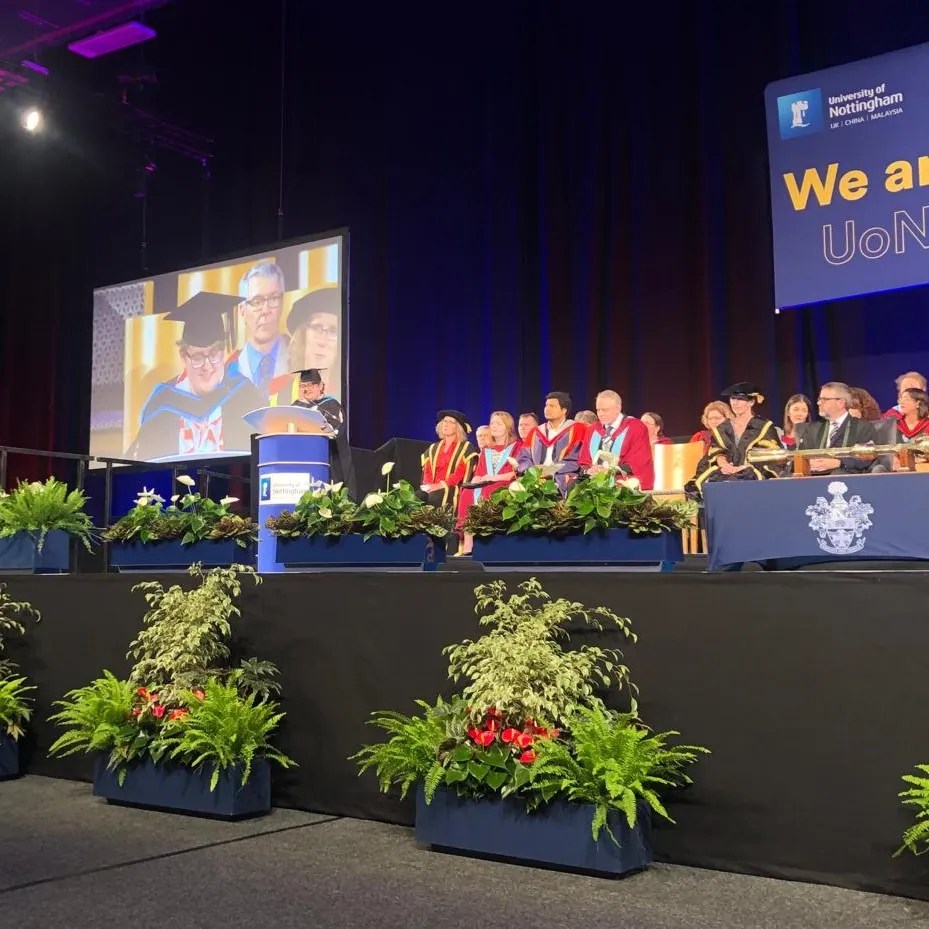
This year I was given an honorary award as an alumni of University of Nottingham, and gave a speech at the Sciences graduation ceremony. I thought I’d share the transcript of the speech.

I’m very honoured for the chance to talk to you all. Ten years ago, I collected my own degree in this very hall for a Masters in Natural Sciences. Looking back at that time, I was filled with excitement for my new life in the wider world to begin – and also very keen for a break from the long months of preparation for final exams.

It takes an immense amount of work, personal determination and mental focus to get to this day. You should all be very proud of the work that has brought you here. I can remember very clearly the long nights I spent struggling over algebra until the early hours of the morning.

As you embark on the next stage of your life, take a moment to really check in with who you are, now, in this moment. Think about the friendships you have formed, and the relationships you have established with your peers and mentors. Over the next few years, you might change and grow immensely. But those supportive relationships will remain with you.

In the last ten years, I have learnt so much about myself and the world. After studying Chemistry and Physics, I intended to find work in scientific research. However, one of my hobbies turned out to be unexpectedly beneficial. A novel I had written during my summer break ended up being sold to a publisher before I graduated. I walked this stage carrying a special secret, alongside my Natural Sciences degree: that I was soon to be a published author for a time travel story based in the physics I’d learnt during my course.

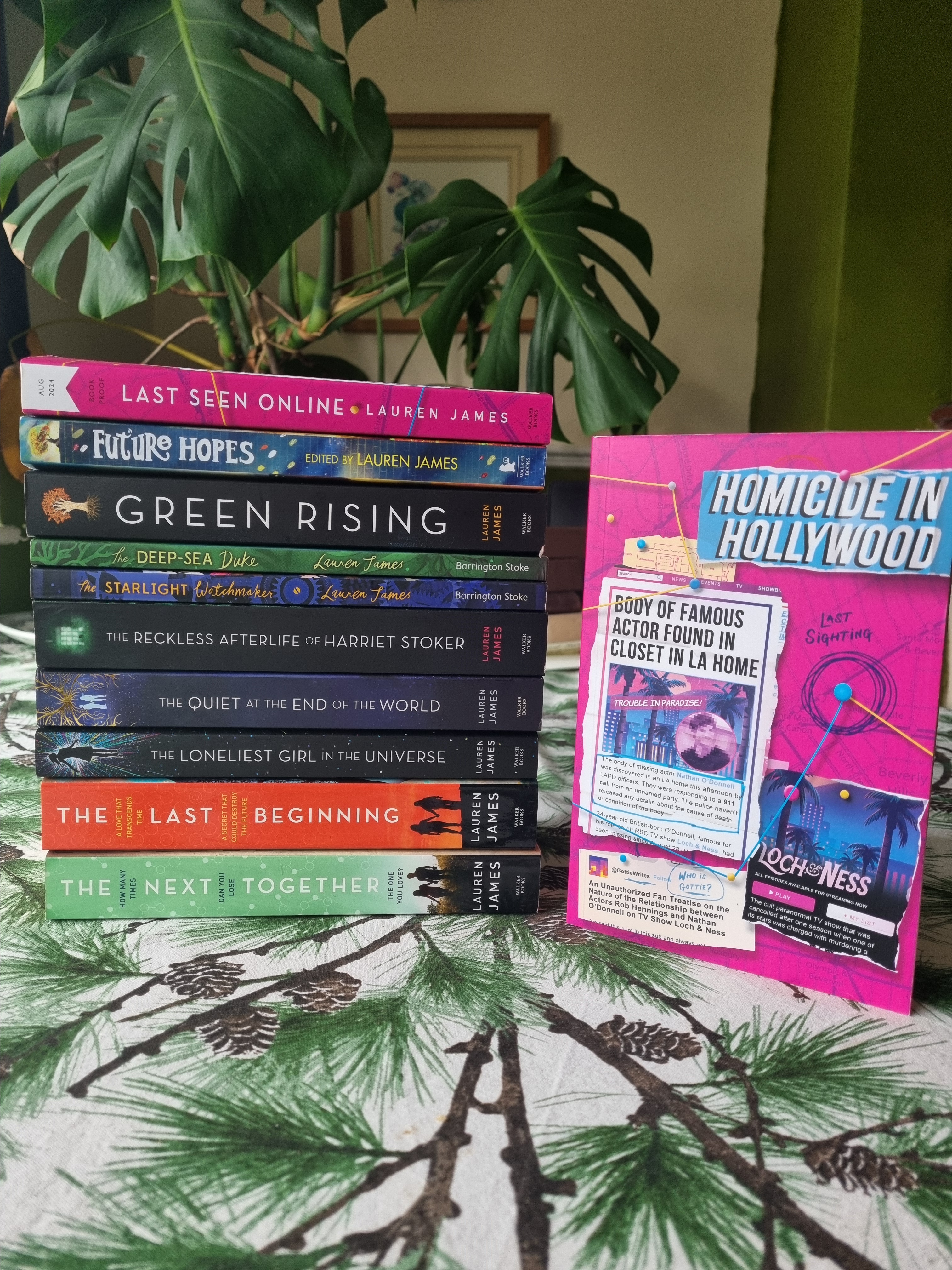
Initially, I planned to write for a ‘gap year’ and then jump back into the world of ‘real work’. But that gap year turned into two years, and then three, and now here I am, a decade later. I have written nine novels, as well as working in the writers room for Netflix’s TV show Heartstopper.

While I’m not the science researcher I intended to become, I do use my degree every day. As well as my writing, I run a climate activism group that encourages writers to include representations of positive climate solutions in their fiction. I also advise production companies and television networks on how to use real science in their projects.

The skills my degree taught me are invaluable as a freelance writer. The University of Nottingham gives its students so many opportunities to thrive. During my degree, I was given the chance to spend an exchange year at Bucknell University in America. Through that freedom and flexibility as a student, I developed the confidence and skills I needed to work proactively and independently; to seek out opportunities in areas that interested me. The encouragement I received here, to forge my own path with determination, is something that still sticks with me, years later. I am incredibly proud to be a Nottingham graduate.

At this juncture in your lives, I encourage you to consider what you value most. Do you want stability, or do you want a career where every day is different? Do you want to be challenged and surprised? Do you want to be in control of the twists and turns your career takes? Do you want to guide and inspire others?

The decisions you make over the next few years will set the course of your life. Choose now what kind of future you want to build. Take risks. Never stop hustling. Seek out work that you are passionate about. Build genuine connections based in mutual respect and integrity. If you are a pleasant, enthusiastic, reliable person, opportunities will come to you from the most unexpected of places.

The world of work can be overwhelming, tiring and stressful. But if you follow your heart, and carve out a niche that is distinctly, uniquely yours, you will thrive.

Congratulations on everything you’ve achieved so far. I cannot wait to see where the next decade takes you.

Thank you to the University of Nottingham for this great honour.

The trials and tribulations of fandom culture

I grew up in fandom. BBC Merlin, Doctor Who and Teen Wolf are some which I’m willing to admit to – but I was never picky. I was always more interested in the fans themselves than the fandom’s chosen media property of interest. I loved digging into the dramas going on within a fan community.

If I caught a whiff of a Big Name Fan with thousands of followers whose Tumblr ask box was full of gossipy messages, I was there. I read every write-up I could find about people getting caught for ‘internet crimes’ like faking an emergency for crowdfunding money or using photoshop to create fanart ‘pencil sketches’. I would click dozens of links to the original fraudulent blogger’s account, following a rabbit hole of posts where they defended their crimes, devouring the comment threads debating the drama.

The stakes of fandom dramas are low-to-non-existent – someone might have to delete their account, maybe? or change usernames? – but there is little real-life impact from fan drama. But when lies or secrets are revealed in fandoms, it can be so explosive that whole communities rupture down the middle, never to recover. Things get intense very quickly.

From personal experience, I was using fandom to fill a void for the things I was lacking in real life. For close, intimate friendships; for queer kindred spirits; for a community that made me feel safe, accepted and understood. When you’re relying so deeply on a small group of people for those things, it’s no wonder that a controversy can get so heated.

When your favourite fan writer is revealed to be plagiarising paragraphs of their fics from novels, it doesn’t just leave you without fic to read. It destroys the foundations of your support mechanisms. The people you trusted most, who you confided in – maybe telling them things you would never share in real life – are no longer trustworthy.

That can feel like a life-or-death crisis point.

So, I wrote a novel where fandom drama is life-or-death, literally. What if your favourite fan blogger is involved in a crime? What if the lead actor on your favourite TV show is killed?

I thought that it would be the perfect way to investigate a murder – in this case, a fan girl who obsessively documents the movements of her favourite actor on the day he is arrested for murder.

Last Seen Online is told through her blog posts, as she investigates the personal lives of the male actors on a fictional TV show in an attempt to prove that they are secretly queer and dating. She goes viral when she goes to their address, and one of the men ends up dead. But who murdered him, and why? The commenters on her blog are hugely invested in finding out.

I wanted to explore how the internet can be used as a tool for investigating real-world crimes. Can a fandom collectively use their detail-oriented focus and intense knowledge of their subjects to solve a crime?

In real life, groups of vigilante detectives on the internet have managed to solve real life murder cases. For example, a female skeleton found in an Ohio river in 1975 was IDed as a missing girl by a Reddit user who worked to update police databases with missing records. An unidentified man who died in a car crash in Australia in 1995 was identified by a Reddit thread, who found his family based on his Grateful Dead t-shirt. Several podcasts investigating old cases have led to new arrests and convictions, such as Your Own Backyard and Serial.

That is a seriously impressive and admirable level of detective work, but it’s a rare occasion when social media frenzies help to solve crimes. Mostly, the internet just turns traumatic disasters into viral clickbait.

The internet also tends to see conspiracies which aren’t there. Were Harry and Louis from One Direction secretly dating? Or is Taylor Swift gay? When you consume a huge quantity of content created by a celebrity, you form a strong parasocial bond with them. Fans feel like they know their role models on a personal level. They have spent huge amounts of time, energy and resources on studying their heroes – from going to all their shows and watching all their ‘behind the scenes’ content, to more extreme activities like tracking their jet movements or hotel stays. They will analyse their social media posts and pictures taken inside their homes, looking for clues to their inner lives.

These are also, conveniently, very useful skills to have if you are trying to find a murderer, which made Last Seen Online a delightful novel to write. I tried to write a book for internet-savvy, internet-cautious readers, who know that you can’t accept what you’re told at face value if you want to survive online. It is filled with references to the fandom dramas I lived through from 2005-2015.

Born in 1992, I was one of the earliest generations to really grow up with the internet. For me, fandom spaces were a lifeline when my touch-starved teenage self desperately needed connection and community. I know how easy it can be to slip too far into an obsessive space where you’re investing an unhealthy amount of time in a fan space – I only survived the pandemic lockdowns by engaging in the torture and pleasure of the Supernatural fandom.

It can be a safe space to seek out comfort in times of crisis. But let me end with a message to my younger self: No, Taylor Swift is not gay. But you are.

This essay was originally shared on United by Pop. You can also read a recent interview I gave to the Nerd Daily.

Events

If you want to meet me, here are a few events I’m going to be appearing at:

24th October – ‘Books Can Change The World’ panel with Liv Jensen, Norwich Book Festival

25th October – In Conversation with Molly Morris, Norwich Book Festival

28th Oct – 2nd Nov – Writer in Residence at The Exchange, Birmingham

2nd Nov – Panel on writing with Lorna French and Philip Holyman – The Exchange, Birmingham

17th Nov – YALC – Heart rate critical panel with Karen McManus, Ravena Guron and Finn Longman

21st Nov – In Conversation with Laura Wood, Waterstones Nuneaton

BBC panel on climate fiction

Last week I appeared on a panel at the BBC’s Climate Creatives Conference, which aired online. You can watch it here.

The new season of Heartstopper was also released this week, which I work on as a story consultant. Jonathan Bailey played a classics historian, and you can find out mroe about his character in the Volume 5 hardback of Heartstopper, where he appears in a mini comic written by me and illustrated by Alice Oseman.

I just got back from a month long writing retreat in Europe – I went to Budapest, Vienna and Prague, and it’s so lovely, but a bit strange, being home again!

I’m diving right back into events, so if you want to see me, here’s where I’m going to be (online, Cheltenham, Norwich, Birmingham, Coventry, London and Nuneaton):

9th October – ONLINE – OH!Con Writing with STEM talk

12th October – Thrillers panel with Kate Weston, Josh Silver, and Amie Jordan – Cheltenham Literature Festival

24th October – ‘Books Can Change The World’ panel with Liv Jensen, Norwich Book Festival

25th October – In Conversation with Molly Morris, Norwich Book Festival

28th Oct – 2nd Nov – Writer in Residence at The Exchange, Birminghambook a one-to-one writing advice session

2nd Nov – Panel on writing with Lorna French and Philip Holyman – The Exchange, Birmingham

7th Nov onwards – Weekly Coventry Reading group (12.15 – 1.45pm)

17th Nov – YALC – Heart rate critical panel with Karen McManus, Ravena Guron and Finn Longman

21st Nov – In Conversation with Laura Wood, Waterstones Nuneaton

New Coventry Reading Group

No pens, no paper, no prep….like a book club, but with no homework!

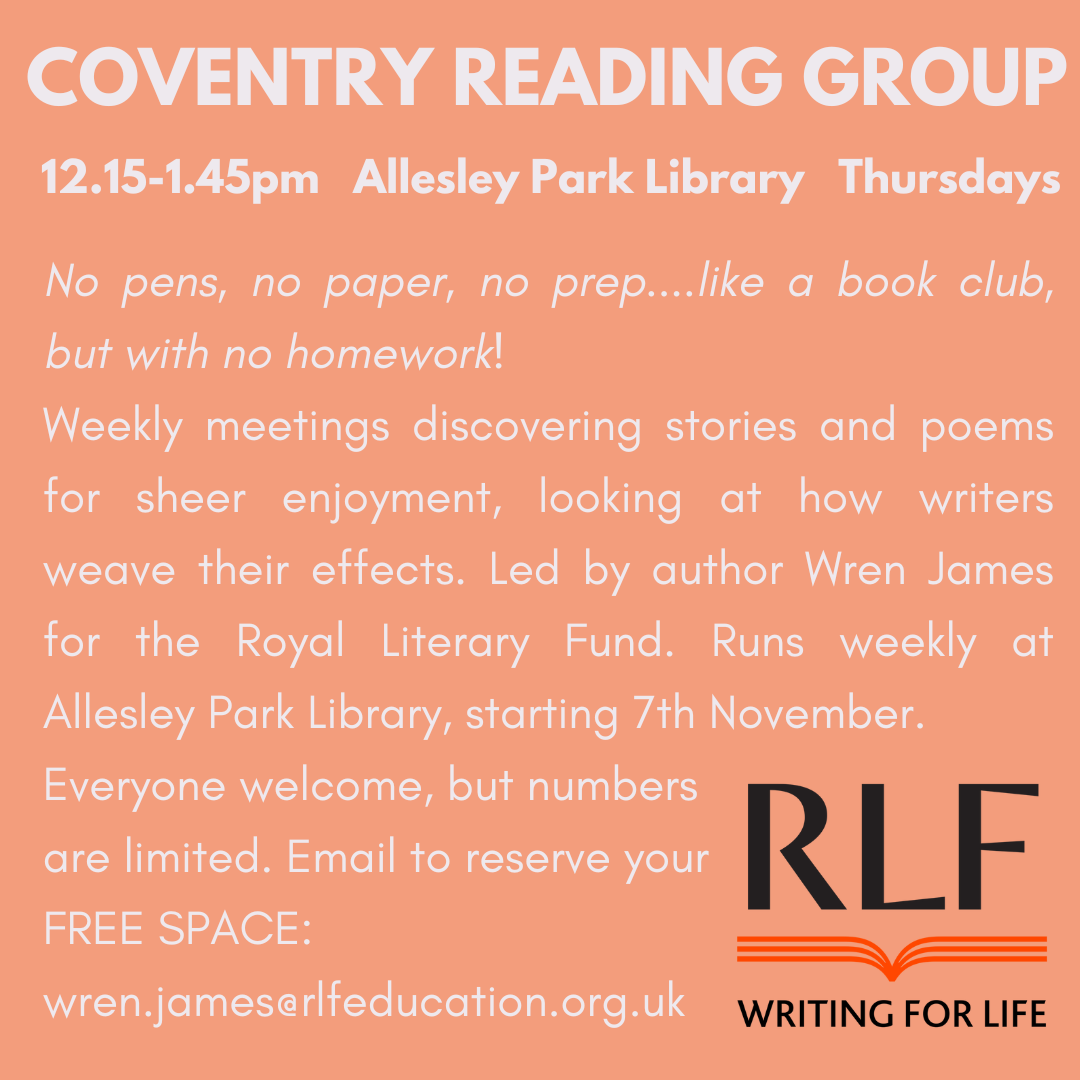
Starting on 7th November, I’m going to be running a weekly reading group in Coventry on behalf of the Royal Literary Fund.

Each week I will read the group a new poem and a short story aloud, and then we’ll discuss them together. Research shows how good it is for us to be read aloud to but how many of us actually make the time to do this? This is ninety minutes when people can just stop and listen to something new to them.

Coventry’s Reading Round will be one of a network of only sixteen in the country funded by the Royal Literary Fund in 2024/25, and, unlike other reading groups, there is no homework needed.

The meetings will discover stories and poems for sheer enjoyment, looking at how writers weave their effects.

The Reading Round scheme was set up to create a space where readers can discover original writing and also rediscover the joys of hearing stories and poems in a friendly group.

Runs weekly at Allesley Park Library, starting 7th November, from 12.15 – 1.45pm on Thursdays.

Everyone welcome, but numbers are limited.

Email to reserve your FREE SPACE: wren.james@rlfeducation.org.uk

Find out more about the Reading Round groups and see if there’s one in your area.

Last Seen Online on tour (plus Heartstopper doggy cuddles!)

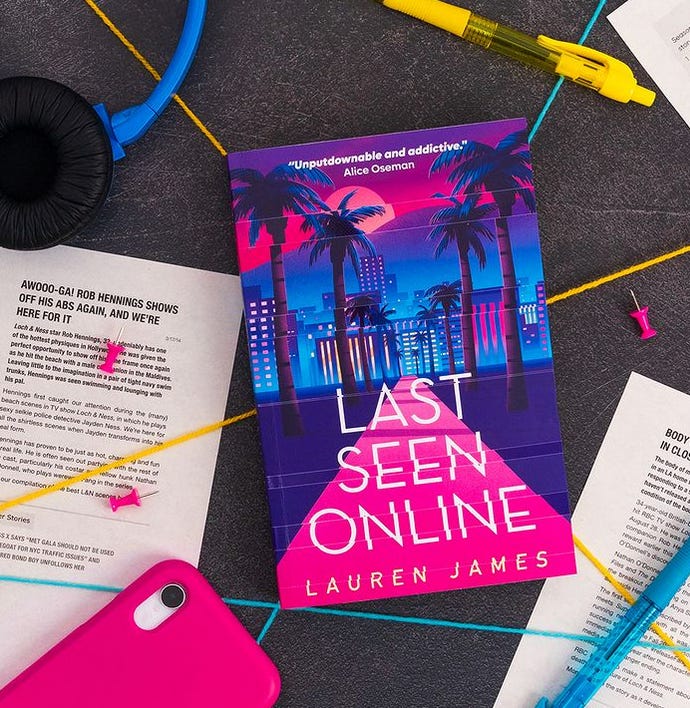
My new fandom/revenge/murder novelLast Seen Online launched a fortnight ago, and it’s already gone to reprints and received this amazing review in the Irish Times:

One of the things Lauren James has handled well in her fiction is internet culture, deftly weaving snippets of articles and posts into various books, always capturing that particular “online” tone of the form in questions. So her latest novel, Last Seen Online, based on a 2019 digital storytelling project, is an absolute treat.

The affection, obsession and insanity of fandom are explored via the fictional Loch & Ness franchise (featured elsewhere in James’s work), a book and then TV series involving a “sexy selkie police detective” who has some serious chemistry with the local werewolf (obviously).

James, born in the 1990s, is ideally placed to capture the specifics of internet fandom in the 21st century – it’s not just the references to particular websites, but the understanding of the different mentalities within fan spaces, reflected in the range of comments included after each instalment of an online “treatise” arguing that the actors in the TV show were in love but forced to remain closeted.

(If this sounds completely unhinged, well – this book is not for you. If it sounds a little unhinged, but also you must know more, step on inside. And if you’re already finding parallels with real-world fandom conspiracy theories – why do you not own this book already?)

The insane-shipper vibes give way to something more sinister, though, as we learn that one of the actors is in jail for murdering the other. In the present day, two LA-based teenagers use their detective skills to try to figure out what really happened – ending up in danger themselves. Tremendously enjoyable.

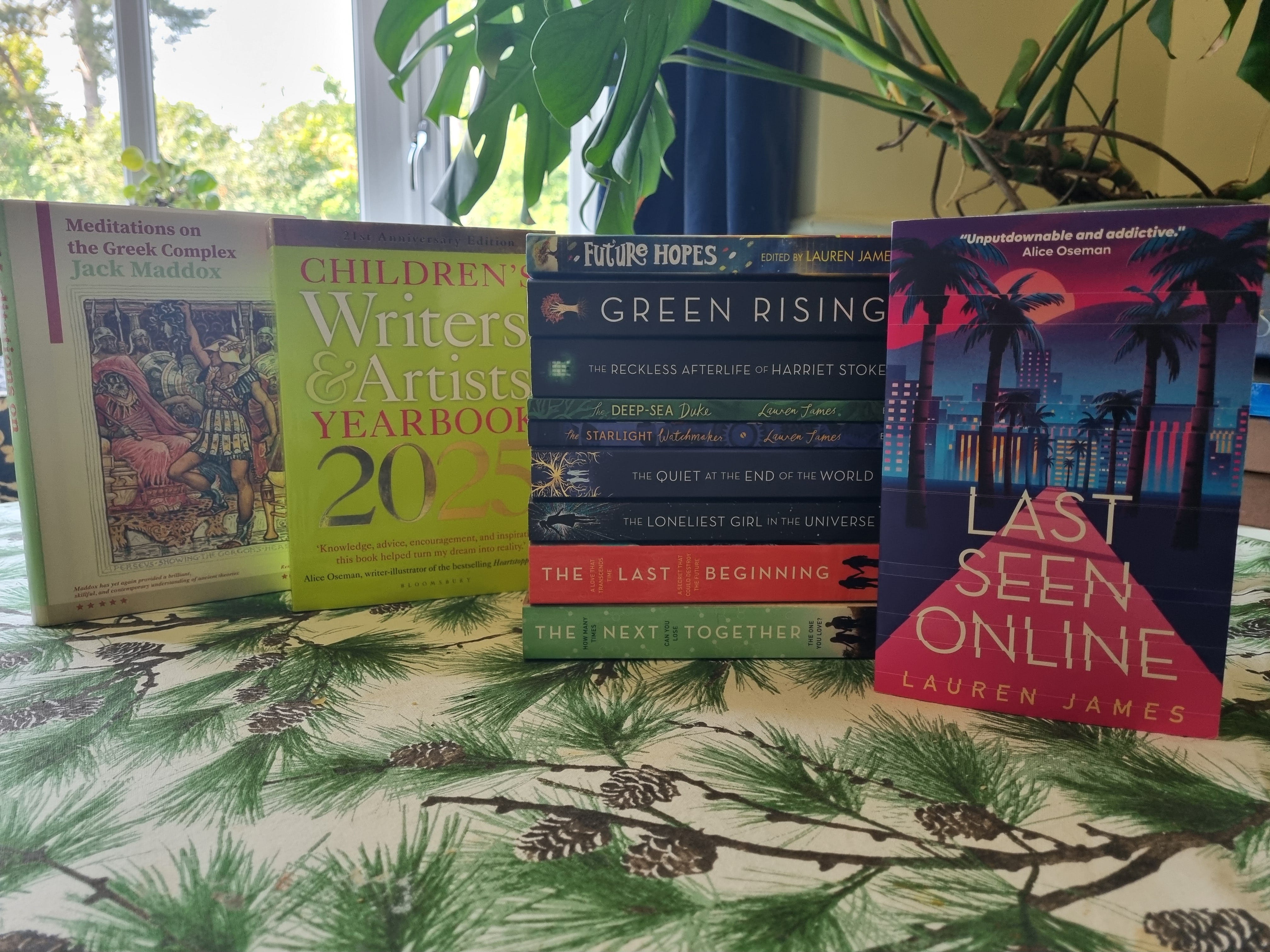
Posing with the rest of my hoard

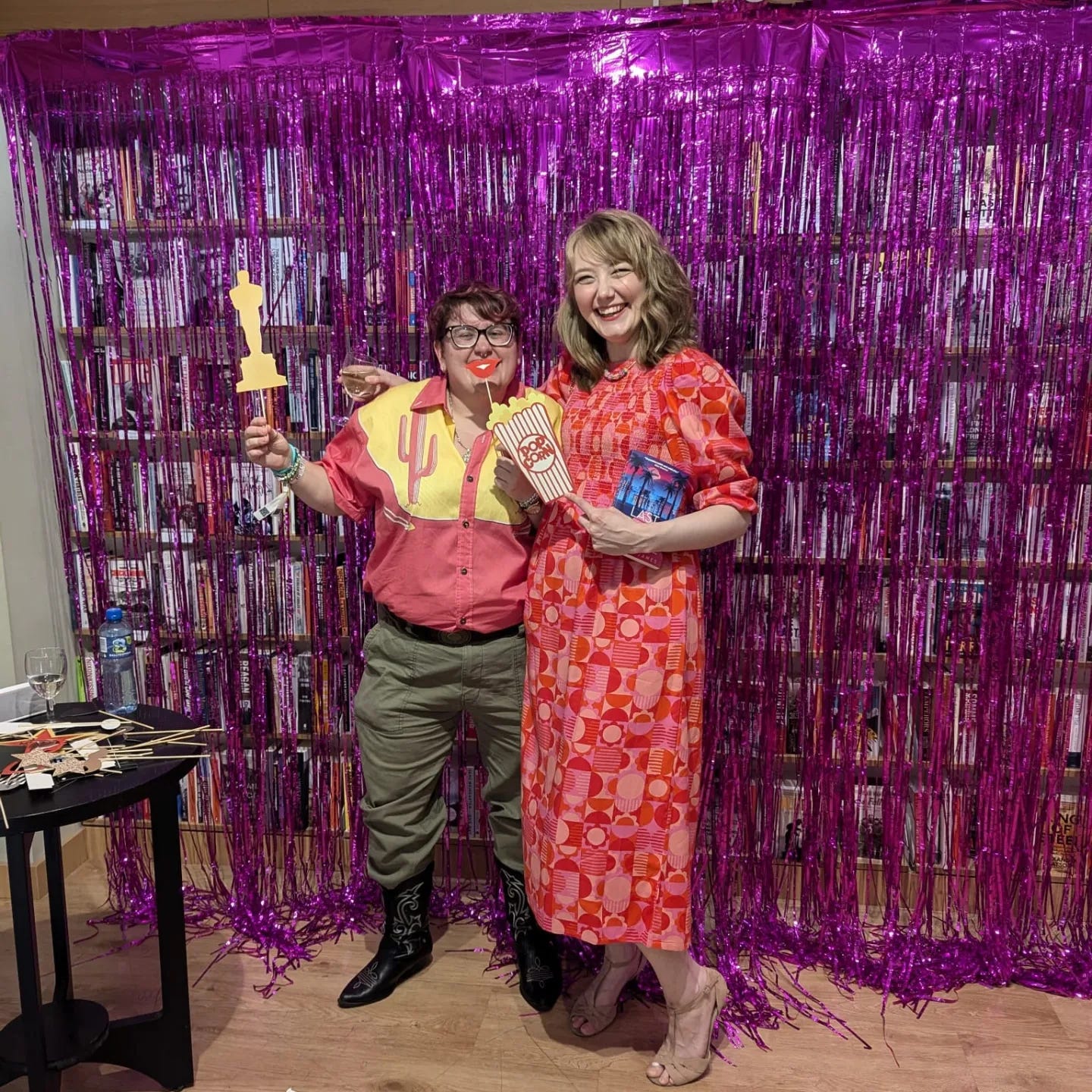
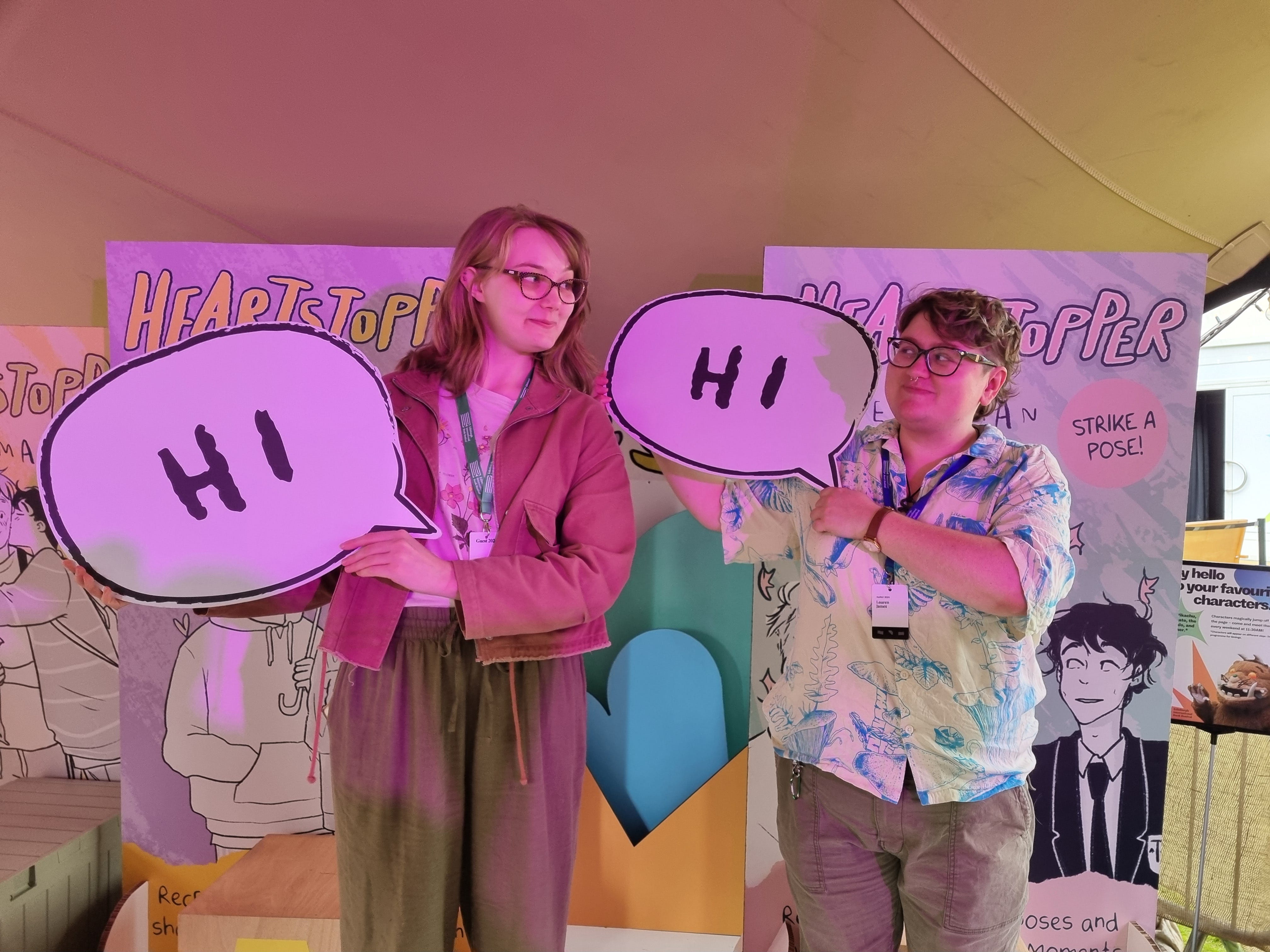
I’ve been going on a flurry of events, which I’ve been trying to document in all their neon glory via Instagram reels (a Pink Pony Club-themed launch featuring cake baking, a London bookshop tour, Coventry Pride, Waterstones Piccadilly’s BookFest day where they had an iconic suspect board for all the LSO villains, and a Heartstopper day at Edinburgh Book Festival). I highly recommend watching the Heartstopper reel for many, many dog cuddles – the festival put on a Therapets event in honour of all the Nelson family dogs.

This tour has been extra special as my partner has been able to come along :’)

I feel so so lucky and overwhelmed by all the support and love for Last Seen Online. Every day people have been messaging to tell me they read it in one sitting, or it’s their book of the year. My last few books have been Rather Serious climate fiction, which isn’t really ‘read it in one sitting’ material, so this has all gone to my head a little bit. I’m so happy to have such a fun, silly book to share with you all.

Thank you to everyone who has ordered or reviewed or shouted about the book. I’m truly the luckiest. My next event is in Oxford next Friday – see below for details.

Really love how gay my job is

If you’ve already finished the book, I’d love to hear your thoughts on if you guessed any of the twists. I’m of the strong opinion that the best twists are foreshadowed enough that a suitably alert reader can spot them before the answer is revealed, and I’d love to see if I nailed that in this book properly. 🙂

And if you haven’t read it yet, well – what are you waiting for?! Forbidden Planet even have signed copies in stock.

Amazon UK Waterstones Audible Foyles

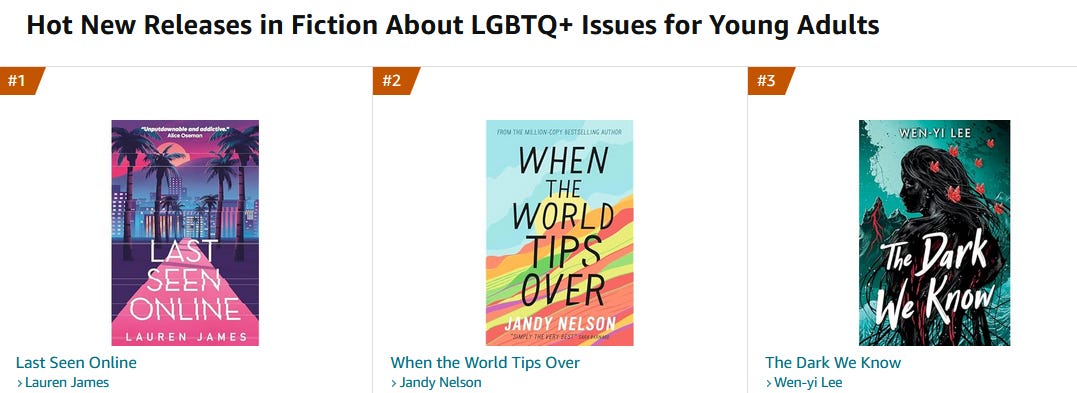
Walker Books domination on the Amazon bestseller rankings

In other news, I have two local community projects I’ve been working on in my hometown Coventry. From November I’m going to be running a reading group for the Royal Literary Fund, one of a network of only sixteen in the country funded in 2024. The meetings will discover stories and poems for sheer enjoyment, looking at how writers weave their effects.

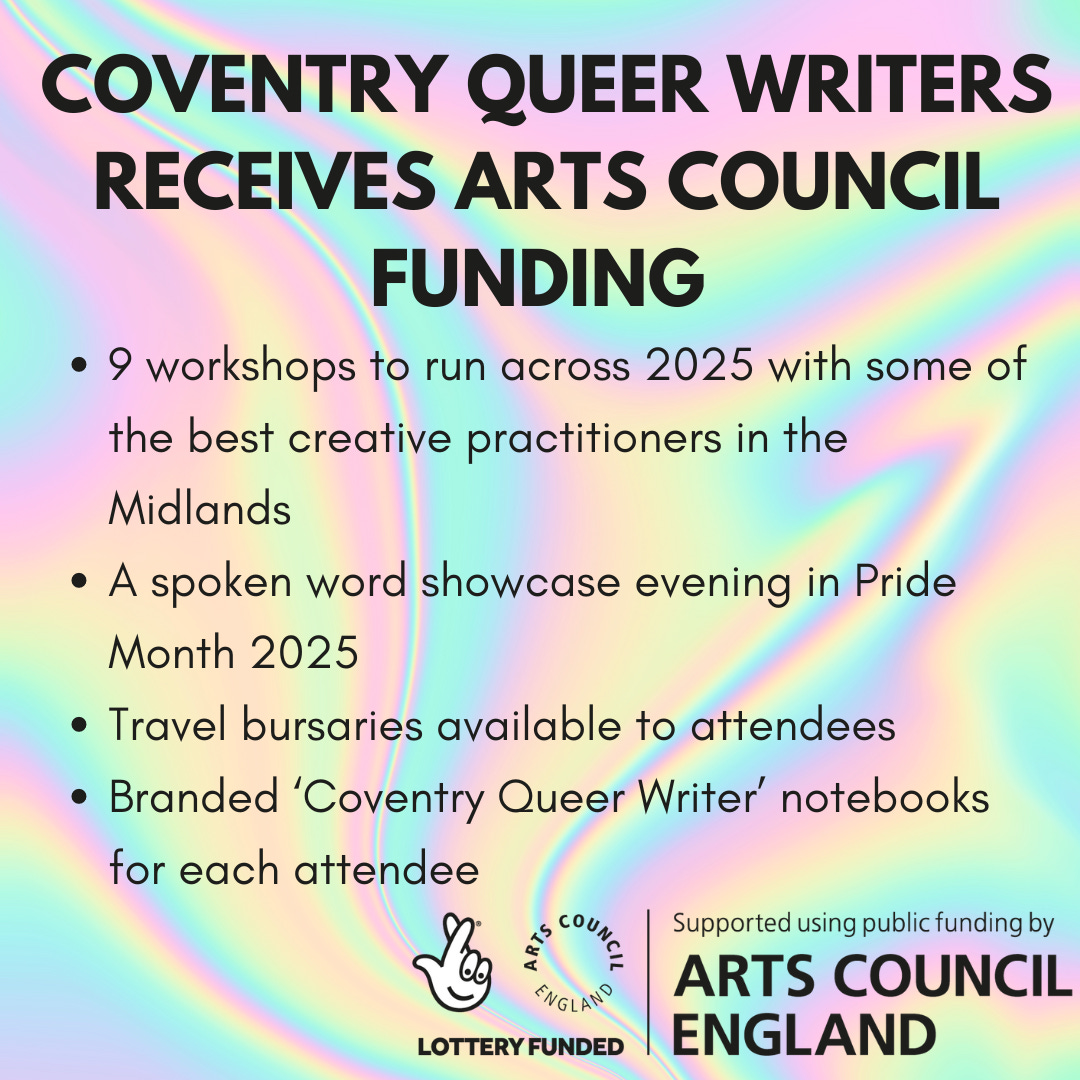
Secondly, for a year now I’ve been holding a Queer writers group in Coventry city centre, and I’m super excited that we’ve just been awarded Arts Council funding. I’m really excited to be able to level up our events for 2025.

(I also run a climate action group of 200 writers, so I imagine I’m going to need to hire someone to help with admin for all my projects soon, woof!)

Events

If you want to meet me, here are a few events I’m going to be appearing at:

OXFORD//23rd August – Kat McKenna and Lauren James ‘Swifties, Fame and Fandom’ – Blackwells Oxford, 6pm

COVENTRY//1st Sept – True Crime Thrillers at Coventry Queer Writers workshop at St Marys Guildhall (1-3pm)

CHELTENHAM//12th October – Thrillers panel with Kate Weston, Josh Silver, and Amie Jordan – Cheltenham Literature Festival

BIRMINGHAM//28th Oct – 2nd Nov – Writer in Residence at The Exchange, Birmingham – book a one-to-one writing advice session or a panel on writing with Lorna French and Philip Holyman

COVENTRY//7th Nov onwards – weekly Coventry Reading group (12.15 – 1.45pm)

LONDON//17th Nov – YALC – Heart rate critical panel with Karen McManus, Ravena Guron and Finn Longman

Amazon Studios is making a feature film of The Loneliest Girl in the Universe!

Variety released the news today:

Amazon MGM Studios is developing the YA novel “The Loneliest Girl in the Universe” as a feature film.

Joe Roth and Jeffrey Kirschenbaum (“Anyone but You,” “Fast X,” the upcoming “Jackpot”) will produce the film alongside Katherine Langford, best known for starring in Netflix’s hit YA series “13 Reasons Why”; Seldy Gray will oversee development for Roth Kirschenbaum Films.

The project is in early development at the studio with Sarah Conradt-Kroehler writing the script, from a treatment by Gary Dauberman.

The Loneliest Girl in the Universe was first published in 2017. It was nominated for the 2019 Carnegie medal, named one of Barnes & Noble’s Top 15 YA Books of 2018, and shortlisted for the STEAM Children’s Book Prize 2019.

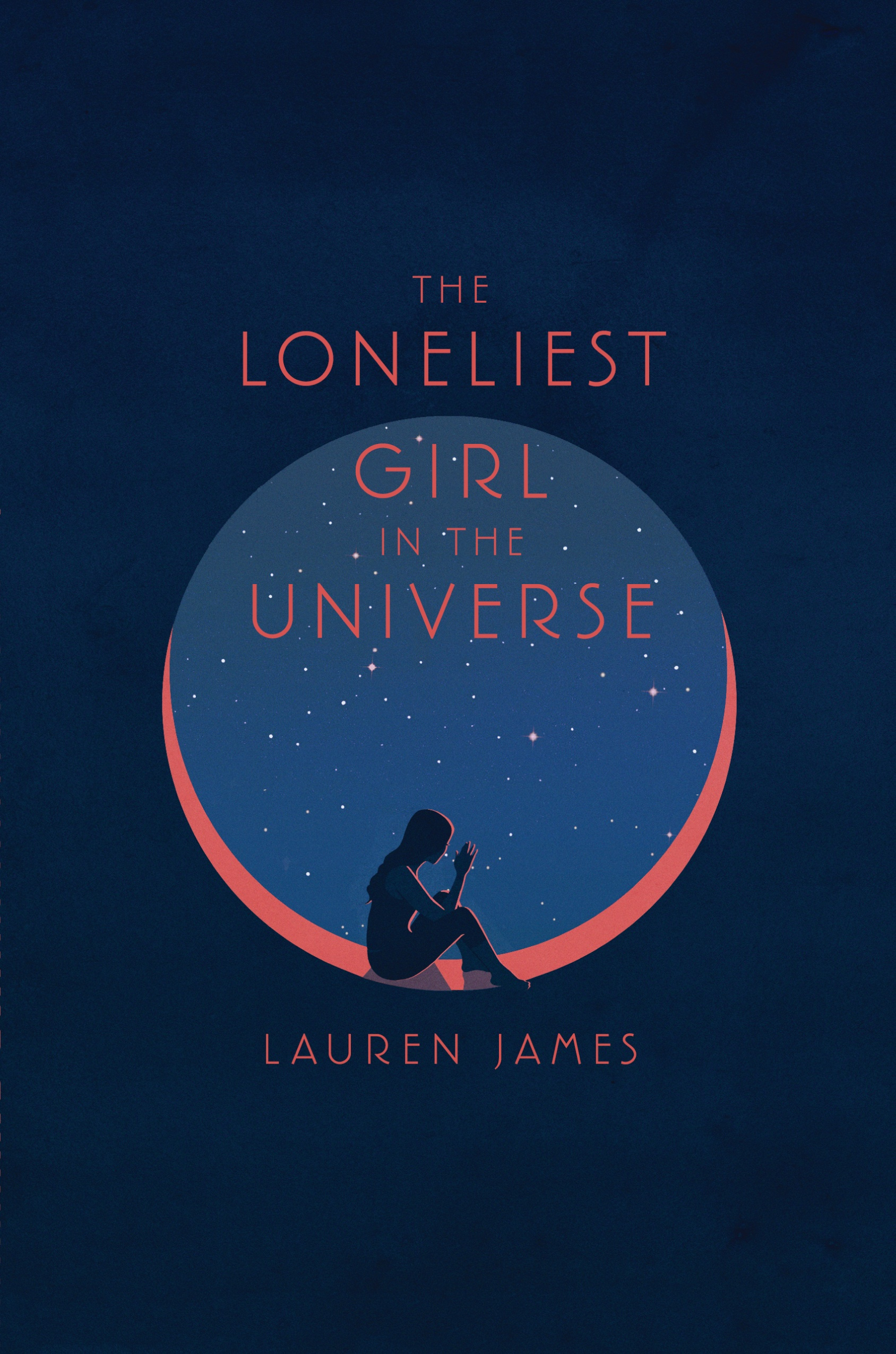
Romy Silvers is the only surviving crew-member of a spaceship travelling to a new planet, on a mission to establish a second home for humanity. Alone in space, she is the loneliest girl in the universe until she hears about a new ship which has launched from Earth with a single passenger on board. A boy called J.

Their only communication is via email and due to the distance between them, their messages take months to transmit. And yet Romy finds herself falling in love.

But what does Romy really know about J? And what do the mysterious messages which have started arriving from Earth really mean?

Sometimes, there’s something worse than being alone…

I’ve been holding onto this secret for four long years, so I’m beyond thrilled to finally be able to share it.

The production company, Roth/Kirschenbaum, made Damsel (Milly Bobby Brown/Netflix), Anyone but You (Sydney Sweeney/Glen Powell), The School for Good and Evil (Paul Feig/Netflix), Fast X (Vin Diesel) and The Gray Man (Ryan Gosling), so Romy is in very, very good hands indeed.

A movie deal is, obviously, a dream come true. It’s not something I ever thought would happen to me. I feel lucky enough to get to keep writing new books, let alone for someone to make an adaptation of something that came out of my brain.

The Loneliest Girl in the Universe is a very special story to me. I wrote it when I was 22, fresh out of a physics degree. On the surface, it was inspired by some of the physics I’d learnt about deep space travel at university, but mainly it was propelled by the complicated feelings I had about technically being an ‘adult’ while really just feeling like a naiive kid. It was about internet dating, and fandom as a form of self expression, and my complicated relationship with girlhood (as someone who no longer really identifies as a ‘girl’).

Romy is one of the most precious character I’ve ever created. I poured so much of myself into her personality; her insecurities; her flaws and strengths. So many readers respond to her vulnerability (and mine) with deep love. People have told me that they would die for Romy. That she’s their favourite fictional character of all time. That she’s helped them process so much of their own anxiety, trauma and imposter syndrome. That she’s a role model for girls who are deciding to study science at university. As a writer, it’s the biggest honour to have created someone who feels so real and important to so many people.

I can’t wait for Romy to reach a whole new audience on screen through Amazon MGM Studios. The team at R/K have a very clear vision for Romy’s story, and so much respect for her journey as a character. I’m very excited to see what they create.

I have some experience of the TV industry in UK through my work in the Heartstopper writer’s room as story consultant, but movies and Hollywood are obviously a whole new ballgame. I’m excited and nervous to learn more!

For everyone who’s been with me and Romy since 2017, I hope the The Loneliest Girl in the Universe movie lives up to all your expectations, when it launches (which might be a while off!). Thank you for sticking with me.

And for new readers, you can read the book now. It’s published in the UK, Australia, USA, and in translation in Indonesia, Brazil, Poland and Turkey.

Goodreads

Amazon UK

Waterstones

Foyles

Audible

Amazon US

“A strange, witty, compulsively unpredictable read which blows most of its new YA-suspense brethren out of the water.” – Entertainment Weekly

“Black Mirror-esque. A fantastic slow-build drama. Lauren James is a genius.” – SFX

“Gripping romantic sci-fi thriller.” – Wall Street Journal

“This slow-burning psychological thriller has a killer twist that will make you gasp.” – Bustle

And while you’re all here, a reminder that my next novel Last Seen Online is being published on August 1st. A scandal occurs within the cast of the TV show that Romy writes fanfiction about in The Loneliest Girl in the Universe.

Goodreads

Amazon UK

Waterstones

Audible

Foyles

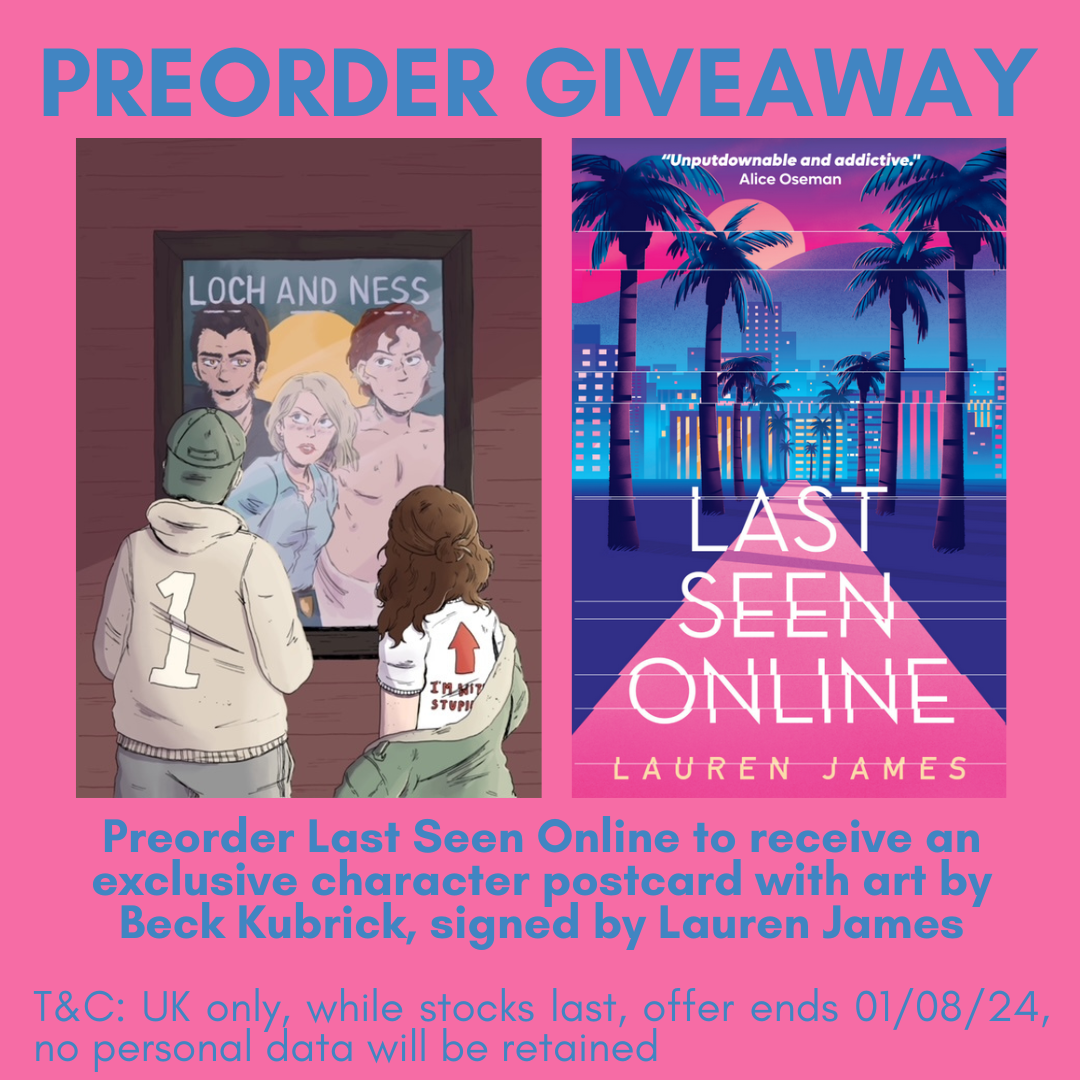
Fill out this form to receive a signed postcard of character art for Last Seen Online – open to anyone in the UK who preorders the book before 1st August 2024.

A contemporary YA murder mystery set in sun-drenched LA, for fans of Malibu Rising, We Were Liars and A Good Girl’s Guide to Murder.

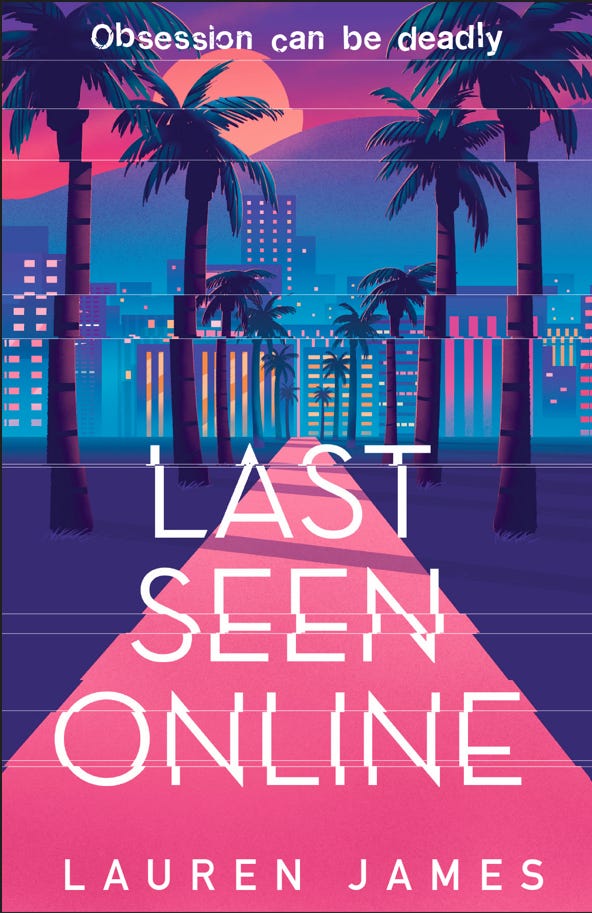
When Delilah meets Sawyer Saffitz (son of Anya Saffitz, aka Hollywood royalty), she becomes hooked on a decade-old scandal. In her quest for the truth, Delilah uncovers blogposts written by the mysterious “gottiewrites” and is soon caught up in a world of greed, fandom conspiracy theories … and murder. And the deeper Delilah digs, the more dangerous it becomes – because someone is willing to kill to hide the truth.

– Wren x

One month until Last Seen Online releases!

THE FINAL COPIES ARE HEREEEEE ✨✨✨

Which means you have LESS THAN THIRTY DAYS to get your preorders in and snag a goody bag of signed postcards and bookmarks! Go go go!


Goodreads

Amazon UK

Waterstones

Audible

Foyles

Netgalley (for book bloggers)

Last Seen Online is a murder mystery set in the iconic LA of teen movies like Clueless and Booksmart. Through glam hollywood parties, two teen detectives investigate an old murder case by the cast of a paranormal TV show. The OJ- style press frenzy that followed the death has almost been forgotten when our teen characters start stirring up the past.

This is a book for people who, like me, grew up with the internet. A lot of the murder clues in the story are discovered online, in a multimedia ‘blog’ format that mimics the obsessive fan culture circling celebrities’ lives. It interrogates how teenagers interact with digital culture. It’s for fans of A Good Girl’s Guide to Murder, Gone Girl and Knives Out, or anyone who obsesses over Taylor Swift’s dating life, reads Vanity Fair articles about Caroline Calloway and mainlines true crime podcasts. It’s for people who loves messy, toxic women – and unreliable narrators.

Like We Were Liars, I wanted to create a book that changes when you read it for the second time. This is for readers who don’t accept what they’re told at face value, and want stories that stay in the mind after reading, that they can discuss in the group chat. There’s not just one twist in this story – it’s twist upon twist, all the way down. Get ready to dig in. 🔍

I’ve always wanted to do a fake epigraph in a book!! Love how this turned out so much.

If you can’t wait, here are…

TEN OTHER BOOKS ABOUT FANDOM

MY TOP THREE REAL LIFE INTERNET DRAMAS (Instagram reel)

BOOK VIBES VIDEO (Instagram reel)

Please preorder if you can! Here’s that Waterstones link again. To quote Robin Sloan (whose new book Moonbound is out this week!!), here’s why preorders matter:

“I know you understand very well the power of the algorithm: the way attention compounds. What you might not understand is the relatively modest scale of book publishing success. It only requires sales in the single-digit thousands to pop a book onto the bestseller lists, which can become gateways to further success. The point of the preorder, then, is to focus a diffuse field of interest into the hot week of a book’s release.”

14th July – Coventry Queer Writers workshop at St Marys Guildhall (1-3pm)

7th August – Scream Queens panel at Waterstones Piccadilly

13th August – Chairing Alice Oseman at Edinburgh Book Festival

21st August – Future Hopes with LR Lam and Tola Okogwu at Edinburgh Book Festival Schools programme

21st August – Internet Sleuthing for Beginners at Edinburgh Book Festival Schools programme

1st Sept – True Crime Thrillers at Coventry Queer Writers workshop at St Marys Guildhall (1-3pm)

28th Oct – 2nd Nov – Writer in Residence at The Exchange, Birmingham – book a one-to-one writing advice session

17th Nov – YALC – Heart rate critical panel with Karen McManus, Ravena Guron and Finn Longman

Preorder Last Seen Online for goodies!

The novel for ‘An Unauthorized Fan Treatise’ is now up for preorder! If you’re in the UK, you can get a goody bag of signed merch by preordering. I’m so excited by all the love for this book already, so I wanted to do something special to count down to release day!

Fill out this form.

Follow me on Instagram for event news and other updates in the run-up to release day.

Art by Beck Kubrick

Here are some early reviews:

✨ Unputdownable stories, morally grey characters you can’t help but love, and twists you’ll never see coming: Lauren James’s books are addictive nosedives into everything from space exploration to parasocial obsession – Alice Oseman

✨ Insanely addictive. ― Laura Steven

✨ Last Seen Online is the perfect read for anyone who has ever fallen deep down an internet rabbit hole. A wild trip into the world of fandom, social media and true crime, you will NOT be able to put this book down. Lauren James has cemented her place as one of the most innovative writers in YA right now – I will read anything she writes. ― Laura Wood

✨ There’s nothing out there quite like LAST SEEN ONLINE; it is completely addictive and utterly genius and I loved every second of reading it – Sarah Underwood

✨ I inhaled this book. Utterly compelling, very clever, and a thrill ride of a read. My favorite Lauren James book yet. – Katherine Webber

✨ This book is a wild ride and I loved every minute of it. ― Sara Barnard

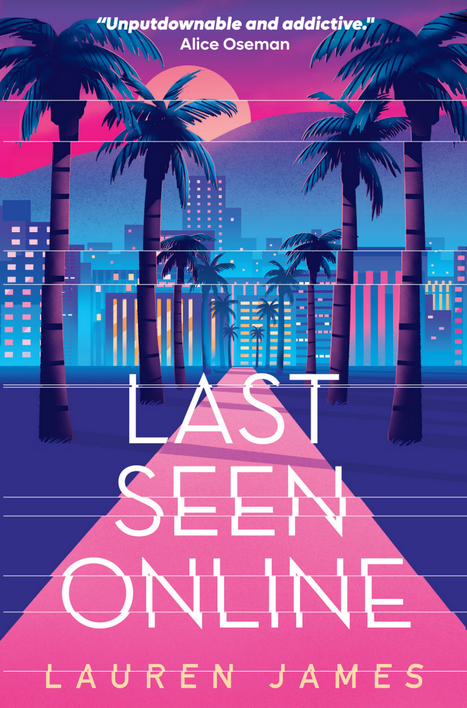
Cover art by Matt Saunders

A contemporary YA murder mystery set in sun-drenched LA, for fans of Malibu Rising, We Were Liars and A Good Girl’s Guide to Murder.

The novel of Lauren James’ hugely popular online story An Unauthorized Fan Treatise.

When Delilah meets Sawyer Saffitz (son of the Anya Saffitz, aka Hollywood royalty), she becomes hooked on a decade-old scandal. In her quest for the truth, Delilah uncovers blogposts written by the mysterious “gottiewrites” and is soon caught up in a world of greed, fandom conspiracy theories … and murder. And the deeper Delilah digs, the more dangerous it becomes – because someone is willing to kill to hide the truth.

Word count: 75,000 Aimed at ages 13+

Publishing in August 2024 by Walker Books in the UK and Australia

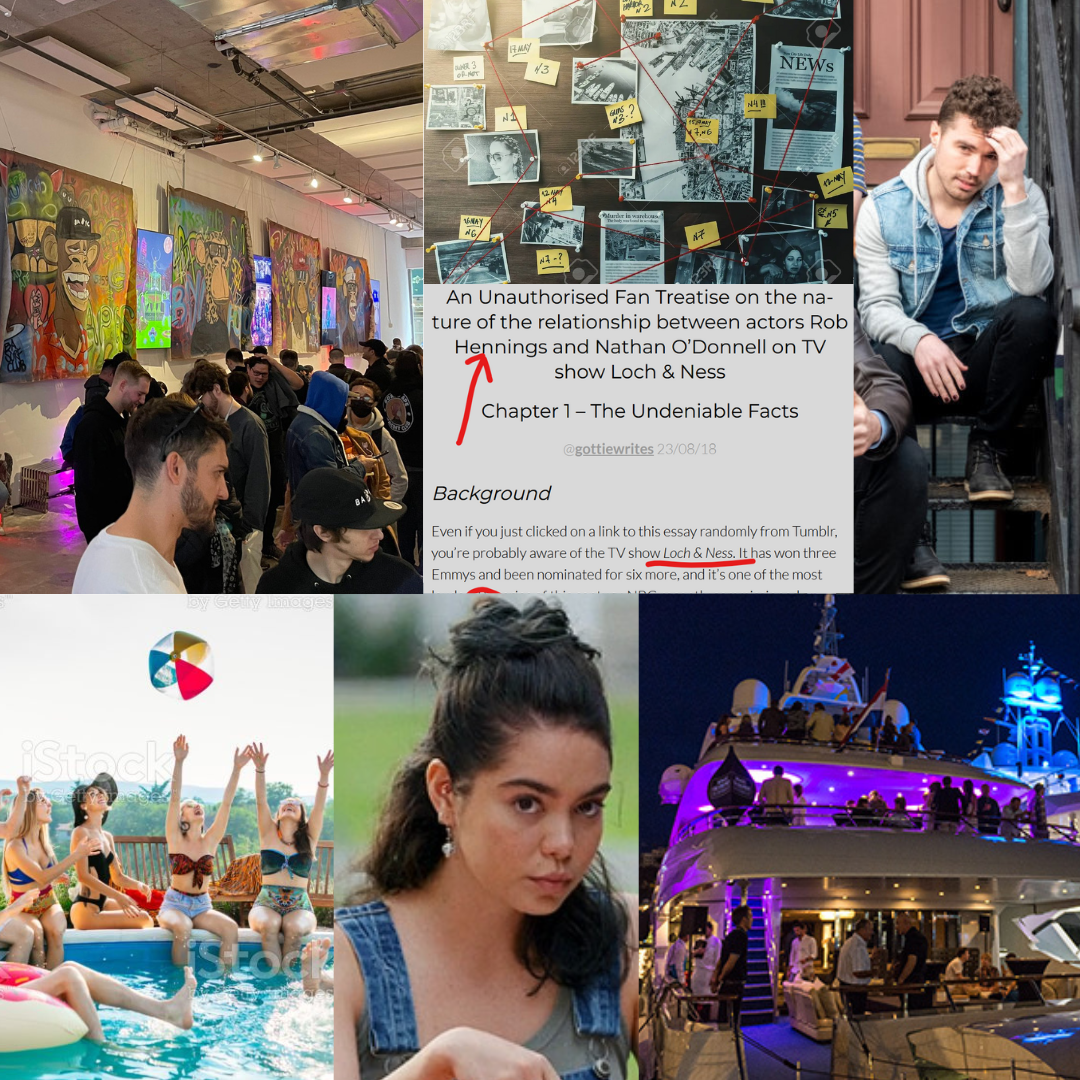
Moodboard

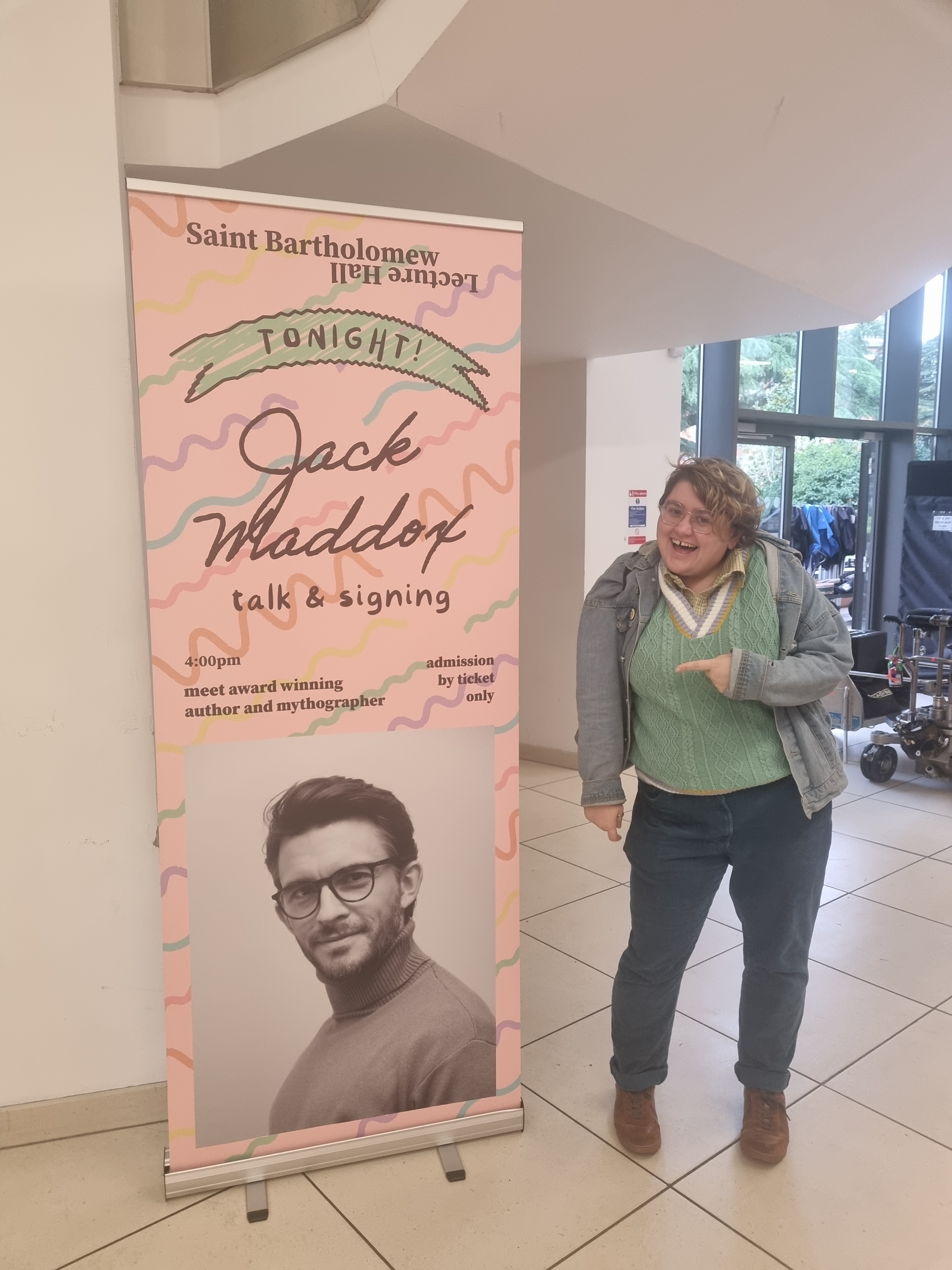
You might have also seen the news that a character created by me will be played by Jonathan Bailey in Season 3 of Heartstopper! In the writer’s room, we simply could not resist the sweetness of Charlie and Nick meeting a celeb crush. And this casting is so perfect that it’s like he stepped right off the page. Jonathan Bailey!!!!! My life goals have officially been smashed out of the park!!!! Could not have picked a better person to play the first of my characters to appear on-screen!! I got to visit set to watch him bring Mr Maddox to life, and you’re in for a treat. (We’ve changed his name to Jack, for dog-related reasons – Henry the pug got there first!) You can read a mini-comic about Jack Maddox here.

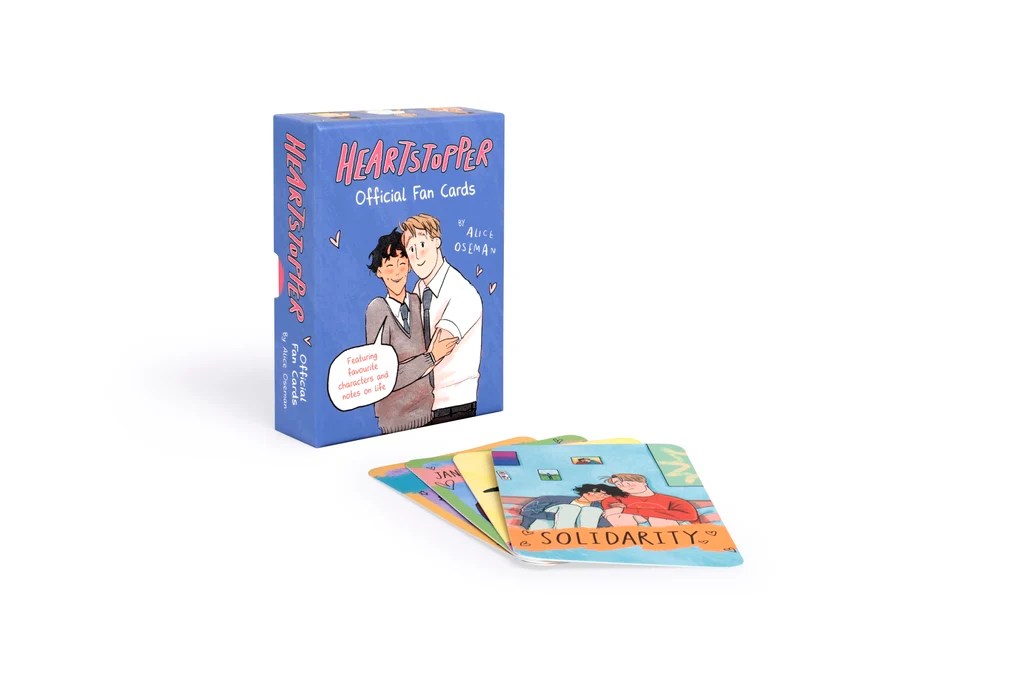
I’ve also written the text for the official Heartstopper character cards (September 2024). Featuring Alice Oseman’s artwork and behind-the-scenes details, you’ll find all your favourite characters in this official Heartstopper deck, as well as conversation cards to help you explore essential themes raised by the books and Netflix series – including Pride, Allyship, Gender and Identity.

My favourite part was deciding with Alice what each character’s love language is. 🤭

Fill out this form to receive a signed postcard of character art for Last Seen Online – open to anyone in the UK who preorders the book before 1st August 2024.

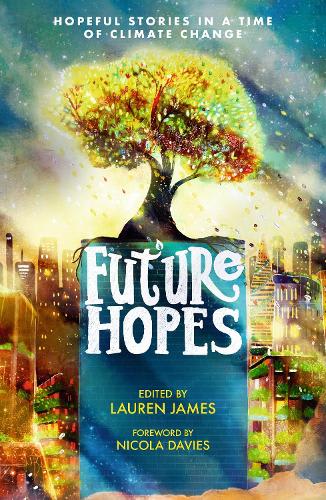
My new anthology is out now!

I’m super excited to announce that I have a new anthology coming out today! Future Hopes is suitable for ages 9-12 and features stories by Eli Brown, L. R. Lam, M. G. Leonard, Rebecca Lim, Oisín McGann, Tolá Okogwu, Neal and Brendan Shusterman, Louie Stowell and Bijal Vachharajani.

Amazon UK Waterstones Goodreads

Ajji walked past the tamarind tree, inviting Ara and Chhaya to do the same. “We never changed our methods. We still farm like my grandparents did. And my parents. Our trees – we worship them. They welcome birds and animals and us; they provide shade to the coffee plants. Even more important now that the summers are so hot and dry. We grow millets and coffee, vegetables and rice. All one big happy family.”

“It’s called intercropping,” Chhaya chimed in.

“Don’t show off, Chhaya!” Ajji clucked at her.

from The Drongo’s Call by Bijal Vachharajani

I’ve spent the last few years working hard to use my platform as a writer to promote climate action. After publishing several climate fiction books like Green Rising and The Deep-Sea Duke, I set up the Climate Fiction Writers League, a group of 200+ authors.

I advise people on how to write hopeful climate fiction, and have consulted with museums & production companies and worked with the Society of Authors’ Sustainability committee to represent the interests of British authors. I have also participated in the Hollywood Climate Summit Pitchfest and spoken at the Movers and Makers Conference at BBC Television Centre.

Why mention climate change in books? It is proven that hope and optimism will inspire more action than anything else. Fiction can inspire a huge amount of empathy, and that’s a force that we can use collectively to inspire change on a global level.

62% of people say they hear much more about the negative impacts of climate change than they do about progress towards reducing climate change, resulting in a perceived Solutions Gap.

A great example of something doing climate change discussion properly is the TV show Ted Lasso, which is about a football team in the UK. In an episode, it is discovered that the football team kit sponsor Dubai Air is owned by Cerithium Oil, who have refused to clean up oil spills in player Sam’s native Nigeria. He sets out to get the team to find a new sponsor.

The plot is uplifting and joyful, being focussed on Sam’s character growth as he stands up for his beliefs. It doesn’t shy away from politics, and shows the true ways to act involve finances, such as changing to a green bank/pensions scheme. It is a relatable, contemporary issue that people can connect to, and shows the connections between countries’ climate issues.

Helping writers weave in climate issues is done in the TV/Film industries through initiatives such as The Albert project, which shows production companies how to weave climate themes into their storytelling through ‘planet placement’. There is also the Good Energy Playbook and Climate Story Labs.

It needs to be more of a focus in publishing too, so I try to help authors see how they can be promoting activism in any type of novel. To create more of the kinds of hopeful stories I want to see, I pitched a ‘positive’ climate anthology for children to my publisher.

It’s especially important for children to see hopeful visions of the future world they are going to grow up in.

“Climate anxiety and dissatisfaction with government responses are widespread in children and young people in countries across the world and impact their daily functioning. A perceived failure by governments to respond to the climate crisis is associated with increased distress.” – The Lancet

With my publisher, I worked to create the Future Hopes anthology. Nine authors pose ingenious and thought-provoking solutions to the climate crisis in this anthology of climate fiction, such as skyscraper farms, insect food and guerilla gardening.

“Hundreds of people are going to be swimming in the sea,” I said, in my talking-to-nerds voice. “Including me. And there’s a big-assed squid out there. In the sea.”

“Squids don’t really have asses,” Dad replied.

from Eyeballs, Tentacles and Teeth by OisĂ­n McGann

The authors, who include Neal Schusterman and M. G. Leonard, were given a list of solutions believed to combat climate change most effectively, based on science research from Project Drawdown.

For example, green city planning such as rentable electric car-pooling, electric bike-sharing, secure cycle and pedestrian lanes, free buses, free insulation upgrades. The importance of rewilding urban areas – roadside fruit and nut orchards, verge allotments, vertical skyscraper farms, rooftop gardens for cooling. Types of sustainable agriculture – tree alleyways in crop fields, perennial crops, free-roaming livestock, no tillage, no fertilizers.

I was buzzing. I took a large wooden spoon from the cutlery drawer and waved it like a magic wand. “Let the mixing begin!”

I dumped a heap of flour into the bowl. I wasn’t sure how much was needed, so I added a bit more. A puff of flour wafted up my nostrils, making me sneeze into the mixture.

“Snot is sustainable!” I shrugged.

from Food of the Future by M. G. Leonard

Once the first drafts were written, I then helped the writers to increase the climate content. This included suggestions to provide more of the characters’ thoughts on the future world they live in.

For example, intergenerational conversations can give a lot of insights – what was different when the characters’ parents/grandparents were growing up? Do young characters remember how the world used to be? What changes do they appreciate and what goes unnoticed?

Other advice was to describe the setting more – this naturally leads into opportunities to mention things that are different in infrastructure from our world.

I encouraged the writers to use more dialogue where characters are actively complaining about something about the world they live in, or trying to decide how to fix a problem, since this is a more natural way to give information about the world than in exposition in a chunky paragraph.

It’s important to make sure the world sends the right message – it doesn’t have to be a positive world, but it shouldn’t leave readers feeling guilty about their carbon footprints.

We want to inspire people, not panic them. Writers should use anger and frustration to drive writing, but not write an angry book – people don’t want to read that.

Try to convey the seriousness of the situation without making it seem futile. Show that climate change is solvable. It’s not imminent and long-term, but it is happening right now.

The messaging needs to avoid blaming individuals for their emissions. People won’t engage if they’re just going to be made to feel guilty about not recycling! There is also a lot of space for positivity connected to nature.  

Stetson was doing his jackhammering, moving at a nice clip, when he suddenly broke through to another cavern – one that wasn’t on the map [of the landfill]. Warm, fetid air spilled out. It was awful, smelling so strongly of ammonia it hurt Zak’s eyes. He – all of them – immediately put on their gas masks.

A flood of furry creatures pouring out of the hole. Dozens of them.

“Oh no! We hit a Dump Devil nest!”

from Dump Devil by Neal & Brendan Shusterman

I want to encourage writers try to show that industry, economics and political factors are to blame. Call out the companies who have been specifically working to slow climate activism.

Future Hopes is an uplifting reading experience. I hope you enjoy it as much as I enjoyed editing it.

Amazon UK

Waterstones

Goodreads