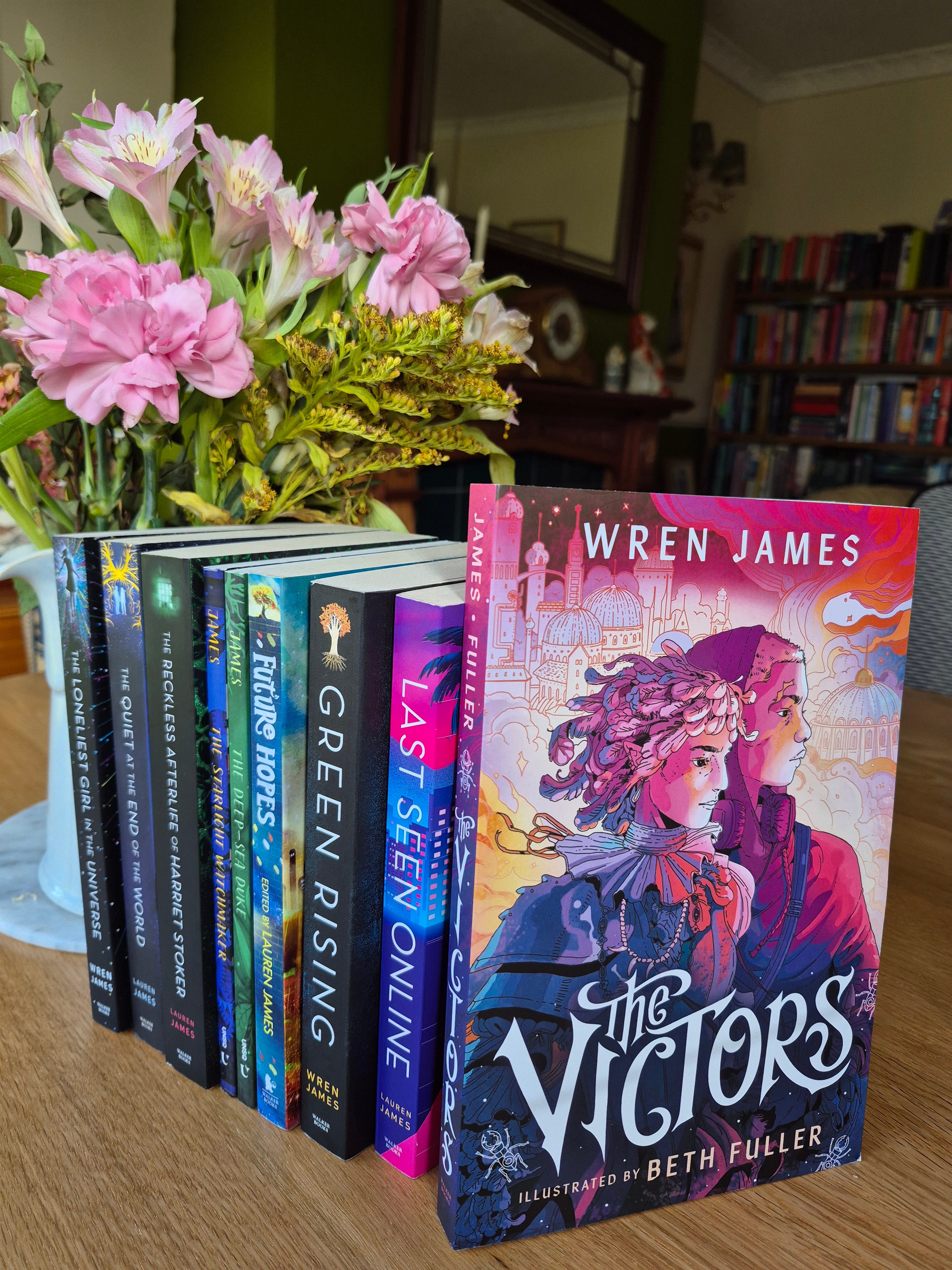
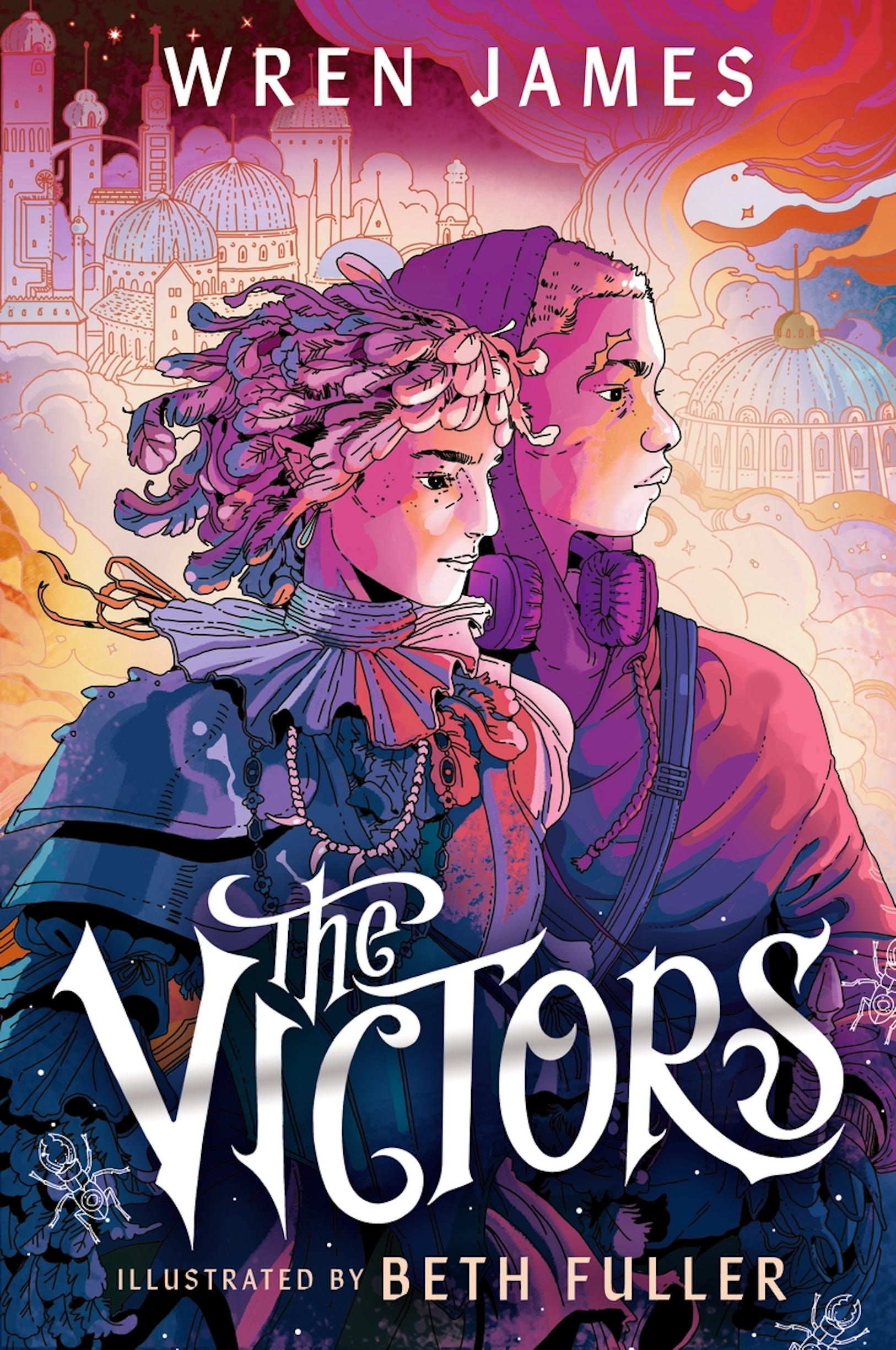
Hello all! I hope you’re enjoying the (slightly) warmer spring weather this week! I have a whole bundle of exciting news to share, starting with – the finished copies of The Victors arrived!!
Isn’t it stunning? If you are a book blogger, you can now request it on Netgalley. I believe early copies will be going out very soon too (eek!)
I will be taking part in a whole flood of events to promote the release in May, including – very excitingly – Hay Festival! It’s been on my bucket list to do this festival ever since I was last invited in 2020 (you can guess what happened to that event).
I’m going to be holding an interactive workshop for ages 14+ where I talk about creating comics, from script work to artist pitches, and we have a go at making our own panelled short story. Please come along!
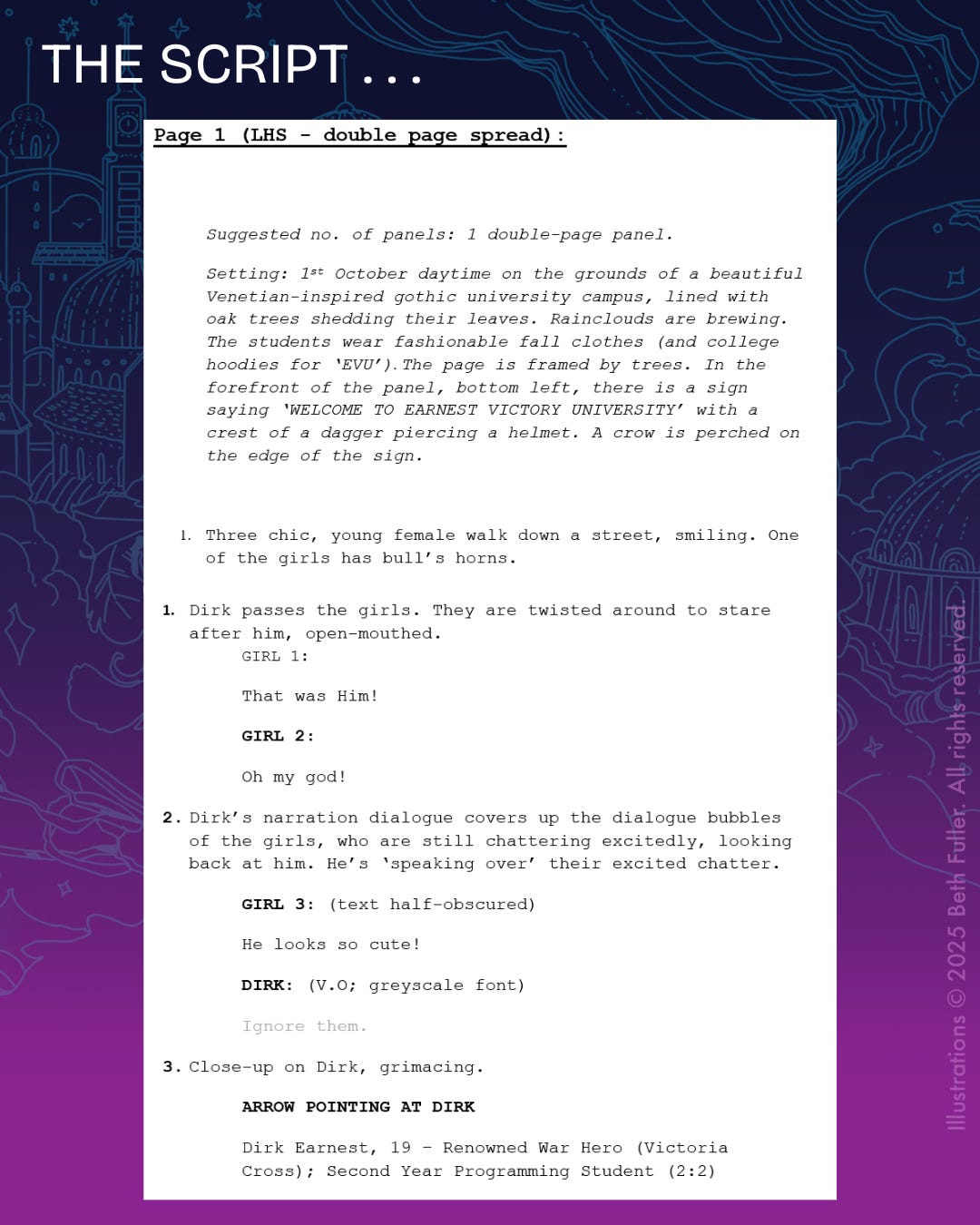
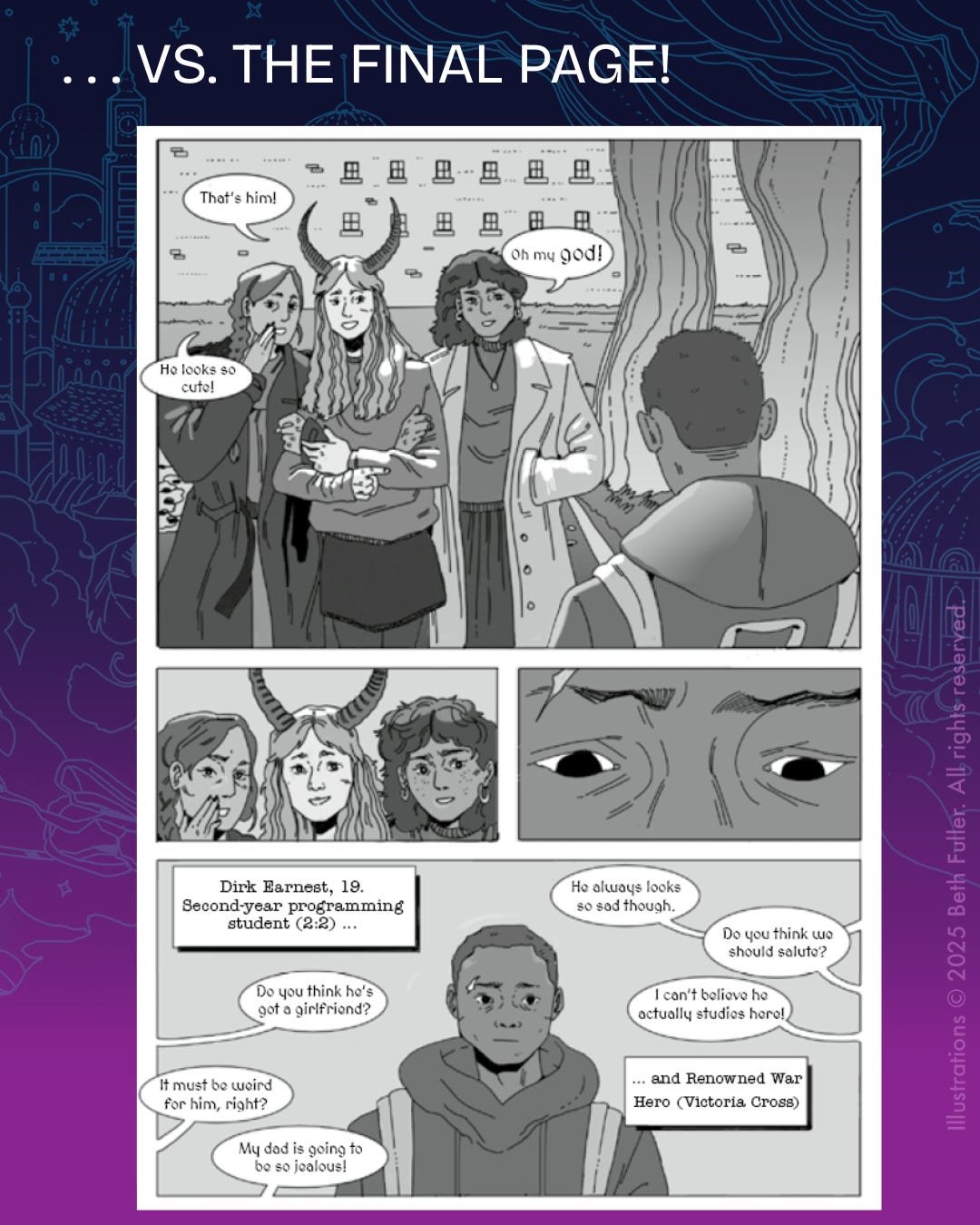
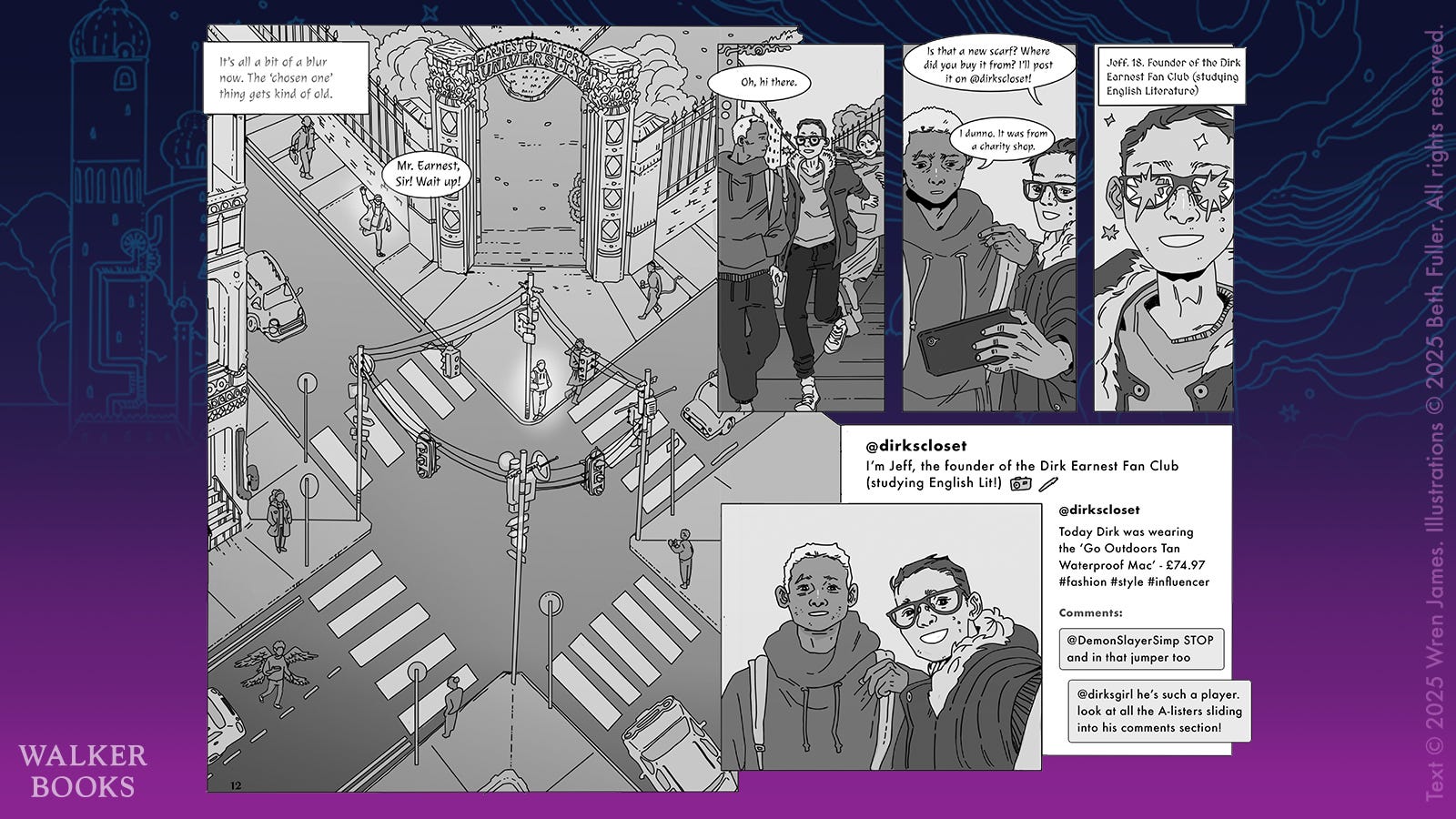
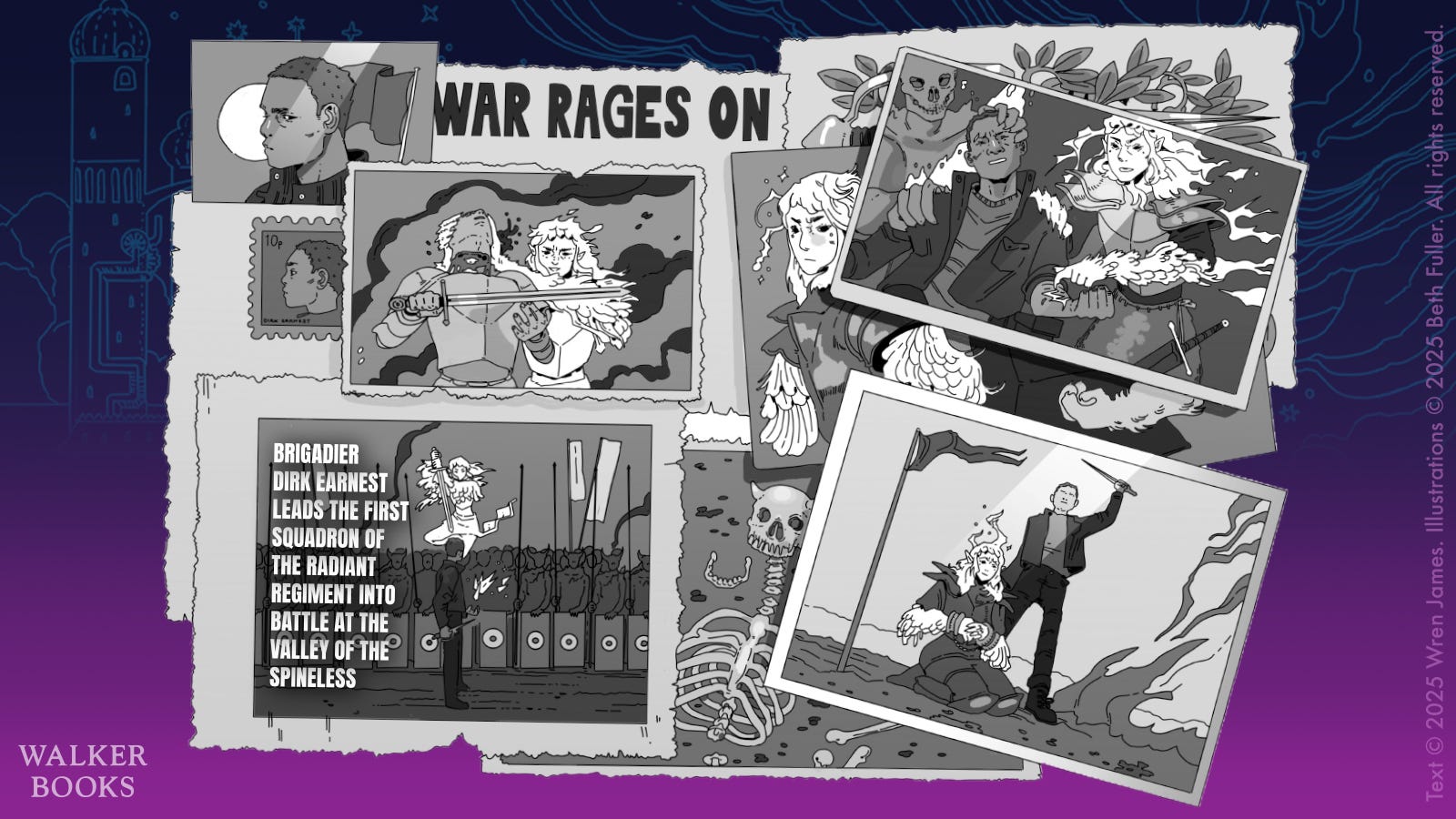
We will be talking about things like, how to take a script from this . . .
. . . to this!
The Victors was a May Highlight in The Bookseller, which called it “A cool and witty graphic novel”. It is about the mortifying ordeal of being known, the flawed myth of the ‘chosen one’ hero, the loneliness of fame, students doing anything to avoid their uni coursework, the choice between annoying housemates or zero socialisation and, most importantly, avoiding your issues using magic.
I hope that you enjoy it if you manage to get hold of an early copy – I LOVE this book so much, I’m so immensely proud of what Beth and the whole team at Walker Books have created with these characters. I can’t wait to spend all summer shouting about it from the rooftops!!
-wren x
If you want to meet me, here are a few events I’m going to be appearing at:
PORTSMOUTH//3rdMay – Portsmouth Comic Con – tickets here
LONDON//23rd May – Fandom Panel at MCM Comic Con – day tickets here
HAY-ON-WYE//27th May – Making Comics workshop, Hay Festival – tickets here
WINCHESTER//5th June – School Library Association (SLA) Annual Conference – University of Winchester, tickets
With only 100 days until release, The Victors is going to print this week! I have butterflies!!
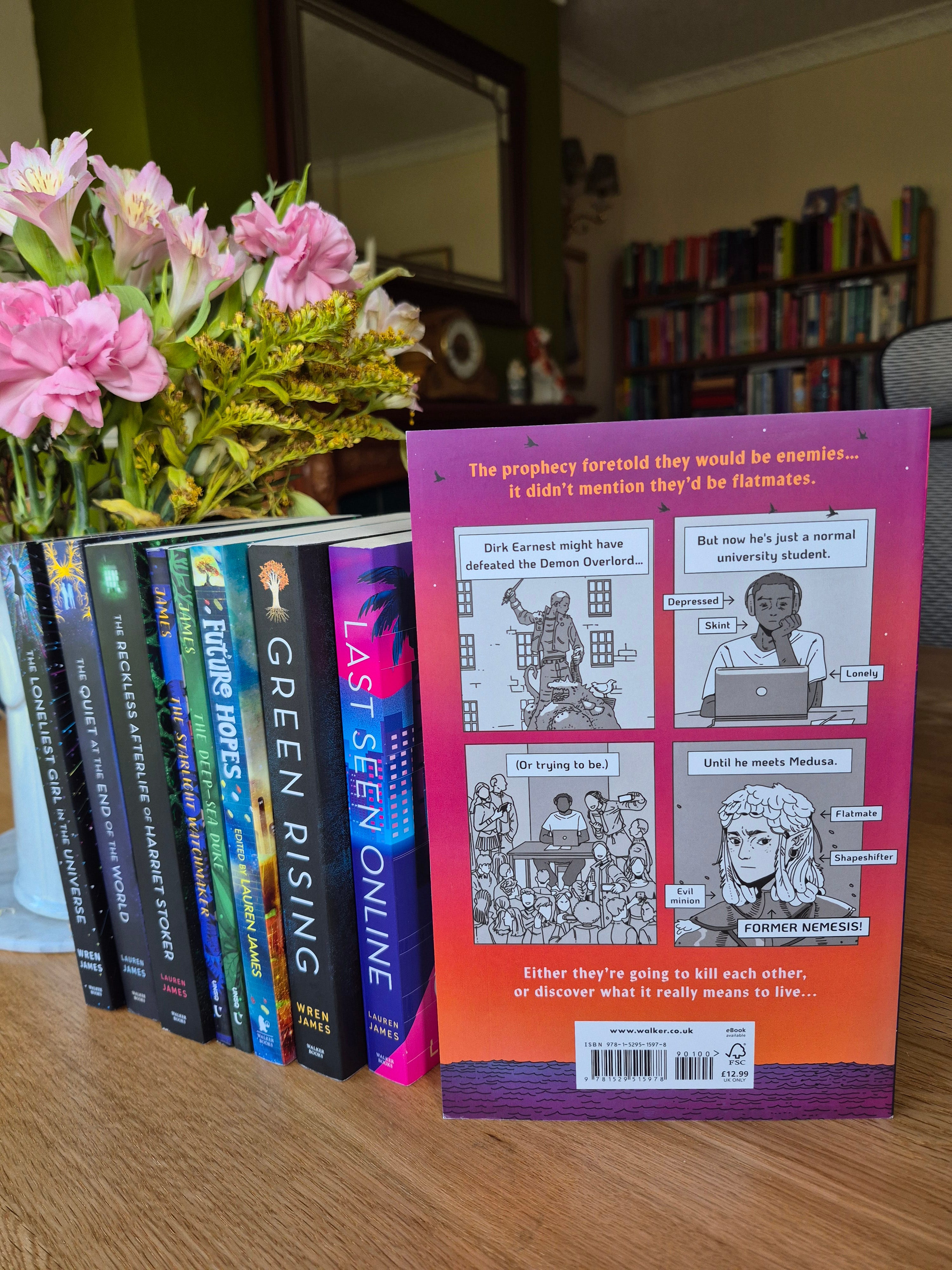
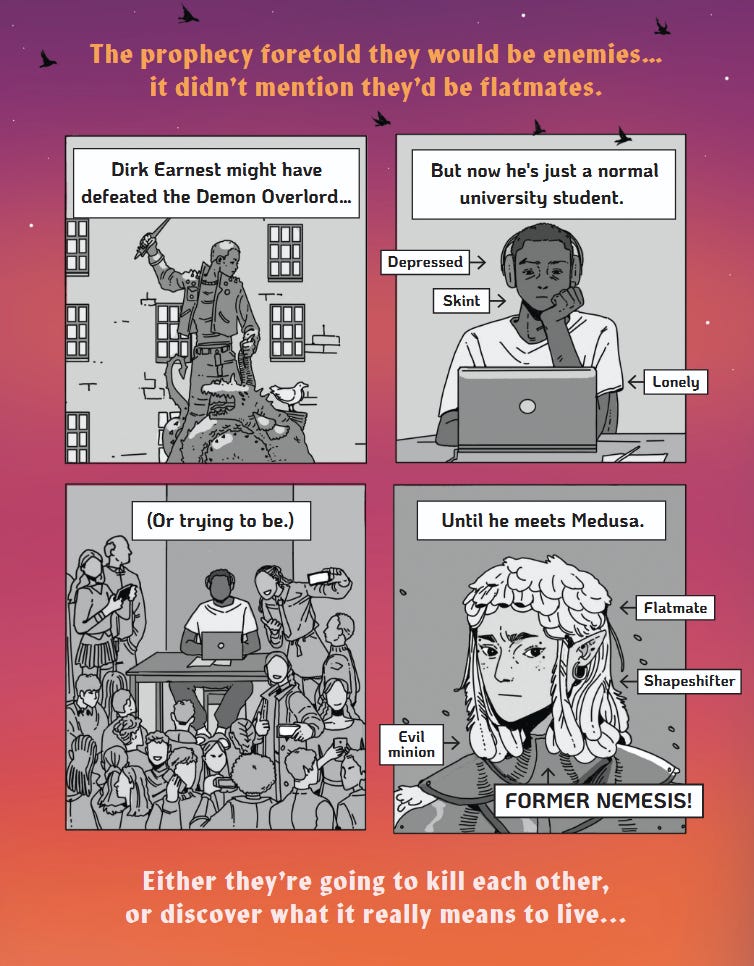
I wanted to share this amazing back cover art by Beth Fuller, designed by Walker Books. Such a fun way to show readers what’s inside!
About the book:
Wren James – author is a reader-supported publication. To receive new posts and support my work, consider becoming a free or paid subscriber.
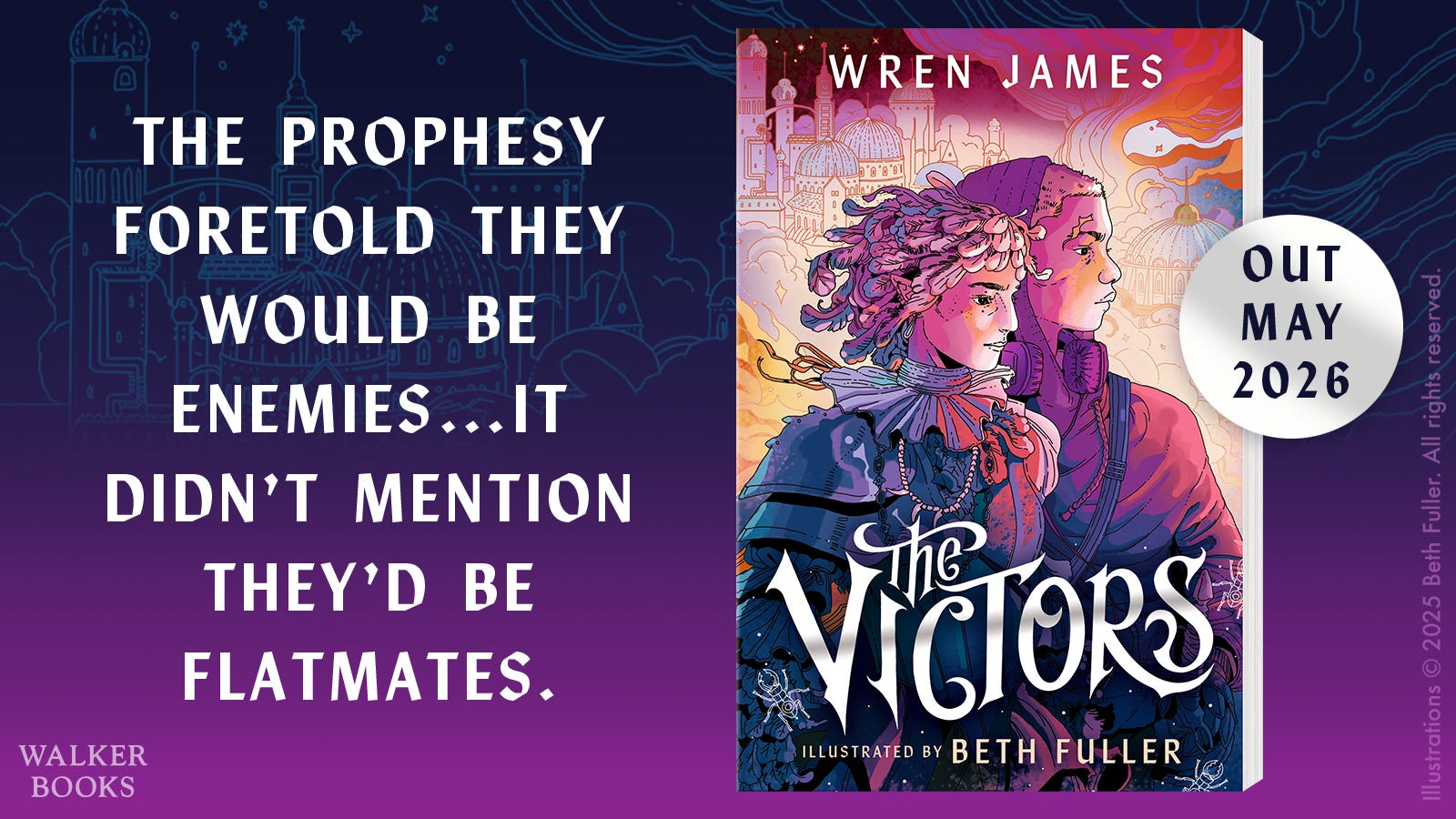
The prophecy foretold they would be enemies … it didn’t mention they’d be flatmates.
At fifteen, Dirk Earnest led the world to victory in a savage battle against the evil overlord Rárog and his demon horde. Now he’s just a normal university student – or he’s trying to be. As the poster boy for fighting evil, Dirk has many adoring fans who follow his every move, but he’s crushingly lonely.
Cue his new housemate, Medusa de la Tempête: art student, former demon soldier, war criminal … and Dirk’s nemesis.
With Dirk haunted by the ghosts of his past, and Medusa’s desire for human connection battling her demonic nature, the two are about to discover that the best friend you need most might be your (ex) mortal enemy.
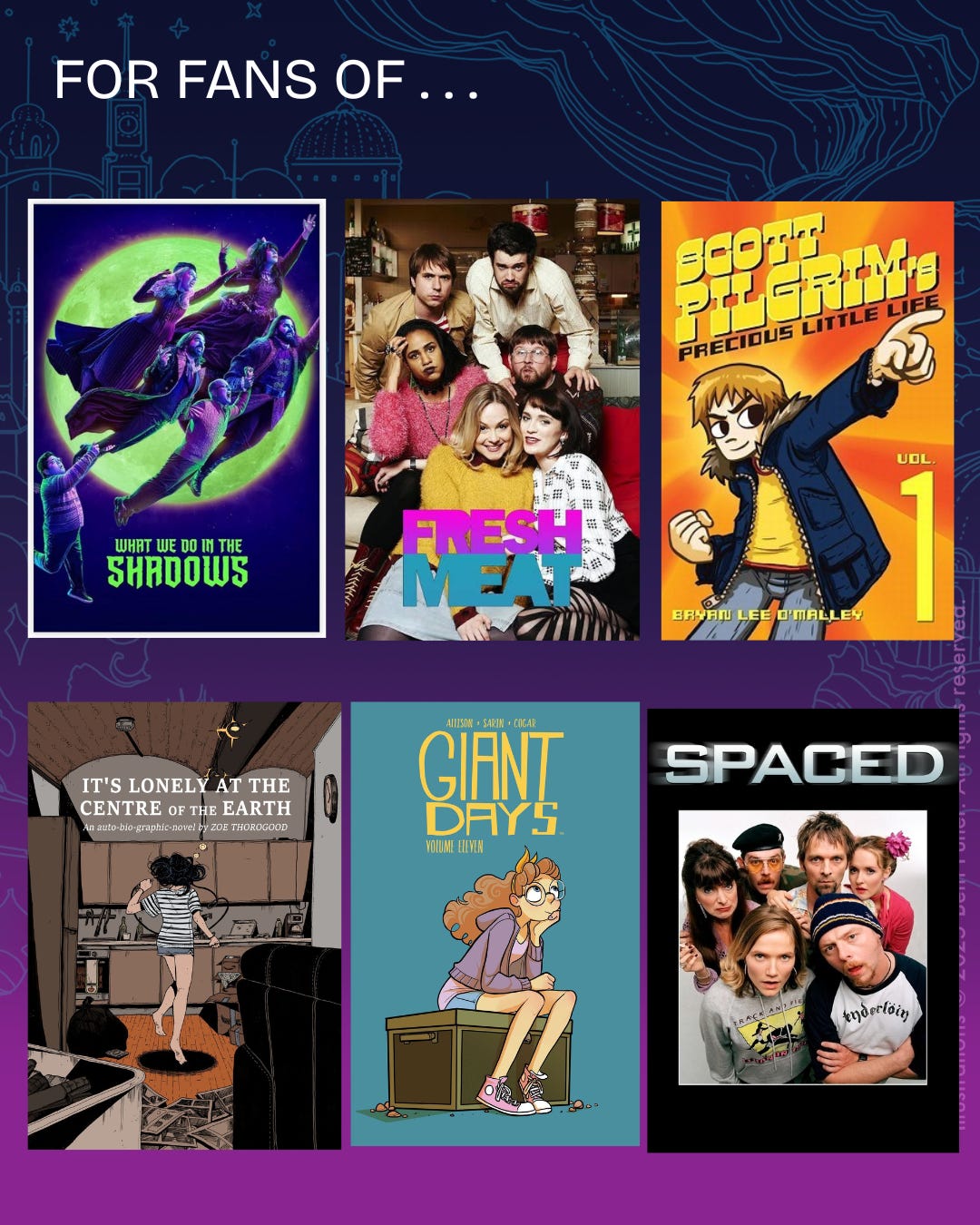
I also shared some of my foundational graphic novels when writing The Victors script in an Instagram video.
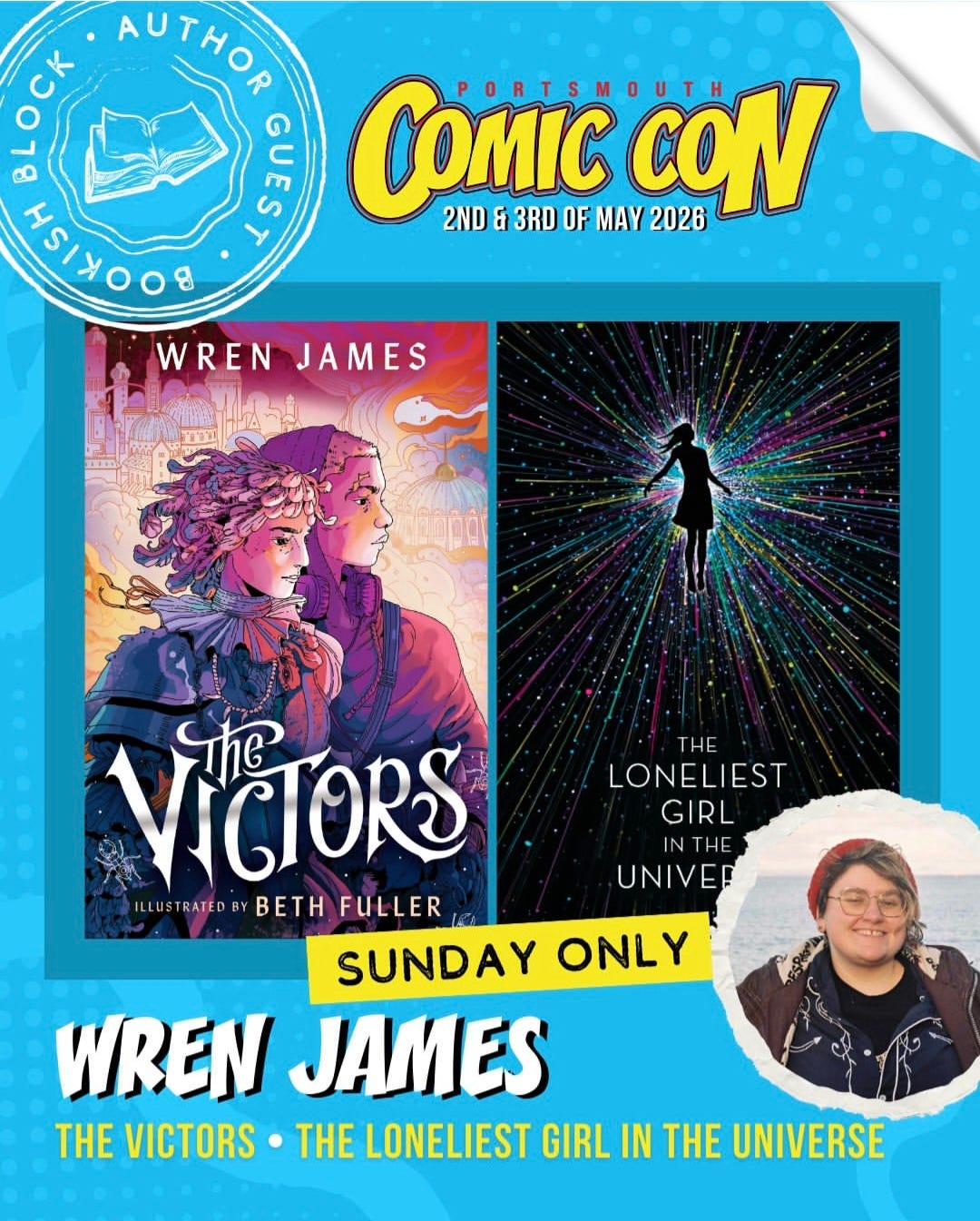
I am going to be appearing at Portsmouth Comic Con on 3rd May (release week for The Victors!) I’m very excited as Maggie Stiefvater, one of my favourite authors, is also going to be appearing at the event. Get tickets here.
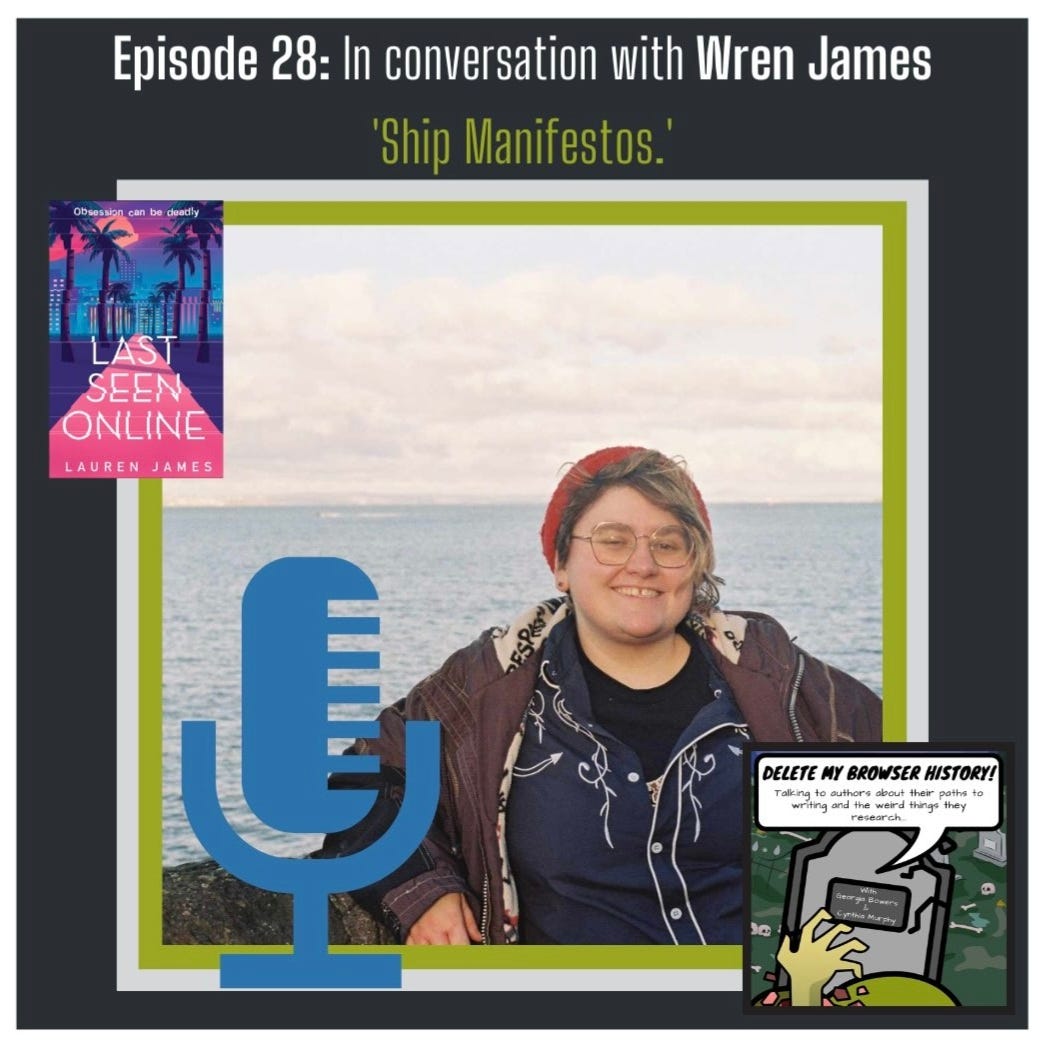
I talk about forgotten fandom dramas with authors Cynthia Murphy and Georgia Bowers on the podcast Delete My Browser History.
I also joined a roundtable on climate fiction on author Michelle Hoover’s podcast The 7am Novelist.
And last but not least (it’s been a busy start to 2026!), I also wrote an essay for the 25th issue of the Solarpunk Magazine, about the process of making my journal The Climate-Conscious Writers Handbook.
I hope the new year is treating you all well so far!
I am SO excited to be sharing the delicious cover of my debut graphic novelThe Victors, illustrated by Beth Fuller and publishing in the UK and Australia with Walker Books on 7th May (175 days!)
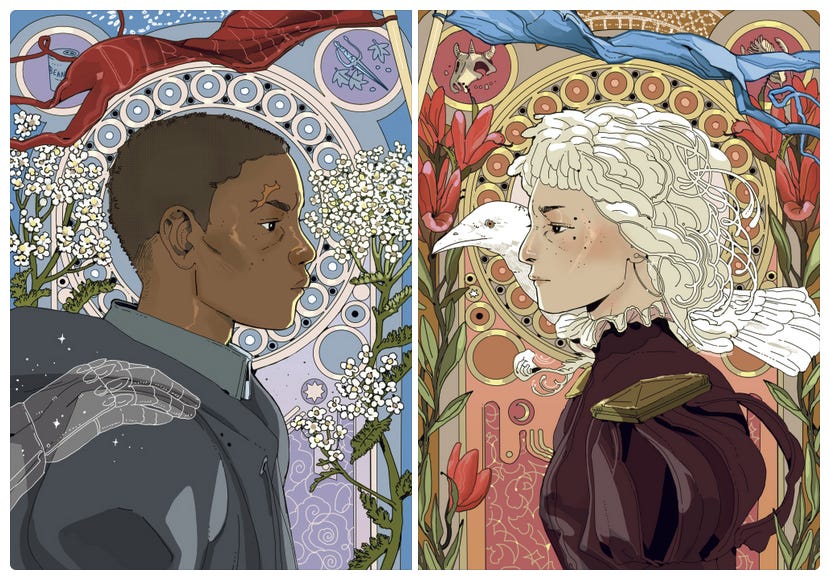
I adore this cover so much, from the bi flag colours to the intricate cityscape details – and the little beetles! The Victors is all about the contrasts between Medusa’s medieval, demonic style of magic compared to Dirk’s solidly modern style, and I love how their outfits show that difference. Medusa’s armour is so cool! And her hair! Their far-off gazes really convey the past battles that still haunt them.
I hope you love the cover too! As an extra treat, here are some early pages from the graphic novel:
Beth Fuller says: “It’s been a fantastic ride collaborating with Wren and the team at Walker Books – I’ve fallen in love with this fun, quirky and sincere story of unlikely friendship, life after saving the world, and the perils of putting chainmail in the washing machine.”
And our editor Non Pratt adds: “The appetite for graphic novels among young readers is only growing and it’s a real thrill to be able to meet those readers as they turn to YA with something that brings the zeitgeisty wit and insight of John Allison’s Giant Days to an intricately conceived Cassandra Clare-esque world. The Victors adds a new perspective to slice-of-life fantasy genre that’s already so popular among crossover audiences and I can’t wait for more readers to discover the formidable combination of Wren’s imagination and Beth’s artistic talent.”
Wren James is the Carnegie-longlisted British author of many Young Adult novels as ‘Lauren James’, including Last Seen Online, Green Rising and The Next Together. They are a RLF Royal Fellow and the story consultant on Netflix’s Heartstopper (Seasons 2 and 3). They like writing stories where queer characters get to be messy, toxic and ‘bad representation’. Their bestselling title, The Loneliest Girl in the Universe is being adapted by the screen by Amazon MGM Studios.
Beth Fuller is an artist from Dublin, Ireland. Accustomed to getting in trouble for drawing in school, she then decided to subvert that by going to art college, graduating from DJCAD with a degree in illustration in 2022. Now based in Copenhagen, she draws anything from concept art to comics, and is interested in art for video games and animation. She can usually be found somewhere between the wine and biscuit aisles of her local supermarket or taking bad black and white film photographs of her friends.
I’ve recently been asked to participate in quite a few academic interviews about my work, so I wanted to compile a list of all the academic publications that reference my climate fiction activism. These papers discuss Green Rising, The Quiet at the End of the World, The Loneliest Girl in the Universe, An Unauthorised Fan Treatise, The Next Together and The Last Beginning.
If you know of a paper which you’d like me to add to this resource, email me: wrenjameswriter@gmail.com
Following the ‘material turn’ in the humanities, this book brings perspectives from science and ecology into dialogue with children’s fiction written and published in the UK and the USA in the 21st century. It develops the concept of ‘entanglement’, which originated in 20th century quantum physics but has been applied to cultural critique, through a reading of Fantastika literature. [….]
Through the science fictional conceit of horizontal gene transfer and human-vegetal symbiosis, the young people – known as greenfingers in the world of the novel – embody the slogan so often exclaimed by young climate activists: ‘We are nature defending itself’. While many greenfingers engage in guerilla rewilding tactics, others are co-opted by corperations seeking to capitalize on the new ‘technology’, or else have their rights curtailed by hastily written laws. The conflict over whether greenfingers will serve or disrupt the status quo centres on three young people in Green Rising. Despite their different social backgrounds, they come together to lead a movement against corporate environmental distruction, mobilising the greenfingers to rewild vast areas of the globe and reverse GHG emissions. In equating young activism with the propagation of vegetal life itself, they imagine the continuity between the materiality of plant life and human culture and politics. […]
The relationships formed in the novel are queer in multiple ways, resisting dominant constructions of the natural world as white and heterosexual as vegetal-human connections allow young people to explore new gender and sexual identities in Green Rising.
Narrative identity, or the construction of a coherent life story to shape a sense of self, is a crucial aspect of identity formation. Narrative identity is impacted by the prevailing cultural narratives during the period of adolescence. This article, drawing on theory from literary studies and sociology, explores the impact of cultural narratives of environmental crisis and destruction on an emerging narrative identity in adolescents as represented in young adult literature. The selected novels—Dry by Neal and Jarrod Shusterman, Green Rising by Lauren James, and Snowflake, AZ by Marcus Sedgwick—examine their protagonists’ agency and transformational potential. They foreground collective agency and human–nonhuman assemblages as possible responses to environmental crisis. Although two novels (Dry, Green Rising) affirm that narratives of environmental destruction engage the transformational potential of adolescents for society, the third novel (Snowflake, AZ) complicates this image and questions whether the impact of narratives of environmental crisis could be too overwhelming for adolescents to bear. The article concludes that the young adolescent protagonists adapt their narrative identity in response to environmental destruction.
The Climate Fiction Writers League founded by former physicist Wren James (author of the 2021 YA ecofiction, Green Rising, and others) eschew a precise definition of ‘Climate Fiction’, but emphasise the need to create positive, empowering narratives to inspire readers: The climate debate needs to move beyond fear at rising sea levels and pollution towards a more solutions-based view on climate change. I feel strongly that we should not be telling a generation of children that their future is unavoidably broken. Change is possible. The climate crisis is an urgent, yet utterly solvable issue. Our fiction should reflect that.
An alternative take on the castaway is offered in Lauren James’s young- adult novel The Quiet at the End of the World (2019). This concerns two teenagers, Lowrie Mount- Batten Windsor and Shen Zhang, the last humans born from frozen ova seventy years after the entire human population was sterilised by a pandemic in the early 2020s. They live in an otherwise abandoned and collapsing London, cared for by a community of 300 septuagenarians who are the last people on earth. As the novel progresses, the pair discover the social media account of a woman who lived through the pandemic and realise that their elders are not human but are in fact [….]
This openheartedness chimes with the novel’s support of trans rights, which it quietly develops in a parallel narrative of the last generation of humans, documented through a salvaged hard drive containing old social media accounts. The blurring of gender binaries is itself a critical element of certain contemporary end- of- the- world fictions.
[….]
A curious addition to the growing corpus of fungal fictions is Lauren James’s Green Rising (2021). This young- adult novel is set in an alternative universe where children and teenagers start to magically grow plants from their skin. One of the protagonists, a working- class English- Bangladeshi boy named Theo, finds that he can grow mushrooms instead, connecting to a mycelial network that links all young people who have developed this ‘greenfingers’ power. It is essentially a wistful eco- daydream, in which a group of these superheroes band together to take on an evil oil company and in the process restore the planet’s broken eco- systems. A melancholy utopia, attainable only by magic. Significantly, though, the novel is driven by an angry critique of the so- called ‘longtermist’ philosophy favoured by contemporary billionaires and draws a line in the sand that embraces fungal systems that elsewhere, in more serious grown-up literature, are often the cause for terror.
One standout example of climate fiction, this thesis will be focusing on the most, that resonates with both the young and the young-at-heart is Green Rising (2021) by Lauren James, because not only it explores the dire consequences of global warming but also offers a vision of hope, showing how young people, those most impacted by the changes happening today, can lead the charge in creating solutions.
Climate fiction has the ability to translate complex environmental issues into compelling, human-centered stories, which can resonate better with the audience, especially the younger readers, who sometimes may not fully understand the scientific researches regarding these issues. That is why, the importance of cli-fi is much bigger than can be expected. Green Rising is particularly effective in this regard, using its fictional framework to illustrate the real-world importance of climate action. As the world faces increasing environmental degradation, youth-led movements like Fridays for Future have shown that the younger generation is not only most affected by climate change but also the most vocal in demanding change. Through books like Green Rising, young people can see themselves as important individuals with the power to shape the future through collective action, imagination, and determination.
Green Rising is about politics, standing up for what individuals believe in and taking direct action. This fiction was inspired by movements like Extinction Rebellion, a movement that aims to mobilise large numbers of people, to work with other climate and environmental groups, achieve a wide spectrum of support across society, and to persuade governments to act justly on the climate and ecological emergency. With this in mind, Lauren James presents a world where plants have evolved to absorb carbon from the atmosphere, providing a way to reverse the damage of climate change. This premise, while fictional, taps into the real world possibilities of bioengineering and reforestation as means of mitigating climate damage. The story also presents situations similar to the present world, such as the oil drilling rigs in the North Sea, which contribute greatly to the water pollution as the following example illustrates: ‘The energy company had built a new oil drilling rig right in the middle of the North Sea where Theo’s dad normally fished. The hulking orange platform damned bilge water into the ocean as they proceeded oil, covering the seabed in chemicals and dirty sediment.’
In her recent feminist science-fiction novel The Loneliest Girl in the Universe (2017), Lauren James tackles topics such as the impact of the supremacy of technology in the realm of human communication in Transmodernity and space travel, as well as the transmissibility of digital information and what Rodríguez Magda has termed “static connectivity” (2004 and 2011)—which refers to new forms of relation and online interactions in which individuals relate to others without completely leaving their isolation. Furthermore, the novel’s innovative generic features—a space opera combining emails, fan fiction, diary entries as well as more traditional narration—invite readers to reflect both on the nature of delayed and instantaneous communication, as well as on the subjective nature of space-time in interstellar space travel, which inevitably transgresses our conventional spatial and temporal humanly limits. The homodiegetic narrator and focaliser of the story, a teenage girl, is traveling beyond humanly limits, as she is exploring a reality never experienced by any human being before, which leaves her with a deep feeling of disconnection and loneliness, as suggested by the novel’s title. As the analysis of the novel will show, despite universal longing for communication and connection, truth and real communication can be obscured even more by the mediation of technology, as it is not immune to the workings of power relationships. As the story reveals, it becomes clear that instantaneity, or the transmissibility of information in real time, is not the outcome of the creation of an ideal and global democratic network in which all the parts have equal power. Moreover, vulnerability is one of the key characteristics of the transmodern human who is trying to find a new planet in which future life could thrive. In short, James’s feminist approach to all these topics reveals that “static connectivity” cannot overlook the vulnerability present in all forms of relationality, and that gender relationships and equality are still issues to be considered and to be fought for.
The human and the nonhuman are deeply and essentially intertwined.
This intertwinement is an underlying theme in The Quiet at the End of the World, serving as a catalyst for the novel’s primary focus on, and exploration of, the relationship between humans and technology that will be discussed in this section. James begins her novel with a phone call between Maya Waverley and the ambulance service about her mother’s unstoppable nosebleed, and with the service’s operator hanging up on her, for this person, too, starts having an uncontrollable nosebleed. It turns out that the nosebleed, which soon becomes widespread just like the pathogen in The Girl with All the Gifts, is a symptom of a virus of unknown origin. If Swanson et al. see figures of monsters as signifying the wonders of symbiosis, in the 2020 STRP Festival that centres around the socio-biological implications of Covid-19, Timothy Morton (2020) titles their essay ‘Thank Virus for Symbiosis.’ In another context, they remark that viruses show us the porosity of lifeforms, how these lifeforms ‘are made of other lifeforms’ (Morton 2013: 29). The mention of the unidentifiable virus in James’s text, then, calls attention to the symbiotic relationship between the human and the nonhuman.
Experiencing a nosebleed herself, Maya shares on her social media that one day, she cannot ‘stop showering and showering, trying to get the virus off [her]’: ‘I know that’s not how it works, but it helps’ (James 2019: 53). Yet this admission contradicts what she puts immediately after: I ‘scrub at my face until it feels tender, gargle mouthfuls of soap, and spit it out in the drain. I still feel infected, like the virus is all over me’ (James 2019: 53). Maya’s attempt to separate her (the human) from the virus (the nonhuman) fails because such a separation is impossible. As discussed above, humans are constituted by a host of bacteria and nonhuman DNA without which they cannot survive. Maya cannot wash off the nonhuman that is ‘all over [her],’ because it is part of her, in other words, it is what makes her human. Like any other lifeform, she is perforated and vulnerable to disease and infection because she is directly connected to beings and elements that are not uniquely hers.
This study explores the Young Adult (YA) genre focusing on the novels of Lauren James. Young Adult novels are often dismissed as being a lesser form of literature, the genre typically ranked lower by critics and the general public as less serious fiction. This study aspires to explore the complex issues that the genre creates a platform for, discussing the progressive nature of the narrative that inspires social and moral values in young readers.
The exploration of these ideas will focus on James novels; The Next Together, The Last Beginning, The Loneliest Girl in the Universe and The Quiet at the End of the World. The young adult genre has unique place in literature, exploring themes that are progressive and crucial for the development of moral and social beliefs in their readership. Using Lauren James’ novels as a case study, this dissertation aspires to provide evidence of the complexity of ideas explored within the genre.
In addition chapter one will focus on the significance of women in scientific roles in James’ novels, providing examples of female characters who serve as standout role models for young readers, striving to achieve the goal of normalising women in roles traditionally occupied by men.
In line with her feminist ideals, subverting gender stereotypes is a continuous feature of James novels, further evidence which will be discussed in relationship to James’ thoughts on writing for young women. To accompany this discussion, chapter one will feature thoughts from secondary sources in order to provide a wider post-feminist context, supported by sources from Rosalind Gill and Natasha Walter; providing further insight into the significance of a feminist identity in modern society.
Chapter two will explore YA fiction and the LGBTQ+ community, citing critics including Michael Cart, exploring YA fiction and sexuality, introducing a symbiotic pairing that highlights the importance of the YA genre for LGBTQ+ readers. This chapter will argue for the importance of inclusion and diversity in YA novels specifically, tracing the change of attitudes and representation of sexuality. I will provide evidence of James’ strong beliefs on the subject of inclusion and discuss the progressive nature of her novels.
This paper will propose a close reading of Lauren James’s recent YA novel Green Rising (2021), a timing story centered around a climate-change activist (Gabrielle), who develops the ability to grow plants from her skin; her story is entangled with that of other teenagers around the world who develop this strange new “Greenfingers” power. My analysis will explore how emotions (personal experiences) and affects (the forces that precede, produce, and inform such experiences) function in environmentally oriented texts for young adults. I will use affective ecocriticism to evaluate the literary structures and devices through which such narratives convey environmental understanding and become engines of affect, stressing that emotional responses are evoked as readers empathize with characters, while also inhabiting emotionally the storyworlds that surround such characters. A particular attention will be devoted to the entanglement between negative/painful emotions (e.g. ecogrief, climate anxiety, solastalgia) and positive emotions (empathy towards victims of environmental injustice and towards the nonhuman, hope that can emerge from grassroot activism, the spontaneous collectives and moments of solidarity that can arise out of disasters [Solnit 2009], and altruistic emotions that can activate trajectories of change). Contending that pedagogy does not have to follow an arc of hope in order to prevent despair (Ray 2020), I will consider the genre of YA dystopia as privileged site of investigation to explore the importance of cultivating both positive and negative emotions, as it deals with dark times but maintains the potential to inspire the ‘social dreaming’ that is central to utopia, challenging and disturbing young readers (Baccolini 2019). The overall aim of this paper is to investigate the role of YA cli-fi in helping young readers to cope with the negative emotions emerging in the Anthropocene, and to turn climate anxiety into critical thinking.
The paper examines Lauren James’ novel Green Rising (2021) through the genre prism of climate fiction intended for children and young people, especially its variant – didactic cli-fi. In this way, the adventure plot is intertwined with social activism and the educational and upbringing function of raising awareness of anthropogenic influences on the escalation of climate change and the necessity of transforming social consciousness. The novel, like most climate fiction, is based on recent scientific indicators, and at the same time combines various genre strategies (science fiction, adventure novel, romance novel) with currently particularly topical superhero narratives, in order to express the necessity of ecological activism and the social struggle against aggressive corporatism and capitalism, which prioritize money over the benefits of the planet and life on it.
The Climate Fiction Writers League is comprised of authors who transform climate narratives into literature of the fantastic. Utilizing novels by League authors, I trace a path from anthropocenic disruption to climate fiction with emphasis on the ways these authors call readers to climate action.
The Climate Fiction Writers League is a growing collective of authors “who believe in the necessity of climate action, immediately and absolutely” and who transform climate narratives about bat conservation, changing weather patterns, water shortages, and other concerns into literature of the fantastic for children, teens, and adults. League authors have written The Tale of a Toothbrush: A Story of Plastic in Our Oceans, a picture book for children, The Girl Who Broke the Sea, a Young Adult thriller about deep-sea mining, The Many Selves of Katherine North, in which a woman projects her consciousness into the bodies of wild animals, and other works of fiction that aim to “inspire passion, empathy, and action in readers.”
Climate fiction has as its inception a variety of anthropocenic disruptions of natural systems like ocean pollution, deep sea mining, and the abuse of wild animals, which are transformed into climate narratives by people who discuss them in various contexts. League authors perform their belief in the necessity of climate action by re-narrativizing these disruptions in fiction, hoping to inspire further activism on the part of readers. Utilizing three novels by League authors; Memory of Water by Finnish author Emmi Itäranta, Any Human Power by Scottish author Manda Scott, and The First Rule of Climate Club by American author Carrie Firestone, I trace a path from anthropocenic disruption to climate fiction with emphasis on the ways these authors call readers to climate action.
There is debate in the publishing world around what constitutes helpful, or unhelpful, climate fiction. This has focused on dystopian stories, set in futures where the damage is done and societies have re-shaped, often in alarming ways. Some feel that such stories risk deepening a child’s climate-anxiety. Author David Thorpe, speaking at the Hay Festival in 2015 (quoted in Knapton, 2015) said, ‘Over the last 10 years [children] have been reading nothing but dystopian fi ction. If we make them think the future is terrible, what are we doing to them?’ Lauren James, says (2023, p.165), ‘I feel strongly that we should not be telling a generation that their future is broken’. The challenge, as Lauren James (2021) tells us, so pithily, is that climate change is ‘discomforting at best and soul destroying/terrifying at worst’.
There is also a widespread belief among authors (and at least some of theorists) of cli-fi in the power of art, specifically stories, to inspire readers and, as a result, change the world. From these premises, the openly activist overtones of cli-fi creators emerge, who both attempt to bring the climate crisis into public awareness and strive to find alternatives to the current lifestyle of the global North (i.e. the so-called Western world: Europe and North America), which is accelerating it. As the Climate Fiction Writers League, which unites writers “convinced of the need for immediate and unconditional climate action,”11 and which also includes Paolo Bacigalupi and Emmi Itäranta, emphasizes, “[f]icture is one of the best ways to arouse enthusiasm, empathy and action in readers. Our works raise awareness of climate change and motivate action at the level of individuals, companies and governments.”
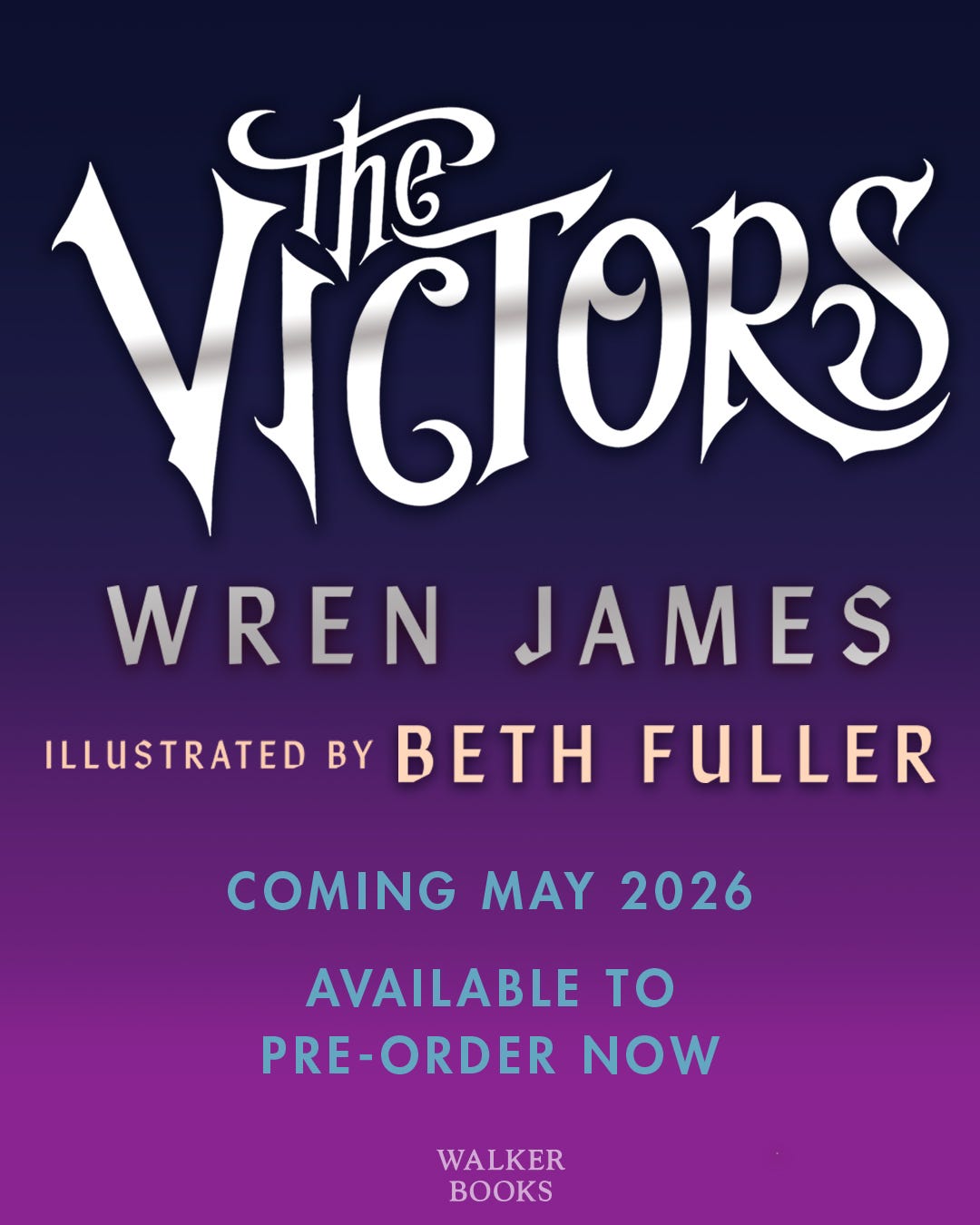
I am very excited to announce that my next release will be a graphic novel! The Victors is illustrated by the miraculous Beth Fuller (@bf_illustrates) and will be published in May 2026 with Walker Books!
If you preorder via Waterstones using the code OCTOBER25 before this Friday 17th, you’ll get 25% off!!
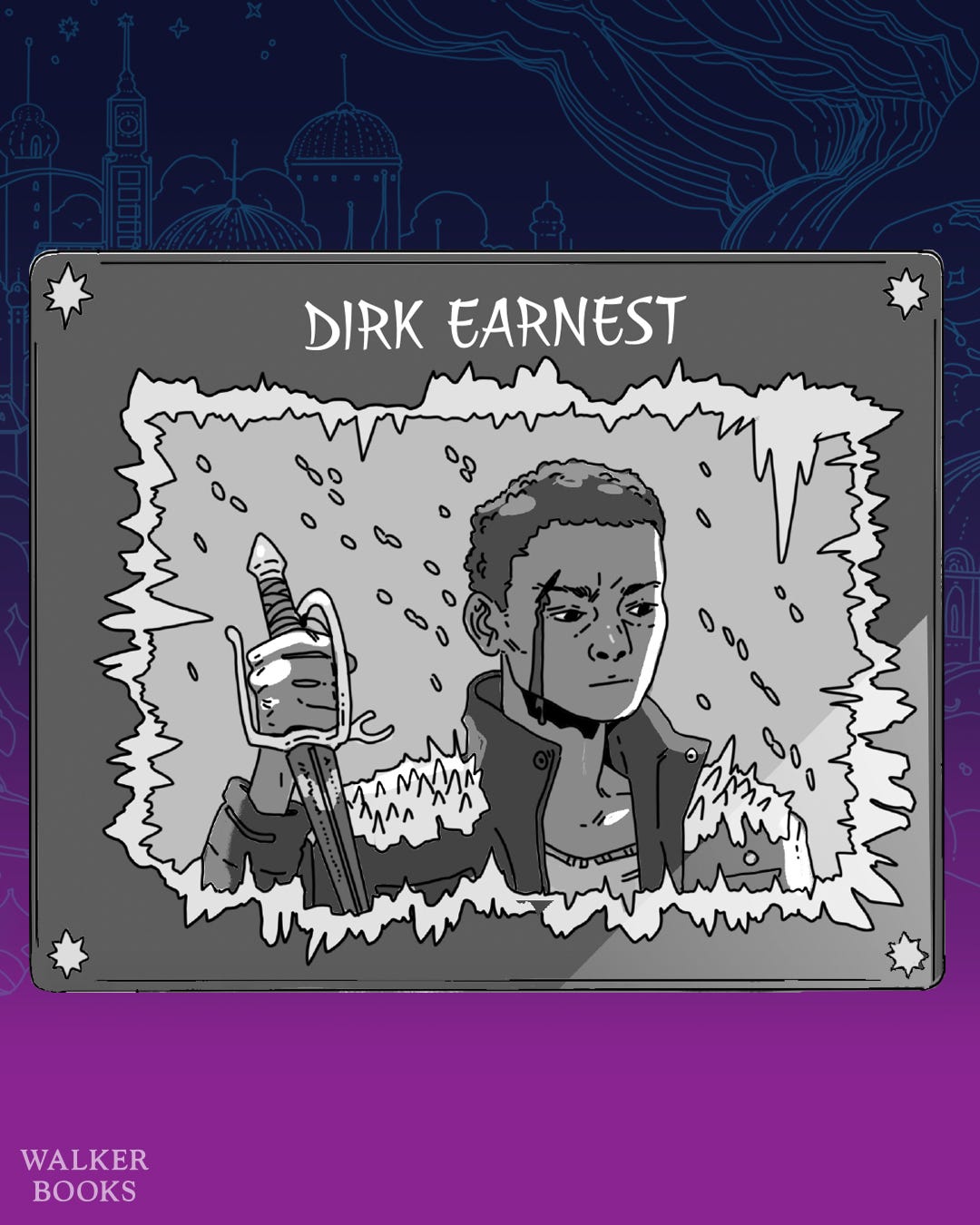
The Victors is about what happens after the chosen one has saved the world. At fifteen, Dirk Earnest led the world to victory in a savage battle against the evil overlord Rárog and his demon horde. Now he’s just a normal university student – or he’s trying to be. As the poster boy for fighting evil, Dirk has many adoring fans who follow his every move, but he’s crushingly lonely.
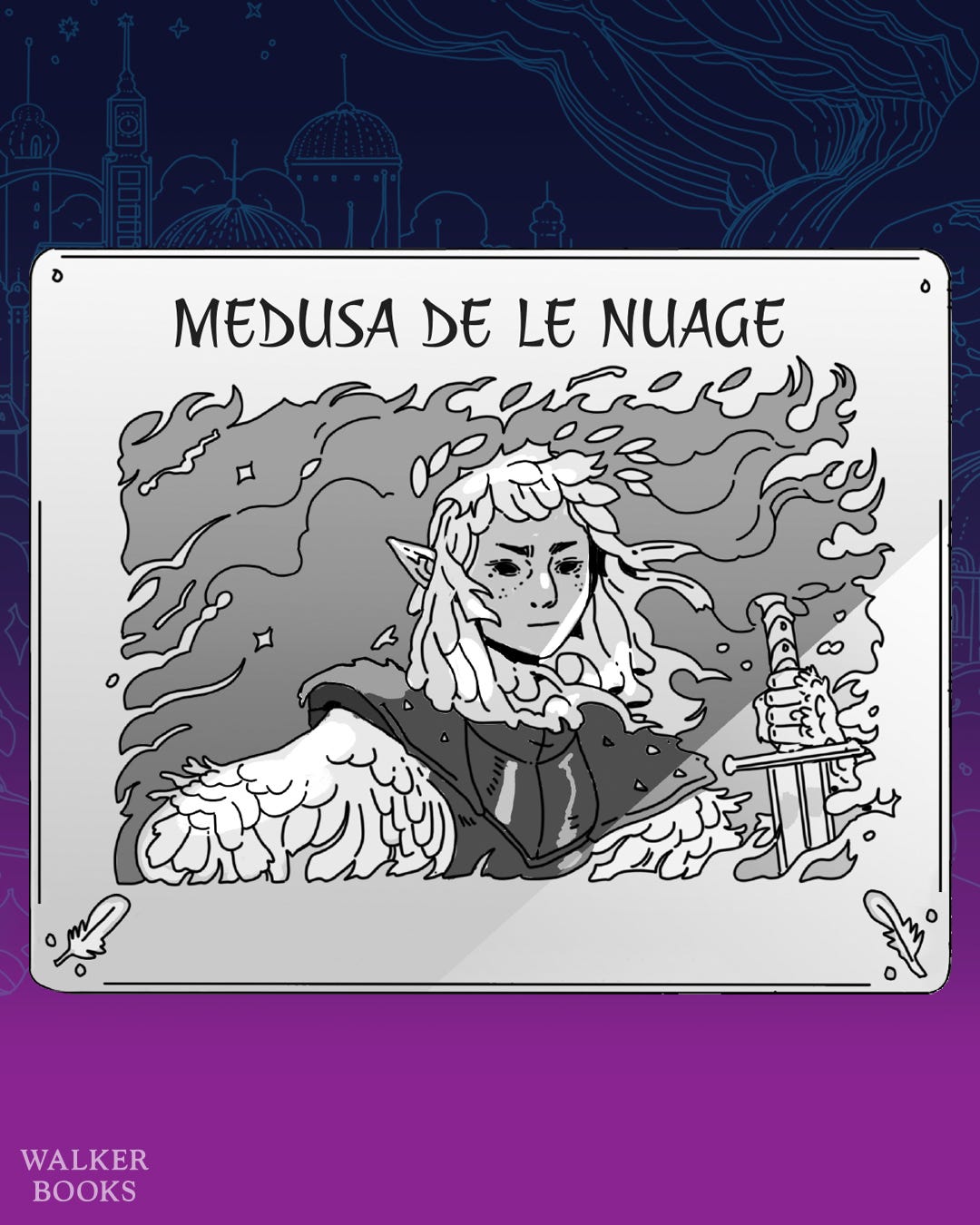
Cue his new housemate, Medusa de la Nuage: art student, former demon soldier, war criminal … and Dirk’s nemesis. With Dirk haunted by the ghosts of his past, and Medusa’s desire for human connection battling her demonic nature, the two are about to discover that the best friend you need most might be your (ex) mortal enemy.
After working in script development on Heartstopper, I was dying to write something in a tight, cinematic format. There’s something so special about a beautifully designed standalone graphic novel that immerses you in a self-contained adventure. Writing within those constraints is a bit of a literary puzzle.
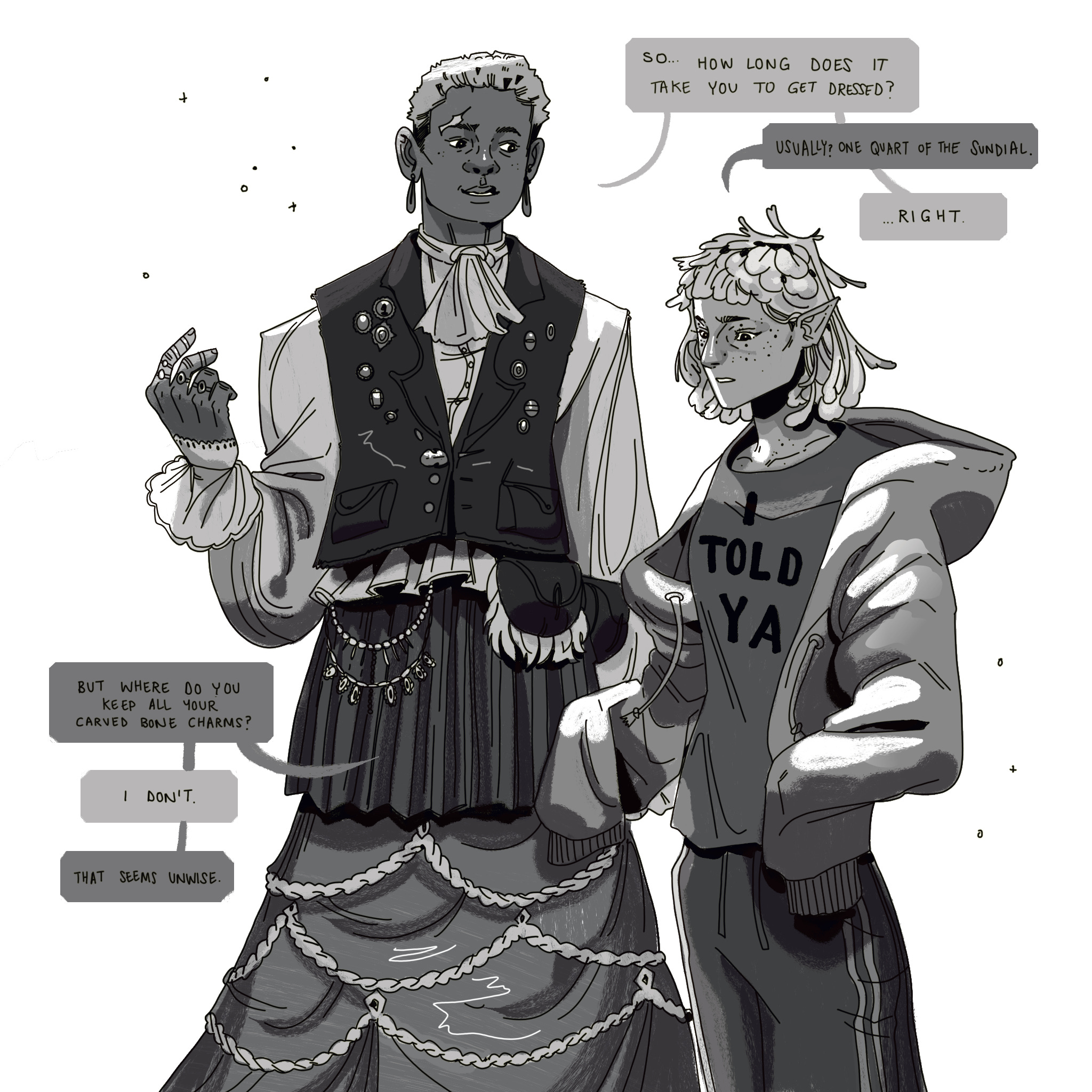
I pitched a graphic novel to Walker Books knowing full well that I don’t have the artistic talent to pull off the illustrations myself. But I had a strong vision of Dirk and Medusa right from the onset. Their character details are total mirrors of each other, from dark to light; dull to vibrant; outgoing to reclusive.
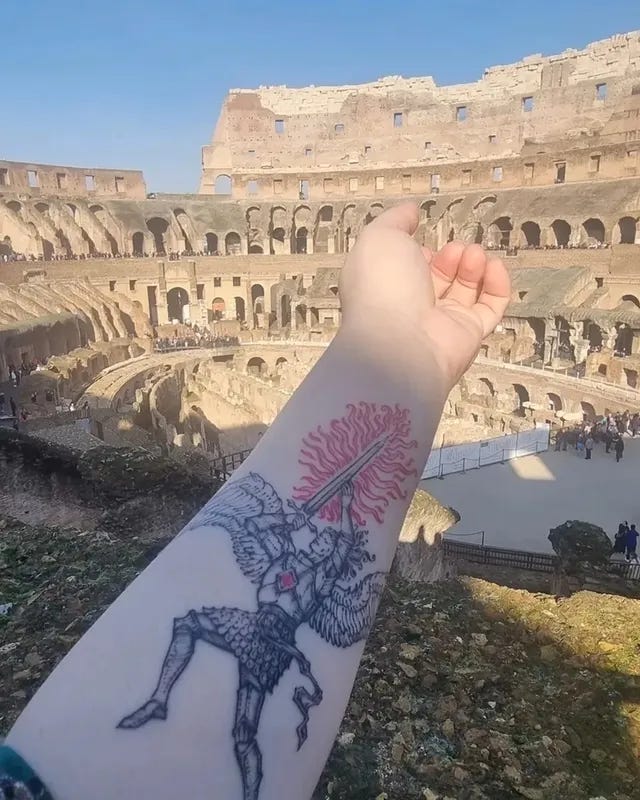
Miraculously, we found Beth Fuller, who has gone above and beyond my original vision to create something truly spectacular. Her rich art style is startlingly funny, heart-breaking and endearing, all at once. She’s a true talent. She’s brought Dirk and Medusa to life so perfectly that I actually got her design of Medusa tattooed on my forearm. A true sign of how perfectly she’s captured the character!
She’s an utter genius and I feel incredibly lucky to have her, Non Pratt and Jamie Hammond at Walker working on The Victors.
Beth Fuller is an artist from Dublin, Ireland. Accustomed to getting into trouble for drawing in school, she then decided to subvert that by going to art college, graduating from DJCAD with a degree in illustration in 2022. Now based in Copenhagen, she draws anything from concept art to comics, and is interested in art for video games and animation. She can usually be found somewhere between the wine and biscuit aisles of her local supermarket or taking bad black and white film photographs of her friends.
Back in October I took part in a writing residency where I wrote a whole 14,000 word solarpunk short story in the view of the public at the University of Birmingham. I wrote a far-future story about a crime that happens on the maiden voyage of the first transatlantic train, inspired by Murder on the Orient Express. The free anthology with the story has just launched – alongside an hour long podcast about my process – over at Phil Holyman’s website.
Phil is amazing, and he and his partner Gareth have put so much time and love into this project. I’m so excited to listen to all the podcast episodes and then go and read the creative works by those writers. It was such an honour to be part of this project, and I hope my story has a far greater life beyond this – it’s definitely a world I’m going to be returning to!
After two decades in developmental hell, the Atlantic Express is finally making its maiden voyage. But what does this mean for American society as we know it? Ecologically speaking, we’re all on the same page RE: the saintly moral goodness of the new line (apart from the baffling Flat Earthers who still think the train is somehow going to tip off the edge of the disc). The reduced emissions and endless environmental benefits have been much mythologised. But are we really and truly prepared for the new normal here? If this thing doesn’t do a Titanic and sink into the ocean, I estimate that we’ll be marking the end of commercial international flights within three years. Soon, New Yorkers will no longer be able to hop across the pond on a day’s notice for a Star Nova concert. If you want to get discount tix to see your latest bubblegum alter-queer post virginal hyperpop obsession in the archipelagos of Amsterdam, you’ll have to:— (i) secure access to the (strictly advance, exclusively corporate) Atlantic Express booking system (ii) block out a spare week for the round trip from your busy freelance DJ lifestyle (iii) cough up the funds for the frankly extortionate price point. So, yes, maybe the planet is saved and sustainable tech has won a huge victory in the name of hospitable life on this planet. Perhaps our future descendants will be able to survive without air masks and heat pumps one day. But who has really lost here??? We have. I will die if I cannot support my pop baby-girls. Ever since the beloved algorithm brought Star Nova into my life, she has needed me!! What are a few little carbon emissions in the face of that?
And here’s a reel I filmed in the week I was writing the story:
The Starlight Watchmaker and The Deep-Sea Duke are being published today in America with Union Square Books , so I thought I’d reshare an essay I wrote in 2019 about them.
The sci-fi genre can be incredibly hard to get into for new readers. Books tend to be 500+ pages long, with lots of dense science facts and made-up terminology that’s been developed by generations of writers over the year (see: artificial gravity, terraforming, parallel universe, hive mind).
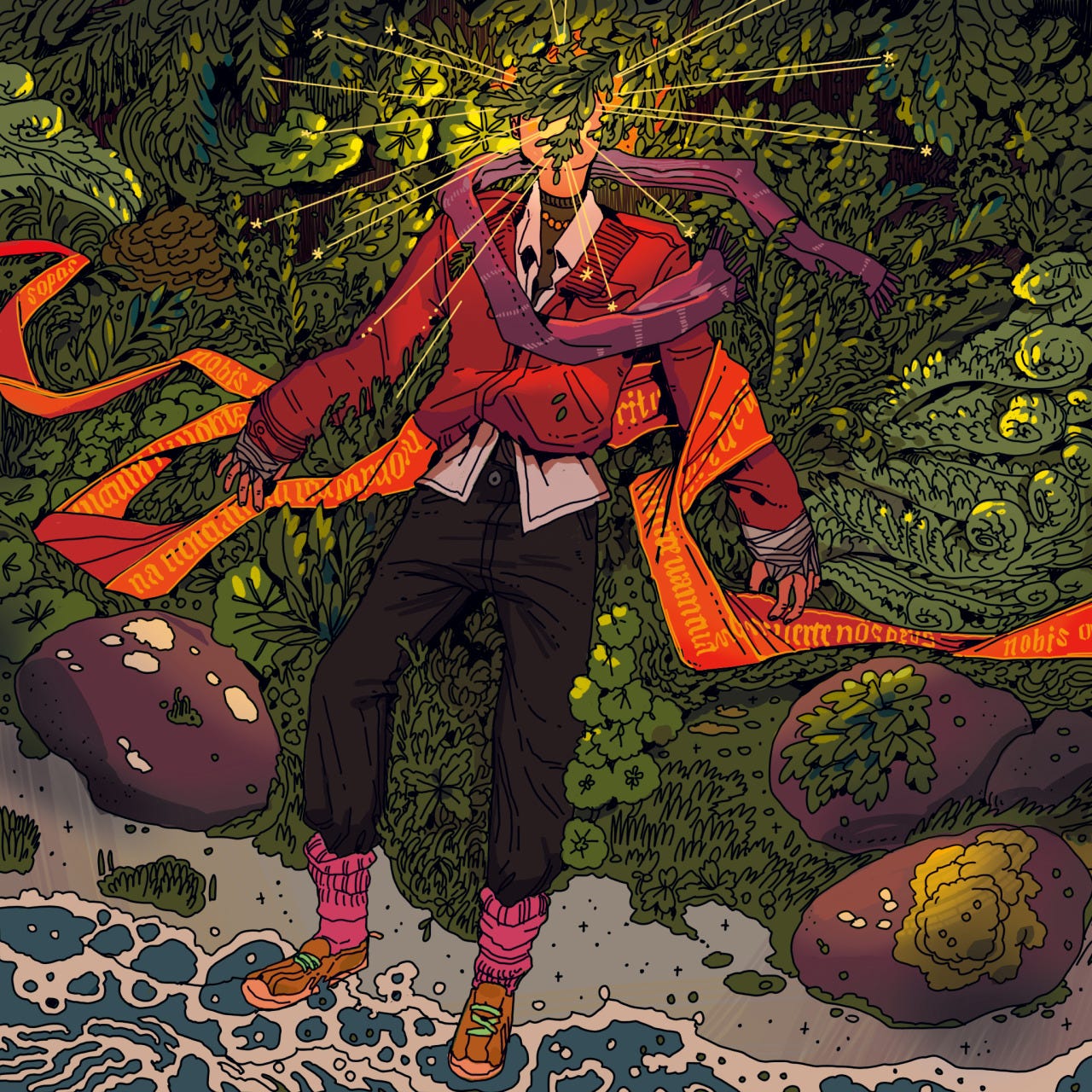
I wanted to write a more readable story that still uses all of my favourite sci-fi elements – there are hints of Binti, Jeeves & Wooster, Starfleet Academy from Star Trek, Saga, Howl’s Moving Castle and The Watchmaker of Filigree Street.
This novella is designed to be a jumping-off point to help readers explore the whole canon of sci-fi, hopefully while feeling like there might be a place for them in the genre, after all.
This is nothing like my usual science fiction novels. It’s not based in science at all. There’s not even a human in the story. It’s full of sentient volcanoes, bicycle-riding-butterflies, clockwork birds and golden gears and cogs. I hope that it feels as magical to you as it did to me, while I was writing it. And if you’ve not read much sci-fi before, I hope this encourages you to give the genre a try.
I want to write a sequel set on Dorian’s underwater planet – I have a plot already planned out, so fingers crossed I get chance to write it! Hugo and Dorian’s relationship still has a lot more story to tell.
I want to speak a bit about Barrington Stoke, and the amazing work they do. For their readable books, they work to make sure that sentence structure is chronological and easy to understand, there are plenty of dialogue markers to make the speaker obvious, and there isn’t any complicated formatting.
As an example, there’s one of the (many!) rounds of edits this book went through.
Each word was analysed carefully several times to make sure it was the best choice. At the end, it still feels like my writing voice, which is an incredible feat! I feel really lucky to have been able to work with Barrington Stoke on this
Fancast –
Hugo (voice) – Eddie Redmayne
Dorian (voice) – Jack Farthing
Ada (voice) – Phoebe Waller-Bridge
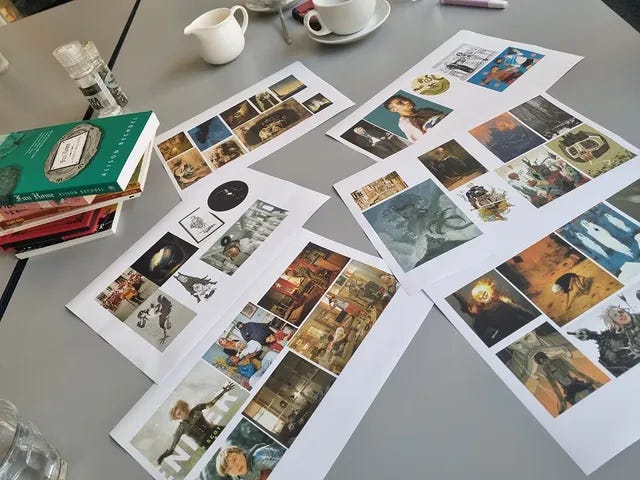
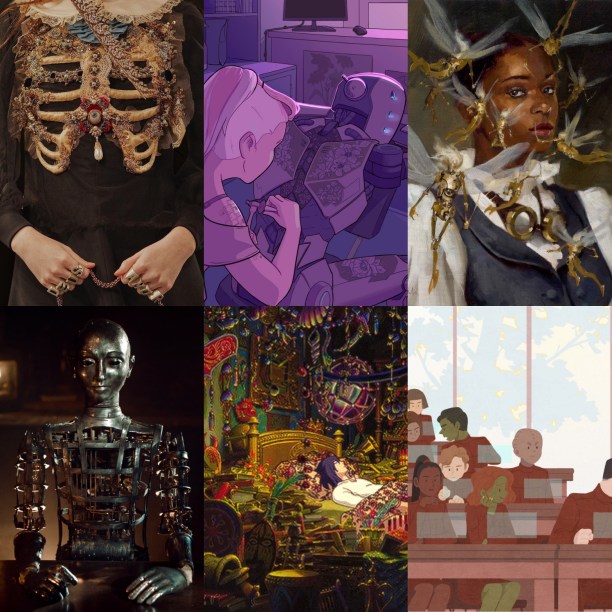
Moodboard about the book
Playlist –
Campus//Vampire Weekend
Like Real People Do//Hozier
Death of a Bachelor//Panic! at the Disco
When the Party’s Over//Kina Grannis
Nominated for the Carnegie medal 2020
Shortlisted for the STEAM Children’s Book Prize 2020
Coventry Inspiration Book Awards 2021 winner
“A charmingly wrought story for reluctant readers that explores social class divisions in an intergalactic setting.” – Kirkus Reviews
Wealthy students from across the galaxy come to learn at the prestigious academy where Hugo toils as a watchmaker. But he is one of the lucky ones. Many androids like him are jobless and homeless. Someone like Dorian could never understand their struggle – or so Hugo thinks when the pompous duke comes banging at his door. But when Dorian’s broken time-travel watch leads them to discover a sinister scheme, the pair must reconcile their differences if they are to find the culprit in time.
A wildly imaginative sci-fi adventure from YA star Wren James, particularly suitable for struggling, reluctant or dyslexic readers aged 13+.
The Starlight Watchmaker is a 20,000 word novella published in paperback and eBook by Barrington Stoke in the UK and Union Square Books in the US (April 2025). The sequel The Deep-Sea Duke is out now. Read the first chapter here.
With World Book Day coming up, I thought I’d share some info about my available workshops and talks. I’m very happy to visit schools and universities, either in person or via Zoom, to discuss writing, queer representation, using real science in stories, and how to engage hopefully with climate issues.
I visit schools very regularly, and the teachers often report back on how enthusiastic my talks get the students about science. One teacher recently said I gave the best talk they’d ever had. 🙂
If you’re a teacher and you’re interested in arranging a visit, shoot me an email at wrenjameswriter at gmail dot com. I’m also available for bookings through Authors Aloud.
Available talks and workshops for Secondary Schools:
‘True Crime Thrills and Cold Case Conspiracies’ talk – Join Wren James on a journey into the world of internet detectives who set out to solve real-life crimes online. Find out about the real true crime inspirations for their murder mystery novel Last Seen Online and learn how they craft the perfect plot twists and spine-tingling thrills in their writing. (1 hour, any number of students)
‘Writing with STEM’ talk – Wren James talks about their writing, with a focus specifically on how they came to write science fiction after studying Chemistry and Physics at Masters level. They discuss how scientific research from their university studies inspired events in their novels. They share spreadsheets used to accurately calculate the figures involved in their writing, such as spaceship travel times and time travel figures. The talk includes discussion of climate change, Einstein’s theory of relativity, extinction and evolution, all talked about in an enthusiastic, easy-to-understand way. Includes a Q&A session. (1 hour, any number of students)
‘World-building’ writing workshop – A group exercise using pictures of real world locations to write a story. Students will use their senses to create atmosphere and setting, building out a story from the location. It includes examples taken from writing Wren did at the age of 18, which later became part of their debut novel. (1 hour, less than 40 students, years 6-9)
Science fiction writing workshop – a group exercise about writing science fiction based on articles in the news. We will choose a recent news topic based on a scientific subject and use the ideas and concepts to create an engaging story. It will teach students how to research science online, and be creative with a typically factual subject. (1 hour, less than 40 students, year 7 and up)
Climate Change in Fiction – a workshop about researching climate change solutions and politics in order to create a hopeful, optimistic story about the future of Earth. (1 hour, less than 40 students). There is a version of this workshop aimed at Years 7-9, or a more academic version of this workshop available for older year groups from Year 12 to university level
Available workshops for older students (Year 12 – University level):
Writing Diversely – an explanation of the core concepts of diversity in writing, and a guided group discussion about why it is important for writers of all kinds to make their work inclusive. Students will learn how to research identities and avoid stereotypes, using case studies and examples of diverse works in Young Adult fiction. We will research a diverse identity for a piece of fiction. (1- 2 hours, less than 40 students) – read a review of this workshop by University of Nottingham here
Climate Change in Fiction – a workshop about researching climate change solutions and politics in order to create a hopeful, optimistic story about the future of Earth. (1 hour, less than 40 students) – watch part of this lecture here or here
Building a Bestseller – a guided workshop turning a story idea into an outline and pitch ready for agent submission. We will discuss plot development, narrative structures and beats, common errors in opening scenes and formatting a synopsis (2 hours, less than 40 students)
Working professionally with agents – a breakdown of the author-agent relationship, and explanation of how to find a shortlist of agents which will suit different projects. We will work on the language used in writing short pitches, author biographies and query letters, focusing on ways to improve your submission and draw out the commercial elements of the plot. We will also discuss how to self-edit your work, and choose an extract of your project to send out. NB: students will need a rough idea of their project for the activities, or they can use their favourite novel as an example, e.g. Harry Potter (1 – 2 hours, less than 40 students)
Working with publishers – an explanation of the process of editing with a publisher, with guided exercises in editing a chapter extract, swapping work and line-editing each other’s writing using Microsoft Word tracked changes and comments. NB: students will need to bring a scene or short story along to edit (1 – 2 hours, less than 40 students)
School, university or library visits, or talks via Zoom/Skype/Google Hangouts, can be arranged by contacting me at wrenjameswriter@gmail.com or fill out this form with the details of your proposed event.
Whenever I’m asked how I write, my immediate response is always: using outlines! I can’t write a single word without a detailed plan – sometimes reaching lengths of ten or more pages. When I’m not trying to keep control of the entire plot in place in my head, it frees up mental space to think about what comes next, to consider what I can lose and what’s missing.
I pour every single thing I know about my story onto the page, explaining explicitly what I want the underlying message to be; how the characters will interact and how that changes over the course of the book; how and when I will foreshadow plot points; the reasons for my worldbuilding choices, as well as how they will influence the plot. If specific scenes or conversations jump out to me as being particularly important, I recount these too. This is not the place to draw out tension and intrigue – this is the place for clear, simple explanations that cover the depth of the story in full.
An outline is absolutely vital for distilling what I want to do with a story down to its core essence. I can’t write a book if I don’t understand what I’m trying to do with it – where is the tension leading? What will give this an ultimatum, an emotional pay-off? What is the tone of the writing? What are the weak points of the characters’ relationship dynamics?
This is my starting point – from here, I can look at it as a whole narrative, and analyse plotlines and character development. I beta-test bold plot ideas by making changes to my outline and following the implications and adjustments to be made through the whole novel. It becomes a simple matter of changing a sentence or two in the outline to see if a plot change might work, rather than revising a bulky novel many times over.
Using my outline as a blueprint and a map, I can see what I need to keep – but also what is missing. What kinds of conversations could help convey information about backstory or worldbuilding to the reader? What is really important for them to understand, and what can I withhold and leave to their imagination?
Then, I begin to write. As I approach each scene, I already know why it’s important to the plot. With all the difficult questions answered, it is frequently a joyful and natural process to sit down to write each day. It leads to constant surprises, as the writing processes enriches and develops what was planned. I go down roads I’d never even noticed on my map. And, most importantly, I know what danger zones to avoid along my journey.
Last June I was commissioned by the West Midlands Readers Network to meet with Warwickshire Pride’s book club and quiz them about what they’d like to read the most. I then went away and wrote a short story to fit their demands!
They wanted to read about trans+, poly characters in their twenties and thirties, and requested ‘vampire smut’ and spooky elements. I ended up writing a story about a group of trans housemates living in a Victorian terrace which is haunted. The story, T-Boys, has been published in an anthology FIVE STORIES.
This project was funded by Arts Council England. Thanks to David and the Warwickshire Pride Book Club for their enthusiasm and excellent ideas!
I’m also very excited that Future Hopes is a Book Trust Spark reading pick! The 15 titles were picked by a panel of librarians and teachers to represent the best of modern fiction for shared reading in KS3 students.




 Wren James