
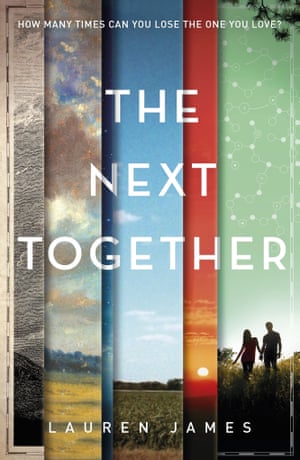
It’s here! I’ve been dying to share this with you for ages now. Find out what storyline you’d live in The Next Together by doing the Buzzfeed quiz here.
And my result:

WRITER & LECTURER
It’s here! I’ve been dying to share this with you for ages now. Find out what storyline you’d live in The Next Together by doing the Buzzfeed quiz here.
And my result:
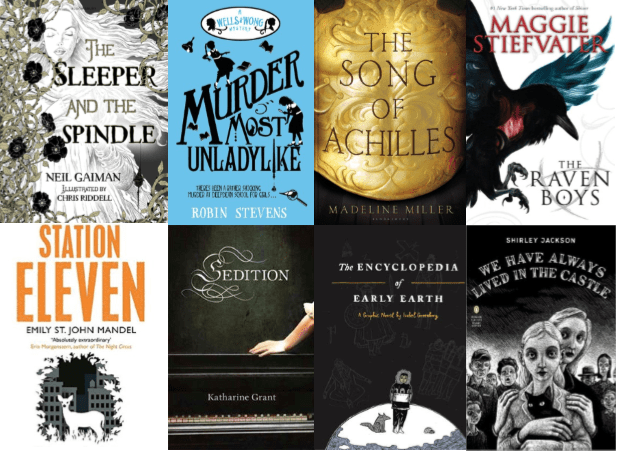
In 2014, I read 139 books. These were my favourite. So far in 2015 I’ve read 158. I’m doing pretty well!
As with the books I most want to read in 2016, none of these are by people I know personally, because I don’t think that’s fair (how would you know whether I’m just saying it because I like them?)
10) Texts from Jane Eyre: And Other Conversations with Your Favorite Literary Characters by Mallory Ortberg
It’s that time again! Last year I recommended 15 books for 2015 (which I did quite well on – I read 12 and loved 7), so here are 16 for 2016. I may have preordered many of these….
These don’t include books by people I know personally, because I feel a bit . . . weird about that. However, a few of those are: Radio Silence by Alice Oseman, Inferno by Catherine Doyle, Beautiful Broken Things by Sara Barnard, Truth or Dare by Non Pratt, Jolly Foul Play by Robin Stevens, The Square Root of Summer by Harriet Reuter Hapgood, False Hearts by Laura Lam, Rebel of the Sands by Alwyn Hamilton, Into the Dim by Janet B. Taylor, Beyond the Red by Ava Jae and obviously MY OWN The Last Beginning.
16) The City of Mirrors (The Passage #3) by Justin Cronin (Orion, May 24th)
From smoking being good for you, to it being possible to turn metal into gold, have you ever wondered what Mr Darcy, Dr Frankenstein and Miss Marple would have accepted as plain fact? Lauren James reveals all here!
Lauren James
Monday 30 November 2015
My first novel The Next Together uses the concept of reincarnation (and time travel!) to explore whether people intrinsically change just by being born in different time periods. The insurmountable barriers of time and space don’t stop my characters from falling in love with each other. However, being born in different points in history does cause some problems. In particular, they often have wildly differing opinions about technology and medicine, due to the current scientific knowledge of their time periods.
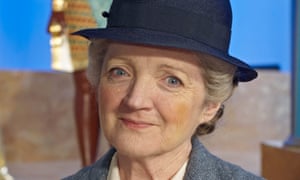
A character born in 1745 will believe different things about the world to one born in 2015 – such as how to treat a headache, or whether it’s possible to travel by flying. The same is true for every character throughout history, even those that are relatively modern. Miss Marple, for example, would have believed that smoking is healthy, something that was only disproved in 1948.
It is inevitable that nearly all of our favourite characters from historical fictional would have accepted some truly terrible scientific inaccuracies as plain fact. Hamlet, born in the fifteenth century, would have insisted that the sun orbits the earth. This was only disproved fully by Isaac Newton in the seventeenth century.
Some of these hypotheses would be considered ridiculous to believe today – such as the idea that a fire element called phlogiston was needed to burn things, which seventeenth-century Don Quixote would have thought to be true. This mysterious element was only discovered to be oxygen over a hundred years later.
It’s impossible to deny that Jane Austen’s Mr Darcy would have believed that metals could be turned into gold if you tried hard enough, but we can still imagine that despite his environment and upbringing, he would have upheld modern moral and ethical standards. We all want to think that our fictional faves secretly supported gender equality and an end to slavery.
Margaret Mitchell’s Scarlett O’Hara fromGone With The Wind, set at about the time that Mr Darcy was probably funding the research of fortune-seeking alchemists, would have believed that it was possible to spontaneously combust. The myth that you had to be constantly on your guard against the possibility of bursting into flames without warning was spread by Charles Dickens, who used it as a plot device in his novel Bleak House. In fact, as recently as the 1970s it was hypothesised that spontaneous combustion was caused by depression.
Mary Shelley’s Dr Frankenstein, despite his creativity with reanimated corpses, would have believed that bloodletting cured illness, something which would horrify modern doctors. It was believed until the mid-nineteenth century that by collecting the blood of a sick patient the imbalance of their humours would be corrected, curing their illness. The existence of humours is another scientific inaccuracy, one that has been believed for millennia, maybe as far back as the time of Achilles and Patroclus.
In the early twentieth century, Sherlock Holmeswould have believed the atom was the smallest possible type of matter, and couldn’t be split further. Protons, neutrons and electrons were only discovered in 1917 by Ernest Rutherford. This atomic breakthough would have been read about with much interest by the detective.
While even the most admirable of fictional creations would have believed some pretty ridiculous things, I think we should be able to find it in our hearts to forgive them for this. After all, they are a product of their time. In future years we might also be mocked for our beliefs.
In February of this year, a new model made by physicists Ahmed Farag Ali and Saurya Das predicted that the Big Bang might not have been the start of the universe after all. The model suggests that the universe had always existed, long before the Big Bang. If this is proven to be accurate, the theory of a giant explosion “creating the universe” could turn out to be one of the scientific blunders of our generation.
Is time travel possible? Should the dinosaurs in Jurassic Park really have been feathery, after all? Is Pluto a planet?
Only time will tell.
Previously: April | May | June | July | August | September | October
It’s nearly December! Thank god, amirite guys? My November has been pretty terrible. I’ve been deep in edit swampland on The Last Beginning for most of November, so I only actually finished reading two books. However, one of them was a graphic novel so incredible I wish it was ten times as long.
Graphic Novel: The Thrilling Adventures of Lovelace and Babbage: The (Mostly) True Story of the First Computer
by Sydney Padua
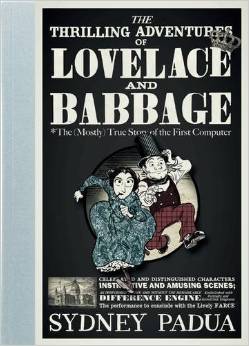
A unique take on the unrealized invention of the computer in the 1830s by the eccentric polymath Charles Babbage and his accomplice, the daughter of Lord Byron, Ada, Countess of Lovelace. When Ada translated her friend Babbage’s plans for the “Difference Engine,” her lengthy footnotes contained the first appearance of the general computing theory—one hundred years before an actual computer was built. Sadly, Lovelace died of cancer a few years after publishing the paper, and Babbage never built any of his machines. But now Sydney Padua gives us an alternate reality in which Lovelace and Babbage do build the Difference Engine, and then use it to do battle with the American banking system, the publishing industry, their own fears that their project will lose funding, and a villainous street musician who will force the two friends to reevaluate their priorities—”for the sake of both London and science.”
Lovelace and Babbage have completely captured my heart. I can’t remember the last time I loved characters more. They have such a great male/female friendship, and they are both oddball and fun and I just – I love them so much. If I ever get access to a time machine, my new answer to what I would do with it is: GO AND HANG OUT WITH LOVELACE AND BABBAGE.
Make-up: Soap & Glory THE FAB PORE™ 2-IN-1 FACIAL PORE PURIFYING MASK & PEEL
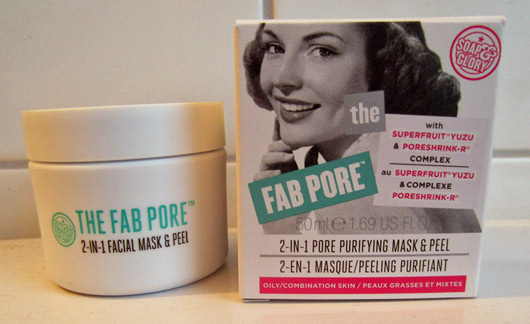
This is the first face mask I’ve ever tried, drawn in by the lure of beauty bloggers, and it was pretty good. I’m clearly not cut out to be a beauty blogger, because that’s all I’ve got to say about it: it was decent.
Internet Nonsense: Company Is Coming by Chris Fleming
I’ve cried tears of laughter at this video every time I’ve watched it (and that’s a lot). I’m pretty sure most mums are like this. I can appreciate it from the POV of someone who will 100% be a mum like this in the future.
TV Series: How to Get Away With Murder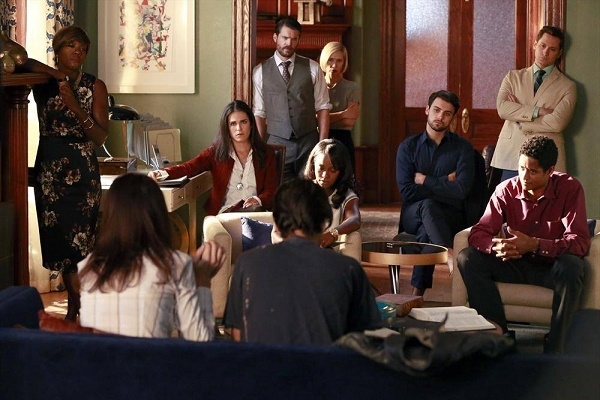
I’ve been watching this very sloooowly, because I’m not often in the mood for crime stuff, so I’m only halfway through series 1. However, it’s excellent and I love and support all of the characters, even though everyone makes terrible life choices and needs to go home and have a good think about their lives for a bit.
 I hear Series 2 is even more of the incredible Satan and Her Murder Ducklings, so I can’t wait for that.
Clothes: Joules Pyjamas
These flannel PJs are so soft and warm and I predict I will spend my entire winter season in them. Do yourself a favour and get some.
Music: Adele – 25
I mean, obviously. OBVIOUSLY. Like the rest of the world, I’m not immune to Adele’s dulcet tones and witch’s cackle. I’ve had the lines I’m so MAD I’m getting old/ It makes me reckless stuck in my head for approximately forever.
And, my official Least Favourite of November: I have my driving test this week. I am very scared. Help.
In other news: My giveaway with Alice Oseman is still running here. And the cover of Alice’s second novel Radio Silence was revealed!
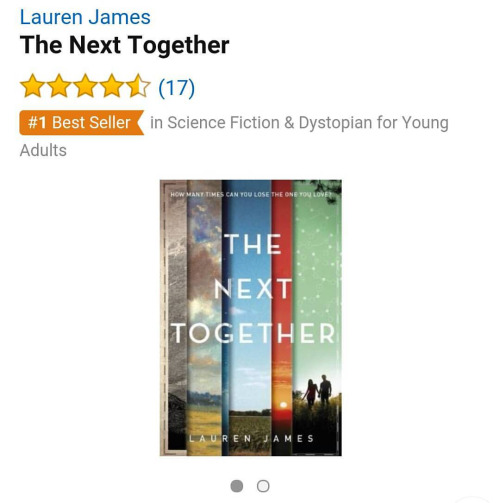
For a lot of this week, The Next Together has been #1 bestseller on Amazon in YA Science Fiction! Obviously I’ve been refreshing it delightedly.
I also did an interview with the University of Nottingham.
The Next Together follows the various lives of Katherine and Matthew as they meet and fall in love throughout history. There are timelines in the recent future and distant past, and each time a mysterious being is tracking Kate and Matt’s relationship, and making sure they fall in love and save the world in every life….
Each lifetime is very different, so the book is made up of lots of interwoven genres – The Next Together is a historical drama, a conspiracy theory thriller, a science fiction adventure, and plenty more besides! Because of the number of different timelines, I thought the story needed something to tie it together, so that it didn’t feel like a collection of stories about separate people. I decided the best way to do that was to include documents and letters in the novel, as well as prose.
My characters Kate and Matt are the same people, but sometimes they are equals and sometimes they aren’t. In one timeline Matthew is Katherine’s servant, in another the opposite is true. This allows for a lot of variety in the way their relationship develops, so I wanted to make sure I kept an element of continuity throughout the book. I thought it would help to have something to tie these characters together – to each other, and to reality. I needed to make it clear they were the same people, regardless of the time period, or whether they are texting or writing letters in fountain pen.

There’s something about the visual aspect of epistolary books – the documents, graphics and pictures – which makes it seem more real. It makes a story come to life. When you can see that a character has the same handwriting in 1745 or 2039, it adds a satisfyingly rewarding feeling to the story.
I also did a lot of historical research, and uncovered many newspaper articles and old diaries and letters, which really brought the periods of history to life for me. I wanted to recreate that feeling in the novel – of history being about real, flawed people, instead of statistics in a textbook. I wanted to bring the sense of humour and life I’d read about to my novel.
 Originally posted at the Dymocks blog
A lot like this, mainly. With probably more eye rolling.
I don’t have a routine, but I’m very picky about my working environment. The slightest excuse not to write and I won’t get anything done! I need chewing gum, a spreadsheet of my daily word counts on myWriteClub (to keep me accountable!) and lots and lots of music. I’m currently obsessed with Halsey’s album Badlands.
As for my writing process, usually I start out with an idea from a dream, or something I wake up thinking about. I’ll make a note on my phone like: reincarnation fic? and over the next few weeks I’ll be working out how it could play out in my head. I won’t write anything down for months probably, and I always start with plot, not characters.
When I decide to start writing it, I’ll type out everything I can think of about my idea and try and form it into a synopsis, like: There’s a girl who meets a boy in her first year biology lab and she knows his name and what his voice sounds like. Then I’ll probably leave it a while again, a few weeks or days.
Then I start reluctantly doing character development (I am terrible at this) (no really). I have now on four occasions got to the point where a new character appears and had to stop writing to decide what they are like, because I’d been putting it off for so long. It usually takes me two drafts to really understand my characters; until then I’m just kind of bemused by them. Once it clicks I can tell you everything and anything about them and love them like children.
Right now I’m writing a character and I’ve written 25k and all I really know about him is that he’s a softbro. We’ll get there eventually. The way I tackle my character development fear is usually via tumblr? Like I have very detailed book tags with all my character insp pictures: book one; book two; book three; book four; book five. I don’t know if that is useful to know or not. I just see a lot of stuff on my dash that reminds me of my stories. I know a lot of authors use pinterest for this.
I write chronologically and don’t let myself skip ahead, though I usually find myself waking up to write down lines and dialogue I want to add later.
I spend a lot of time messing around with formatting. I can’t just go into a word doc and write. It has to be Sitka text size 12, and I need page numbers and a title page and headers because ….I’m a good procrastinator.
I usually I have at least one epigram before I write a word (I collect too many epigrams. I have to cull them frequently.) It used to be single spaced but usually you submit in double spaced, and I’m used to it now. I find single too crowded.
My document usually starts as a plan, but this tends to be pretty aggressive and sarcastic and I don’t really follow it. I usually focus on the short term- I have a list of one-liners or dialogue from notes on my phone I want to include, so I paste that into the word document and write through it. It’s satisfying if I write in all my notes, I’m more pleased to have done that than if I wrote 10,000 words.
I find working from little tidbits like that can really help if I’m stuck with a scene, it’s like fic prompts.
Like: she sullenly refused to meet his gaze, sure he was laughing at her
“what kind of feeble response is that”
use phrase ‘monstrous rage’ hah
I just try and fill in the gaps between those ideas!
I have to have pictures of my characters before I can write them. I need to know what font their handwriting is. I need to know what their favourite slang word is.
I occasionally write out by hand, but I have to type it up pretty much immediately, and I usually waste a long time editing it instead of writing more.
Usually I listen to my book playlists. I can’t really write without music, but it has to be music I know really well. If I’m having a good writing moment I’ll be singing too. At the minute I’m listening to Brave- Sara Bareilles, Young volcanoes- Fall out boy, and High Hopes- The Vamps a lot. It needs to be upbeat because I type to the rhythm of the music.
My writing time is usually from 2pm-1am, but when I go to bed I’ll have an hour where I keep waking up to make notes.
I use a lot of italics and try to actively avoid adverbs. I dislike all caps dialogue. I try and think about what different media types I could use and work them into the story- letters, instant messages etc.
When I’ve finished I’ll share it with a few people and my mum and then put it away from two months before looking at it again.
This blog post was originally posted at Teen Reader’s Diary.
If I was given access to a time machine for a day, I wouldn’t be able to go to just one place. I’m too greedy. I’d have to go on a tour of history and the future, until I ran out of fuel or caused some kind of horrific future-destroying “kill your grandfather” type accident.
First of all, I would without a moment of doubt have to go and see the dinosaurs. I’ve always loved Jurassic Park and The Land Before Time, so how could anyone turn that down?
On the way, I’d like to stop off for breakfast in seventeenth century France to take Pain Au Chocolat and Espresso with La Maupin, a female fencer and opera singer who had more adventures than one person should be allowed in a lifetime outside of fiction!
Then I’d go to visit Easter Island and find out how those giant statues were moved around once and for all, by watching them being built. I’d visit Machu Picchu for lunch with the Incas and spend the afternoon exploring the Galapagos Islands with Charles Darwin.
I’d go to the Roman Baths for a relaxing spa session, before visiting Henry VIII for a dinner of his famous cockentrice. I couldn’t resist going to see an original Shakespeare play – maybe one of his lost plays, so I could tell everyone at home what happened! Then I’d be off to an Elvis Presley concert.
Finally, I’d finish off the evening by attending a regency ball, so that I could chat about writing with Jane Austen over rum punch. I then wouldn’t be able to resist taking a slightly tipsy visit to the future. I’d go to the first human colony on another planet – but I’d like to arrive a few hours before their spaceship first landed, so I could pretend I’d been there waiting for them all along!
A day in the life
I start every day by going swimming at my local gym. This gives me time to think through what I’ll be writing that day, and solve any nagging plot holes that I might have abandoned in frustration the night before (this happens more often than I care to admit).
After I’ve done a hundred lengths of front crawl, and soaked in the Jacuzzi until I’m extremely wrinkly, I’ll go home and begin work.
I spend a few hours answering emails and doing admin stuff. This can range from discussing editorial notes or marketing tactics with my editor and agent, or replying to tumblr asks and writing blog posts.
Surprisingly, a lot more of an author’s time is spent doing things other than writing – something I never realised until I became a writer. I’m lucky that most of my work can be done from home, but about once a fortnight I’ll go down to London on the train for a meeting or event in person. I was recently on a panel discussing Diversity in YA at a conference, which was a lot of fun.
I’m learning to drive at the minute, so then I might have a driving lesson in the afternoon. I’m working on navigating islands at the minute (I’m not very good at it yet!).
When I get home, I’ll finally start writing. I only start writing properly in the evening, because there are too many distractions during the day! I’ll crank up my playlist for the book I’m writing (by the time the book is finished it will usually have reached over 100 plays on iTunes), chew some gum and get started.
After I’ve procrastinated on tumblr, and taken dozens of pictures of my dogs, that is…
Eventually I’ll force myself to get down to work, and write for about five hours. I try to write between one and two thousand words a day, but sometimes that might be as little as three hundred words or as much as three thousand. It depends on what I’m writing. I don’t worry about not writing enough, as long as I write something. It’s all progress!
Then I might catch up on some TV series like Hannibal or The Great British Bake-Off or read something – right now I’m reading Lockwood & Co by Jonathan Stroud. I’ll collapse into bed about 1am, mind full of plot ideas and character dialogue!
I don’t believe in soulmates in reality, but as a literary device they are one of my favourite tropes. The idea that your favourite character is only a moment away from bumping into their perfect partner is such an exciting incentive to keep reading. It adds an air of anticipatory delight through the whole book – especially when the going gets tough. The character might be going through terrible things, but just wait until they meet their soulmate! Then everything will change – and they have no idea what’s coming! It’s so gleefully delicious to read.
I’m a sucker for those kind of stories. So here are some of my favourite soulmate tropes.
Soulmarks
This is the idea that you’re born with a mark which matches one on your soulmate’s skin – or even their name, like a tattoo. Every person you meet might be your soulmate, and the only way to find out is to check their soulmark and see if it matches your own. So fun! What are the social conventions of asking about other people’s soulmarks? What happens if you fall in love with someone, and then realise your marks don’t match? What if your soulmate is already married? What if your parents knew you were gay from the moment you were born, before you did, because the name on your arm was of someone of the same gender? What would that change about society’s acceptance of homosexuality throughout history? The politics of this are just so fascinating.
Reincarnation
Obviously this is one of my favourites – I wrote a book about it! The idea that souls find each other in every life, and that they can’t keep themselves away from each other despite the fact that they literally died and came back to life . . . it’s irresistible!
Dream sharing
This is one of my favourite tropes. What if your soulmate has been in your dreams since you were a child? What if the first time you met a stranger, you suddenly recognised them from your oldest dreams? What if you shared the same dreamspace, so you’d spent hours and hours together in dreams before you ever even met?
Imprinting
What if the moment you saw someone, even if you were just passing them in the street, you knew they were your soulmate? It would be so convenient (and save a LOT of small talk) but what if you were driving past them, and never found them again? What if you spent years after that, knowing your soulmate was out there and what they looked like, but never being able to find them? What if you saw a famous actor in a film and realised they were your soulmate? What would dating sites look like – a series of endless photos that you stared at until one clicked? I NEED TO KNOW EVERYTHING.
Sharing emotions
In this soulmate concept, even before you meet each other you can feel your soulmate’s emotions. You’d feel happy when your soulmate is happy, and pain when they are hurt. How would you track them down? How would it feel to finally meet someone whose emotions you knew just as well as your own? Imagine the sheer happiness you would feel from them when you finally met!
Originally posted at Imaginary Misadventure.
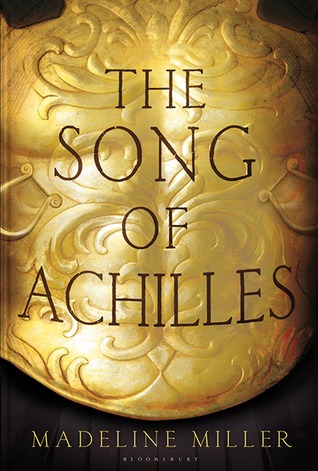
This is a retelling of the Illiad set in Ancient Greece and exploring the relationship between Achilles and Patroclus. Interwoven with gods, goddesses and magic, at its core this is a romance of truly epic proportions. If you know the mythology, you know to brace yourself for tears and heartbreak.
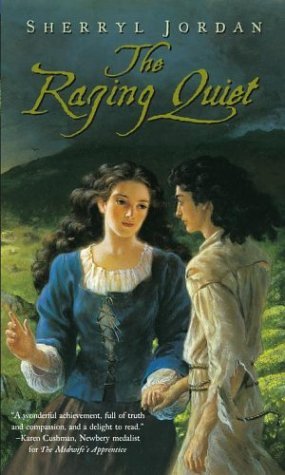 This Young Adult novel takes place in a medieval village, and tells the story of Raven, a deaf orphan who the villagers think is mad, and Marnie, a widowed young girl, befriends him. She realises that his ‘madness’ actually comes from a lack of understanding of speech, and together they create a form of sign language. Their blossoming love – and peace in each other’s company even when the world is against them – caught my heart immediately. I used to get this book from the library over and over when I was a teenager. I’ve read it more times than I can count.
Daughter of Venice by Donna Jo Napoli
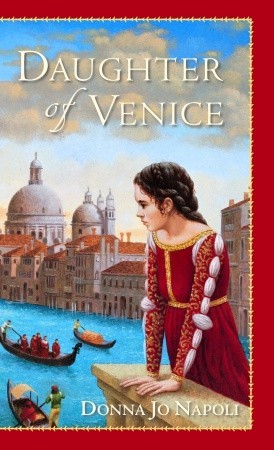 Another book that I used to check out of the library over and over. This is set in Venice in 1592, where Donata is a noble girl stifled by convention, who dresses as a boy to explore the city. She finds her way to the Jewish district, and meets a boy called Noe, who works in publishing. This book was a huge inspiration for the 1854 storyline in The Next Together, where my character Katy dresses up as a boy so she can go adventuring too!
Sorcerer to the Crown by Zen Cho
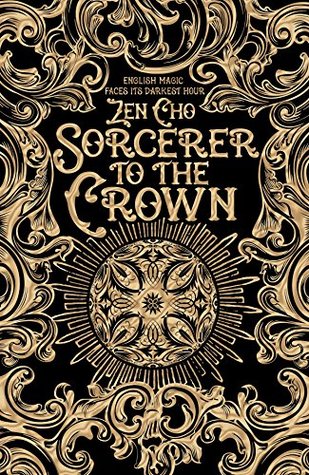 This was only very recently published, and I’ve been recommending it to everyone I know ever since. Set in a magical Regency England, this is the perfect mix of the magical regency London of Jonathan Strange and Mr Norrell, and Georgette Heyer’s shamelessly trope-filled romances. The whole book make me squirm with delight – it has everything from UNICORNS to GIANT FURIOUS MERMAIDS to CLOUD FLYING. Just – I want to tell you about every scene, because every scene is a wonder.
If you’re looking for more diverse fantasy, then this is the place to look. Both Zacharias and Prunella are POC, and the plot revolves around a Caribbean island, with another central WOC character.
Fingersmith by Sarah Waters
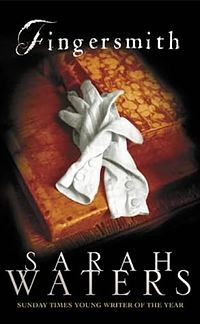
This is set in Victorian England, and tells the story of Sue, a thief, and Maud, the noble lady she is trying to rob. Their lives are tied together in unexpected ways, made even more complicated when they fall in love. Full of twists, romance and betrayal, I promise you that once you start this story you won’t be able to put it down.
Originally posted at Nicole has read…

 Wren James